 Transformation
Why Women-Only Training Spaces Change Everything
Safety, focus, sisterhood: what actually shifts when women train among women. A research-informed look at the psychology behind women-only spaces — and why they transform.
4 min read

Transformation
Phoenix Initiative5 min read
People will ask how you are, and you will find that the honest answer does not fit into a sentence. Grief has that quality: it resists language almost as a matter of structure. You can describe the circumstances, the date, the arrangements. The thing underneath the arrangements has no vocabulary, and the effort of translating it for other people is often more tiring than carrying it.
What surprises many women is how physical it turns out to be. The exhaustion that sleep does not touch. The tight band across the chest. Appetite that vanishes or doubles. A jaw that aches. Forgetting words mid-sentence. None of this is a sign that you are handling it badly. Bereavement is a whole-body event, and the body is often the first place it becomes visible — sometimes long before you have found anything to say.
It is worth dispensing early with the most famous framework. The five stages so often quoted come from Elisabeth Kübler-Ross's observations of terminally ill patients facing their own deaths, and were never established as an orderly sequence that bereaved people move through. Grief researchers have spent decades pointing this out, with limited success, because the model is tidy and grief is not.
The lived version is far less linear: you oscillate. Some hours you are entirely functional and some you are not, and the two can be twenty minutes apart. Days you expected to be terrible pass quietly; an ordinary Tuesday flattens you because of a song in a supermarket. Knowing that this oscillation is normal removes one whole layer of suffering — the layer where you conclude you are grieving incorrectly.
Movement does not fix grief. Nothing does; grief is not a malfunction to be repaired. But many people find that it gives the feeling somewhere to go while they are not yet able to talk about it.
Part of this is physiological. Effort changes breathing, heart rate and muscular tension, and a body that has been braced for weeks often lets go slightly during and after sustained movement. Part of it is rhythm: walking is the most widely used bereavement practice on earth, and cultures across the world have paired mourning with procession, journey and repetitive motion for as long as we have records.
And part of it is simpler still. Grief is exhausting, isolating and formless. A walk has a beginning, a middle and an end, and it takes place outdoors, and it does not require you to explain anything to anyone. On a day when nothing else feels possible, that combination is worth a great deal.
There is no protocol here, and anyone offering you one should be treated with suspicion. But a few principles seem to help.
Grief is not an illness, and most people move through it with time and support rather than treatment. But some do not, and that is not a failure of character either. Persistent, intense grief that does not shift over many months and continues to prevent you living your life is now formally recognised by clinicians — prolonged grief disorder appears in current international diagnostic classifications — and effective help exists.
Please talk to a doctor or a grief specialist if the weight is not moving, if you are not eating or sleeping, if alcohol has become part of the management, or if you have thoughts of harming yourself. Asking is not weakness at the end of the process. It is very often the thing that starts it.
Phoenix Oasis is a women-only sports and transformation retreat being built on thirty hectares in Rivera, in the department of Huila, Colombia. It will open on 30 June 2028, with the first stays from July 2028 and one hundred founding places.
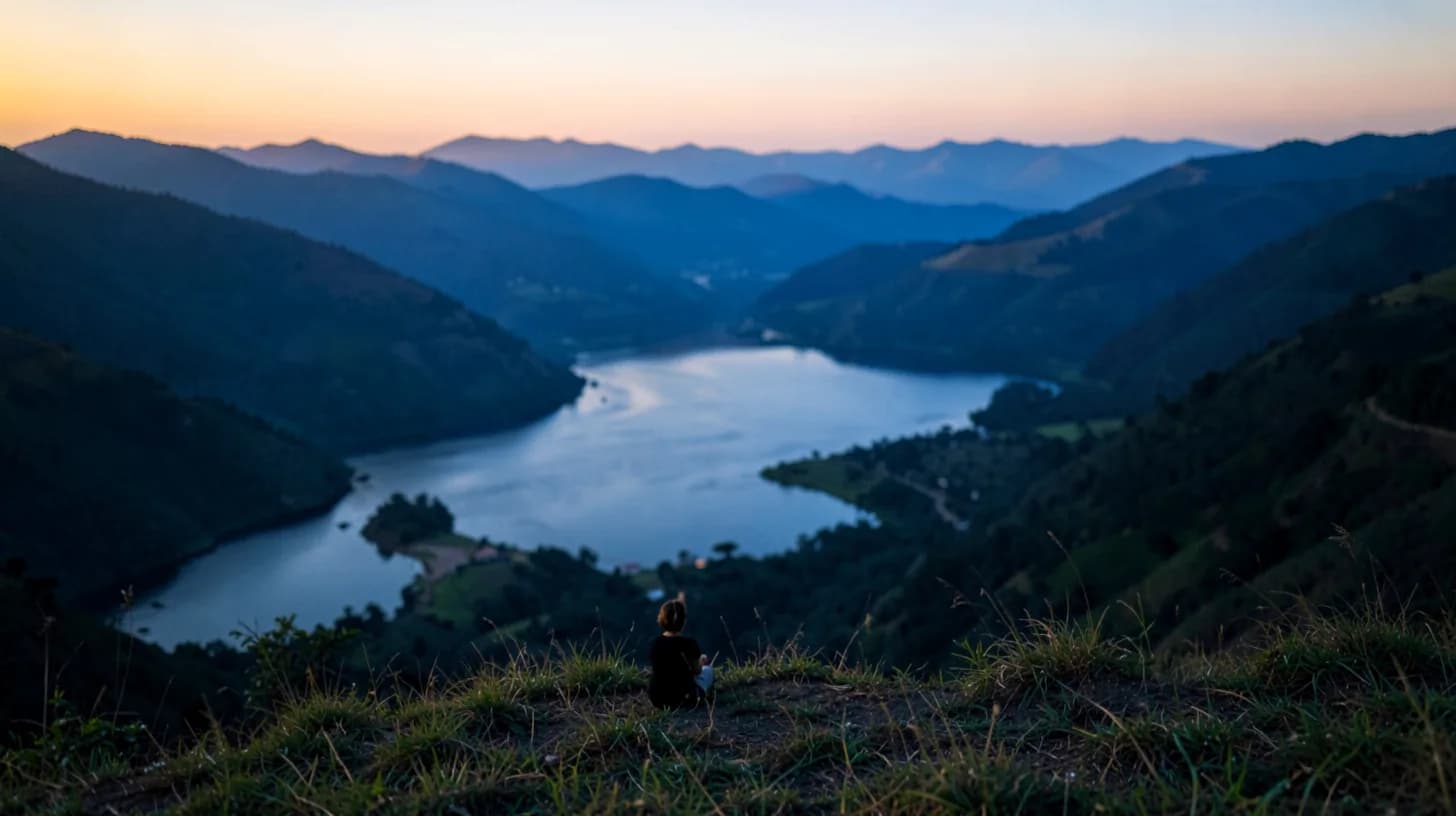
Not every woman who comes will be arriving from something joyful, and the plan takes that seriously. Stays of seven to twenty-eight days are being designed with space that is not programmed — walking paths through the land, quiet places to sit above the valley, mornings where nothing is required of you — alongside the training. There will be no obligation to explain to anyone why you are there. The company of other women who also do not need to explain themselves is, for many people, the most useful thing a place like this can offer.
You can follow how the site is taking shape on the retreats page. Until then, if today is heavy: put your shoes on and go to the end of the street. It will not fix anything. It is still worth doing.
TransformationSafety, focus, sisterhood: what actually shifts when women train among women. A research-informed look at the psychology behind women-only spaces — and why they transform.
4 min read
 Transformation
Grand resolutions collapse; tiny daily gains compound. Discover the math and science behind the 1% philosophy, and how getting slightly better every day transforms everything.
5 min read
 Transformation
Forget the 5 a.m. miracle checklist. Here is how busy women build morning rituals that survive real life — small, flexible, kind, and powerful enough to change your whole day.
5 min read