 Transformation
Why Women-Only Training Spaces Change Everything
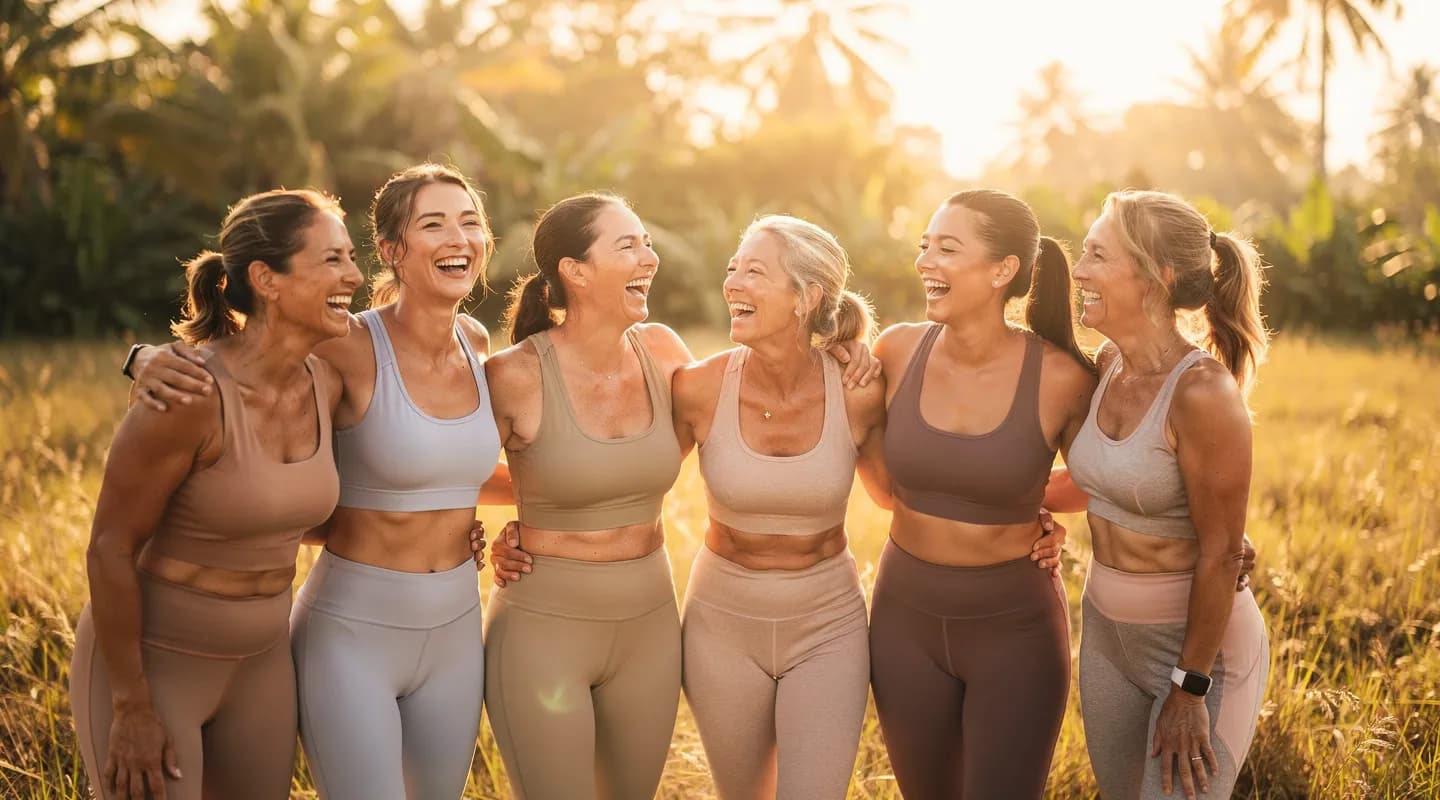
Safety, focus, sisterhood: what actually shifts when women train among women. A research-informed look at the psychology behind women-only spaces — and why they transform.
4 min read

Transformation
Phoenix Initiative4 min read
Ask a woman six months into serious strength training what has changed and the answer is almost never the one she expected. She will mention the mirror last, or not at all. What comes first is stranger and much more interesting: that she said no to something at work without rehearsing it for three days. That she carried the suitcase up the stairs without the little internal calculation. That an argument at home did not knock her sideways for a week.
None of this is mystical. It is the fairly ordinary consequence of practising something difficult on a schedule, in a setting where the difficulty is calibrated and the feedback is honest. A barbell is one of the few things in adult life that tells you the exact truth immediately, without politics. Spend enough time in that relationship and it changes how you handle the rest.
Body composition is the slowest, least controllable and most publicised outcome of training. It is also the one most affected by things you did not choose: genetics, age, sleep, medication, the years you spent dieting. Making it your primary measure means handing your sense of progress to the least reliable variable in the system.
Meanwhile, the fast, controllable, life-altering outcomes go unmeasured because nobody photographs them. That is the trade the fitness industry has quietly made on your behalf, and it is worth declining.
Try the substitution for a month and see what happens. Instead of a photograph, keep a short note of things you did that you would not have attempted in January: a hill you walked up without stopping, a box you moved alone, a conversation you had standing up. It is a strange list to keep and an unusually convincing one to reread, precisely because none of it can be explained away by lighting or a good angle.
There is also the plain physical dividend, and it deserves more respect than it gets. Lifting your own suitcase into the overhead locker. Carrying a sleeping child from the car. Getting off the floor without using your hands — a small test with a stubborn habit of predicting how the next decades go.
Grip strength is a good example of how unglamorous and how important this is. In large international cohort studies, including the long-running PURE study across dozens of countries, grip strength turned out to be a surprisingly strong predictor of general health outcomes. Nobody trains for a strong handshake. It is a proxy for a body that has been asked to do things.
Honesty matters here, because the opposite claim is everywhere. Strength training will not resolve grief, repair a relationship, or make an unfair workload fair. It does not cure anxiety or depression, and if you are struggling with either, that is a conversation for a doctor or a psychologist alongside — not instead of — whatever you do in a gym.
What it does is more modest and more durable. It gives you one domain where effort and outcome are reliably connected, at a time when many other domains do not offer that. On weeks when everything else is unclear, having one thing that answers when you ask it is not a small provision.
Phoenix Oasis is a women-only sports and transformation retreat being built on thirty hectares in Rivera, in the department of Huila, Colombia. It will open on 30 June 2028, with the first stays from July 2028 and one hundred founding places.
The programme is being designed around exactly this idea: that the point of the training is what it leaves behind. Stays of seven to twenty-eight days are planned to combine real strength work with recovery, food and time outdoors, and to end with something specific and portable — a week that fits the life you actually return to, rather than a fortnight of intensity that cannot survive contact with a Monday.
You can follow how the stays are taking shape on the retreats page. In the meantime, keep an eye on the returns nobody photographs. They are the ones you get to keep.
TransformationSafety, focus, sisterhood: what actually shifts when women train among women. A research-informed look at the psychology behind women-only spaces — and why they transform.
4 min read
 Transformation
Grand resolutions collapse; tiny daily gains compound. Discover the math and science behind the 1% philosophy, and how getting slightly better every day transforms everything.
5 min read
 Transformation
Forget the 5 a.m. miracle checklist. Here is how busy women build morning rituals that survive real life — small, flexible, kind, and powerful enough to change your whole day.
5 min read