 Transformation
Why Women-Only Training Spaces Change Everything
Safety, focus, sisterhood: what actually shifts when women train among women. A research-informed look at the psychology behind women-only spaces — and why they transform.
4 min read

Transformation
Phoenix Initiative5 min read
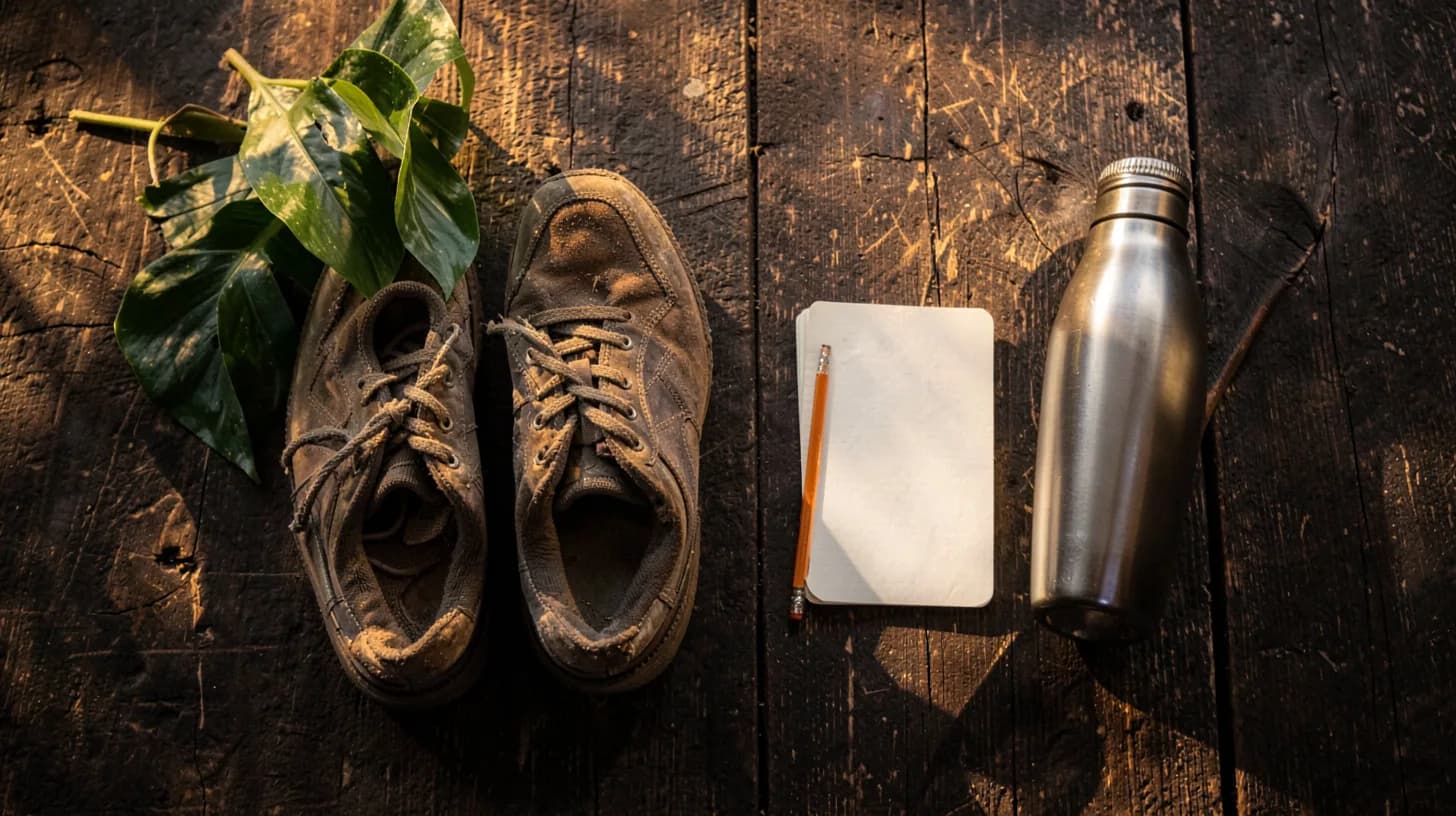
The first three weeks are rarely the problem. Something has happened — a birthday, a photograph, a doctor's remark, a January — and the wanting is loud enough to get you out of the door. Then, usually without announcement, the volume drops. The alarm goes off and there is no voice inside saying yes. There is only a flat, reasonable silence, and the very sensible observation that today would be a fine day to start tomorrow.
Most women read that silence as a verdict on their character. It is not. It is the entirely predictable behaviour of motivation, which is an emotional state and therefore subject to sleep, hormones, workload, weather and whether someone was unkind to you at 4 p.m. Expecting it to be present on demand is like expecting to be in a good mood on schedule. The women who train for decades are not the ones who feel like it more often. They are the ones who arranged their lives so that feeling like it stopped being the deciding vote.
Weather is what you get on a given Tuesday. Climate is what you get on average across a year, and it is the only thing worth planning around. A system is simply a set of decisions you make once, when you are clear-headed, so that a tired version of you does not have to make them again at six in the morning.
The most useful shift in framing is this: stop asking how do I get motivated and start asking what would have to be true for this to happen even when I don't want it to. That is an engineering question, and engineering questions have answers.
None of these require you to want anything. That is the entire point.
If you take only one idea from this article, take this one. The greatest threat to a training practice is not a bad session; it is a missed week that becomes a missed month. The minimum session exists to stop that cascade.
Its rules are simple. It must be short enough that you cannot credibly claim you have no time. It must require no special conditions — no good mood, no clean kit, no company. And it must be allowed to be genuinely unimpressive. Ten minutes of easy movement on a day you had planned an hour is not a failed session. It is a maintained system, which is worth far more.
Over a year, the woman who does eight full sessions and twelve minimums a month will be far ahead of the woman who does twelve perfect sessions in March and nothing until September. This is not a moral argument. It is arithmetic.
Most plans are written on a Sunday evening by an optimist. Write yours for the worst realistic week instead: the week with the deadline, the sick child, the four hours of sleep. If the plan survives that week, it will survive all the others. If it only works when everything else cooperates, it is not a plan — it is a wish with a schedule attached.
It also helps to know that the timeline is longer than the internet suggests. In one often-cited study from University College London, participants building a new daily habit took a median of around sixty-six days to reach automaticity, with individuals ranging from about eighteen days to well over two hundred. Two months of feeling like you are pushing is not evidence that it is not working. It may simply be what the middle looks like.
And one honest note: a persistent, heavy absence of motivation that spreads into the rest of your life — work, food, people, pleasure — is worth raising with a doctor rather than solving with a better calendar.
Phoenix Oasis is a women-only sports and transformation retreat in development on thirty hectares in Rivera, in the department of Huila, Colombia. It will open on 30 June 2028, with the first stays from July 2028, and one hundred founding places.
Part of what a retreat can do is lend you a system for a while. The plan for stays of seven to twenty-eight days is a week with its own architecture — training, meals, rest and sleep already arranged, so that no energy is spent deciding — and, crucially, time given to designing the version you will take home. A fortnight in a valley in Colombia does not itself create a habit. What it can do is show you what a well-built week feels like from the inside, which is much harder to invent from scratch on a wet Tuesday.
You can follow how the programme is taking shape on the retreats page. Until then, pick your slot, write your minimum, and let motivation come and go as it likes.
TransformationSafety, focus, sisterhood: what actually shifts when women train among women. A research-informed look at the psychology behind women-only spaces — and why they transform.
4 min read
 Transformation
Grand resolutions collapse; tiny daily gains compound. Discover the math and science behind the 1% philosophy, and how getting slightly better every day transforms everything.
5 min read
 Transformation
Forget the 5 a.m. miracle checklist. Here is how busy women build morning rituals that survive real life — small, flexible, kind, and powerful enough to change your whole day.
5 min read