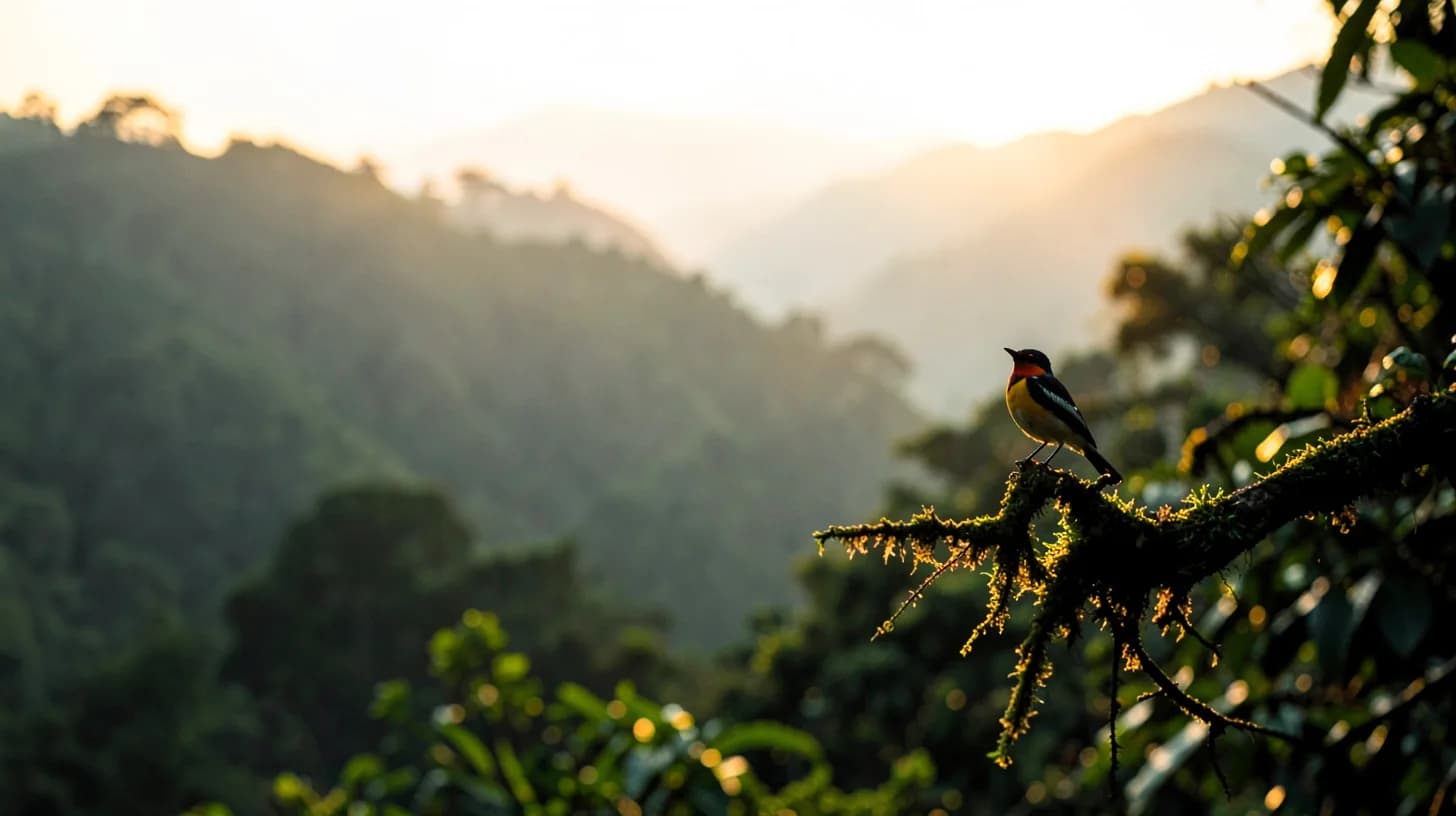
The first thing that happens in Huila is not the light. It is the sound.
Around half past five, before the ridge line has any colour in it, something in the trees starts up — a rising two-note whistle, then a harsh cackle from further down the slope, then a liquid gurgle that sounds mechanical rather than animal. Within ten minutes it is a wall of noise. By seven it is largely over, and the day has begun.
That dawn chorus is the single most accessible piece of natural history in Colombia, and you do not need binoculars, expertise or a guide to be inside it. You need to be awake.
Why Colombia has more birds than anywhere else
Colombia holds the highest recorded bird diversity of any country on earth — more than 1,900 species, from a land area smaller than Argentina's.
The reason is structural. Three Andean ranges run through the country, each with its own gradient from lowland forest to páramo, separated by deep valleys that isolate populations from one another. Add Amazon, Orinoco, Caribbean, Pacific and dry inter-Andean valleys, and you get an extraordinary number of distinct habitats packed into one territory. Colombia has also repeatedly topped the global single-day bird count organised through eBird, an event in which thousands of observers worldwide record what they see in twenty-four hours.
Huila sits in the middle of that structure, with the upper Magdalena valley on the floor and two cordilleras rising on either side.
Colombia's first national park, and a bird that echolocates
In the far south of the department, in the municipality of Acevedo, is Cueva de los Guácharos, declared in 1960 and therefore the oldest national natural park in Colombia.
It is named after the guácharo, the oilbird (Steatornis caripensis) — one of the strangest birds alive. It is nocturnal, it eats fruit, it roosts in colonies deep inside caves, and it navigates in total darkness using audible clicking echolocation, a capacity otherwise associated with bats. At dusk the colony leaves the cave in a stream of shrieking birds and disperses into the forest to feed.
The same cloud forest holds the Andean cock-of-the-rock, the flame-orange bird whose males gather at communal display grounds and shout at each other. Between the two, the park would justify the trip on its own.
Condors on the western edge
Puracé National Natural Park, straddling the border between Huila and Cauca, is one of the better places in Colombia to see the Andean condor — a bird with a wingspan over three metres that has been the subject of a long-running national conservation and reintroduction effort.
Seeing one is not guaranteed and never will be. Condors range enormously and are still few. But the páramo landscape at that altitude is worth the climb regardless, and the sight of a bird that size using a thermal is not a thing you argue with afterwards.
What you will actually hear from a veranda
Most of your birding in Huila will not happen in a national park. It will happen with a coffee, sitting still, in the first hour of daylight. These are the voices you will learn first:
- Great kiskadee (bichofué) — the harsh three-note shout that gives it its Spanish name, which is simply what it sounds like.
- Rufous-collared sparrow (copetón) — a small crested sparrow with a sweet, slightly mournful whistle, present from sea level to páramo.
- Tropical kingbird (sirirí) — a high, thin, insistent trill from a wire or bare branch.
- Blue-gray tanager (azulejo) — pale blue, everywhere, in every garden.
- Crested oropendola — the liquid, tumbling gurgle, from a tree hung with woven pendulous nests.
- Colombian chachalaca — a Magdalena valley endemic and the loudest thing in the pre-dawn, a rhythmic raucous chorus that sounds like an argument.
- Common pauraque — at night, a rising whistle from the road ahead of your headlights.
If you want a target species, the Tolima dove is the one to ask about: a threatened endemic of the upper Magdalena slopes, found in Tolima and Huila and almost nowhere else.
Two hours north, an entirely different list
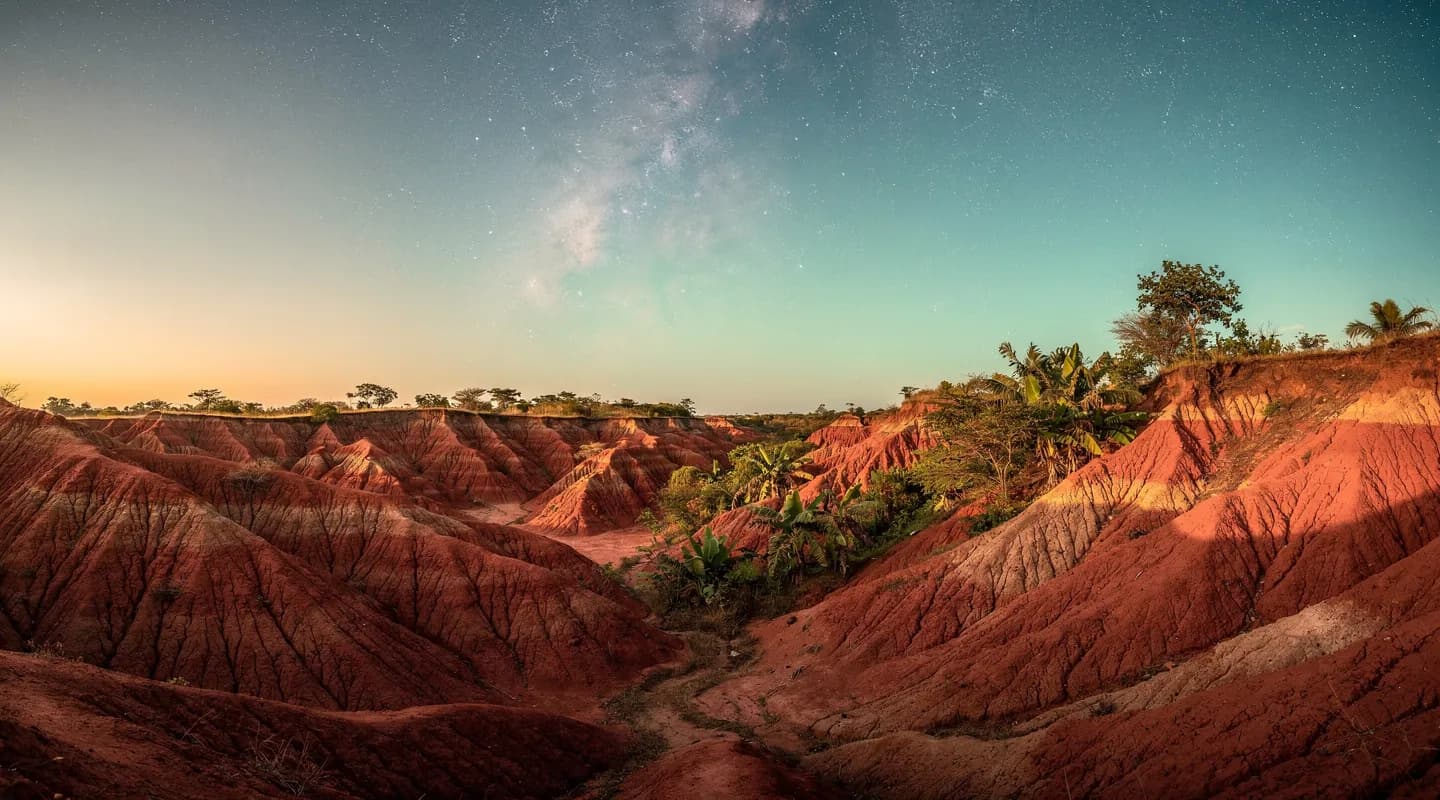
The Tatacoa, in the north of the department, is tropical dry forest, and dry forest holds a different community altogether: vermilion flycatchers burning red on fence posts, burrowing owls standing at the mouths of holes in open ground, and specialists adapted to thorn scrub that you will not see in the coffee hills.
Being able to reach two such different bird communities in one day, within a single department, is unusual anywhere in the world.
Doing it well
- Go at dawn. Activity collapses by mid-morning and only partly returns at dusk.
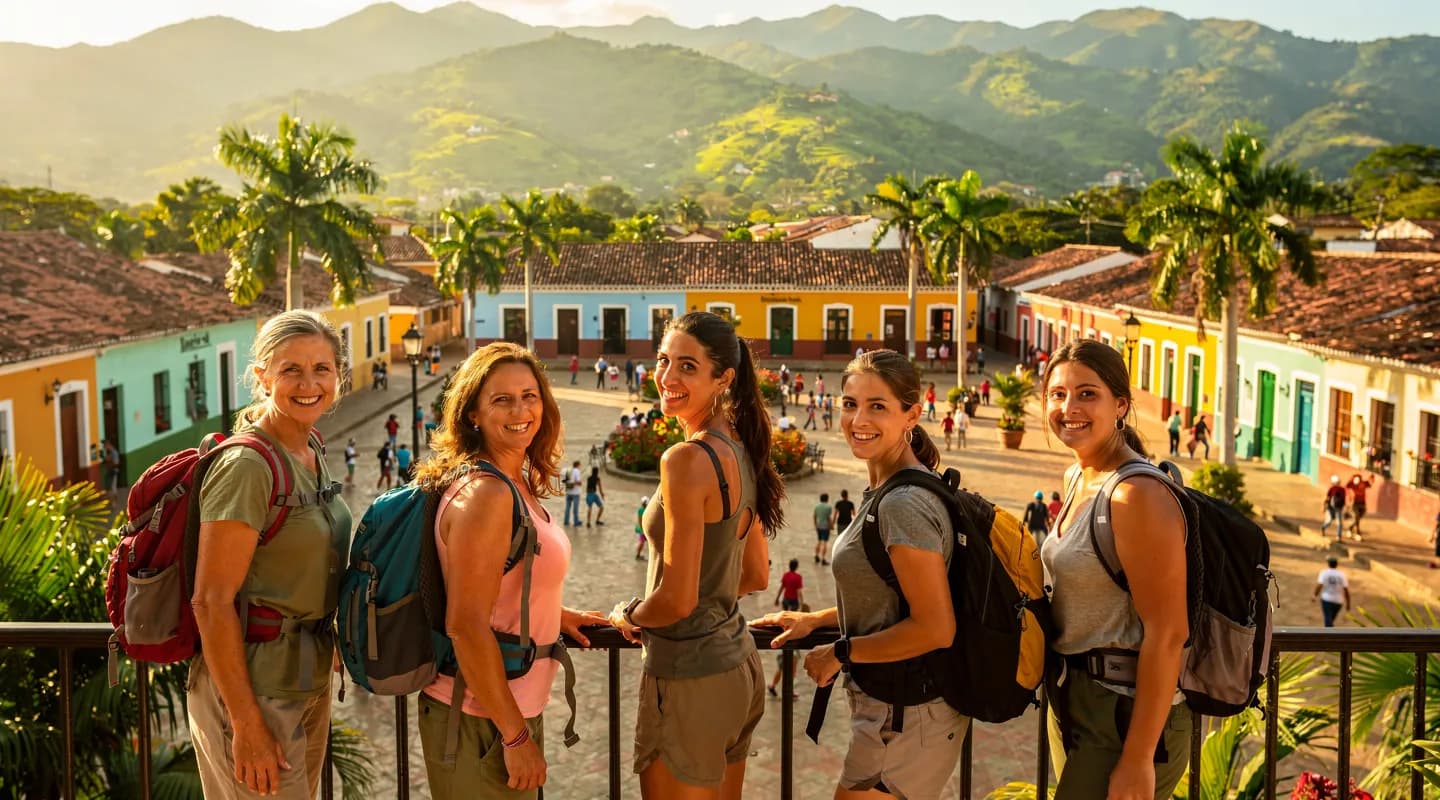
- Use a local guide. Colombia's birding-guide sector has grown fast, it employs people in rural areas directly, and a guide will find in ten minutes what you would miss in three days.
- Download Merlin and eBird before you fly. Sound identification works remarkably well here, and your records contribute to real datasets.
- Learn ten calls, not a hundred species. Ears beat eyes in dense forest, always.
- Stay still. The most common mistake is walking.
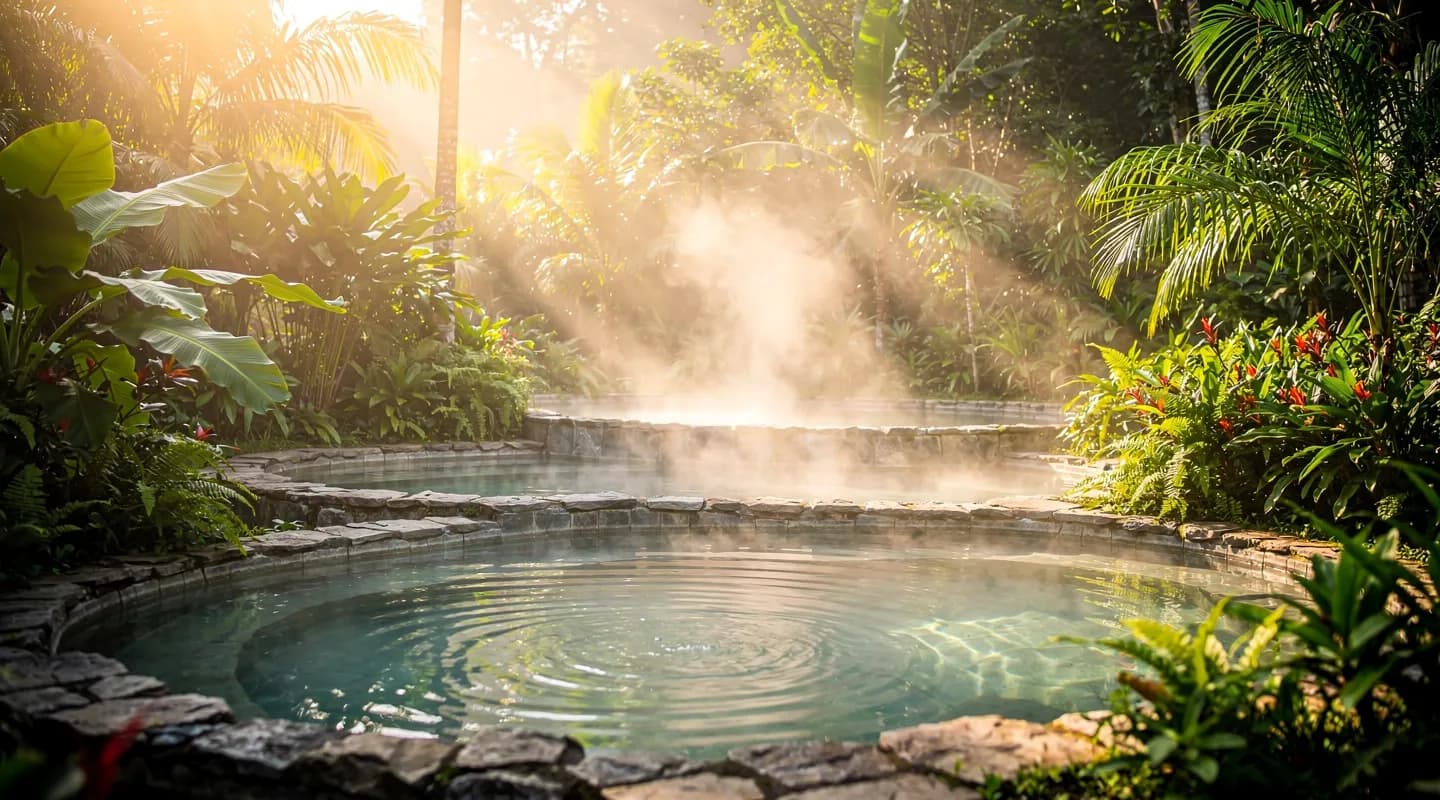
Phoenix Oasis is being built on thirty hectares in Rivera, Huila, and will open on 30 June 2028. The site sits in the thermal hills between the Magdalena valley floor and the eastern slopes — exactly the kind of transitional ground where forest, water and open country meet, and where bird activity concentrates.
Guests will not need to organise anything to encounter it. They will only have to be outside at half past five, with a coffee, before the noise starts.

 Colombia & Surroundings