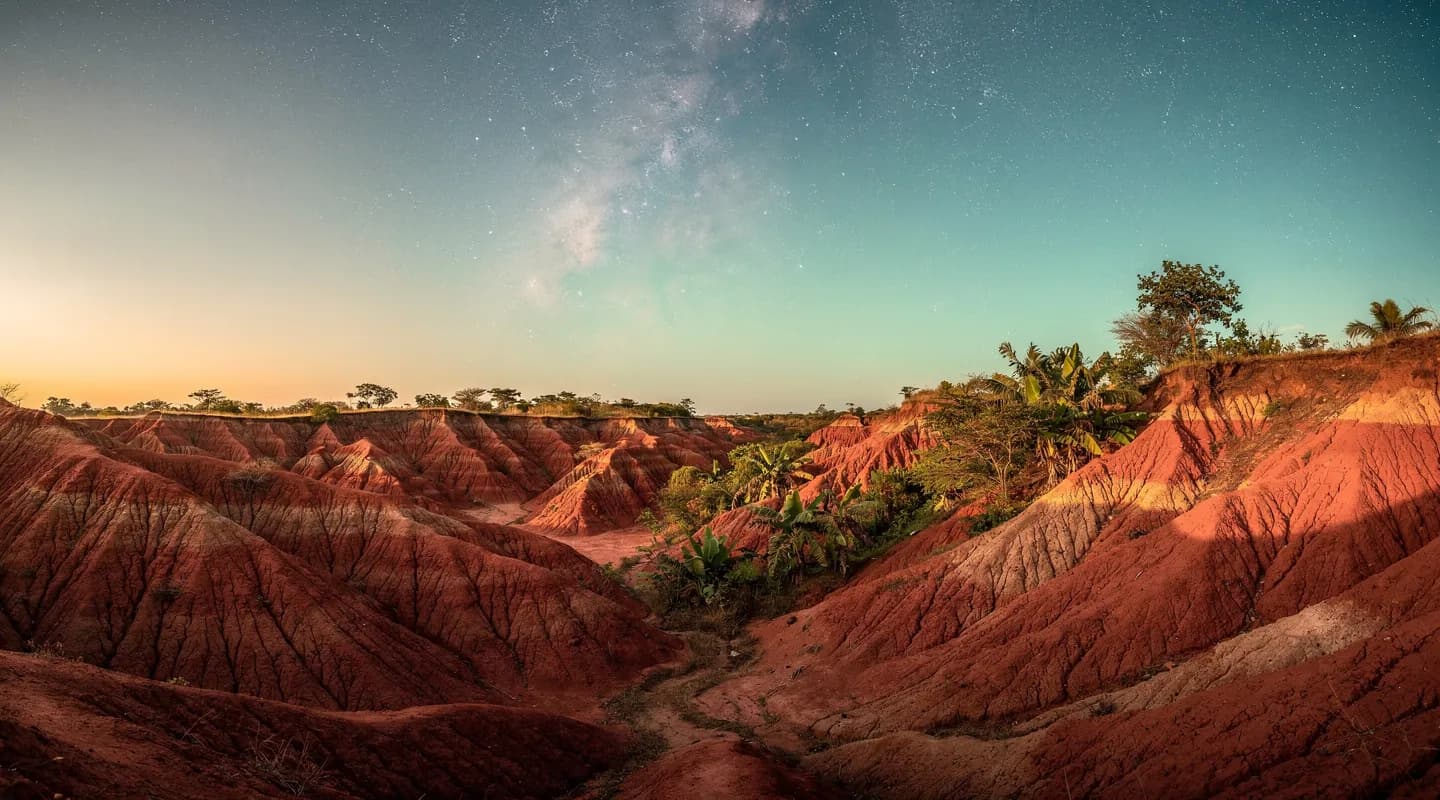
Some landscapes make you feel small in the best possible way. The Tatacoa desert, in the north of Colombia's Huila department, is one of them. By day, it's a sculpture garden the size of a city: 330 square kilometers of eroded red canyons and ash-grey gullies, cactus forests, and silence so complete you can hear your own heartbeat. By night, it becomes something else entirely — one of the best stargazing sites in Colombia, where the Milky Way pours across the sky like spilled sugar.
Here's everything you need to plan a visit that does it justice.
First, a secret: it isn't actually a desert
Tatacoa is technically a tropical dry forest that has been eroding for millions of years — the skeleton of a much older, wetter landscape. Geologists call it a desierto by courtesy; locals call it the Valley of Sorrows, the name Spanish conquistador Jiménez de Quesada gave it in 1538. What matters for you: it's hot (often above 35°C at midday), strikingly beautiful, and split into two distinct zones.
- Cusco, the red zone, is the postcard: ochre labyrinths of wind-carved columns and narrow paths that glow like embers at sunset.
- Los Hoyos, the grey zone, feels like walking on the moon — pale, rippling badlands with natural pools hidden between the folds.
Both have marked walking loops of one to three hours. Do Cusco for sunrise or sunset, Los Hoyos in the softer morning light, and hide from the midday sun like everyone sensible does.
Why the stargazing is genuinely world-class
Three things make Tatacoa a magnet for astronomers. It sits near the equator, so you can see both northern and southern hemisphere constellations from one spot — the Southern Cross and the Big Dipper in a single night. It's dry, with famously clear air and little cloud cover for much of the year. And it's dark: the nearest city, Neiva, is far enough away that light pollution stays low.
The area around the observatories hosts star talks most clear nights, where local astronomers walk you through the sky with laser pointers and telescopes. If you can, time your visit to a new moon — the difference is dramatic. During meteor showers, travelers spread blankets on the still-warm rock and simply look up for hours. It's the kind of night that recalibrates you.
Practical details that actually matter
- Getting there: Fly or bus to Neiva, then it's about 40 minutes to the town of Villavieja, the gateway to the desert. Regular colectivos and taxis make the trip; the last stretch into the desert is a short moto-taxi or car ride.
- When to go: The drier months — roughly December to February and July to September — offer the most reliable clear skies. Weekdays are far quieter than weekends.
- Where to sleep: Options range from simple posadas in Villavieja to rustic lodges and camping right in the desert. Sleeping under the stars, even once, is worth the basic comforts you trade for it.
- What to bring: Real sun protection (hat, high SPF, light long sleeves), at least two liters of water per person for walks, cash (card machines are rare), a headlamp with a red-light mode, and a light jacket — desert nights turn surprisingly cool.
- Respect the terrain: Stay on marked paths. The formations took millions of years to sculpt and a single shortcut leaves scars that last decades.
Small pleasures to build your day around
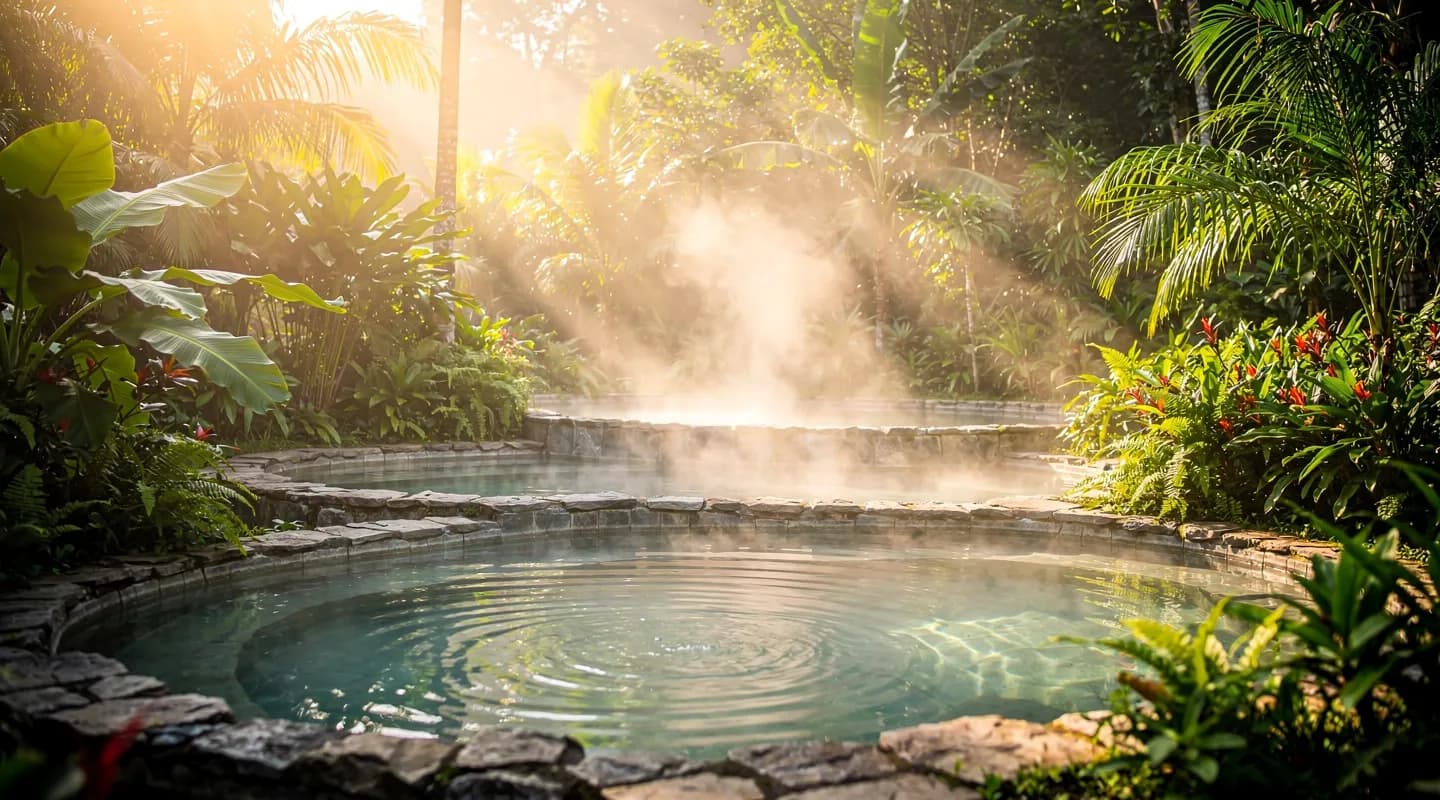
Between the hikes and the stars, Tatacoa rewards slowness. Swim in one of the improvised pools at Los Hoyos, where cool water in the middle of grey badlands feels frankly surreal. Try a goat-cheese arepa or roasted goat in Villavieja — the local specialty. Watch the sky change color from a hammock. Talk to the guides; many grew up here and read the desert the way sailors read the sea.
And give yourself one full night. Day-trippers see the canyons; overnighters see the point.
The desert as a mirror
There's a reason so many traditions send people into deserts to figure things out. Strip away noise, screens and schedules, and what's left is you, the rock and the sky. Many women come back from Tatacoa describing the same feeling: the sense of being tiny under all those stars and, at the same time, more solidly themselves than they'd felt in months.
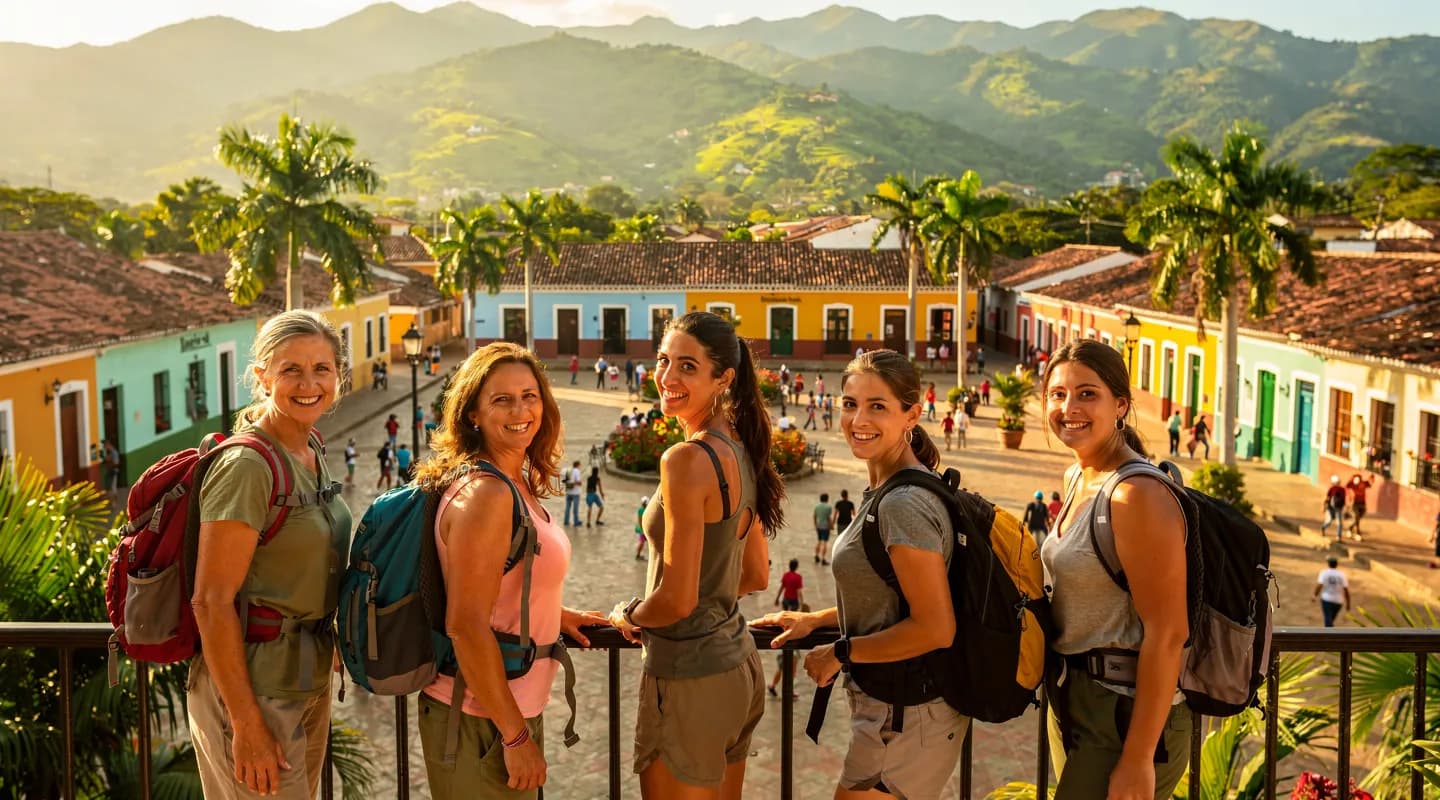
That feeling — perspective, clarity, a slightly braver version of you — is exactly what we're building for at Phoenix Oasis, our women-only sports and transformation retreat center under construction near Rivera, less than two hours from the desert. When we open on June 30, 2028, the Tatacoa's night sky will be part of the wider landscape our guests explore: proof, written in stars, that the world is bigger than whatever felt heavy last week.
Until then, the desert is already there, already open, already waiting.
Want your future adventure to start with a plan instead of a someday? Discover the retreat stays we're designing in the heart of Huila.

 Colombia & Surroundings