The first thing to unlearn about Huila is the word "season". At roughly two and a half degrees north of the equator, the sun rises around six and sets around six, every month of the year, and the average temperature in the valley barely moves. There is no summer here and no winter — though you will hear locals say verano and invierno, which in Colombia mean dry and wet, not hot and cold.
What changes is water. The upper Magdalena valley runs on a bimodal rainfall regime: two wetter stretches and two drier ones, repeating annually. Choosing when to come is not about temperature. It is about how much rain you are willing to walk through, how green you want the hills, and how many other people you are prepared to share the road with.
Here is the honest calendar.
The four stretches of the Huila year
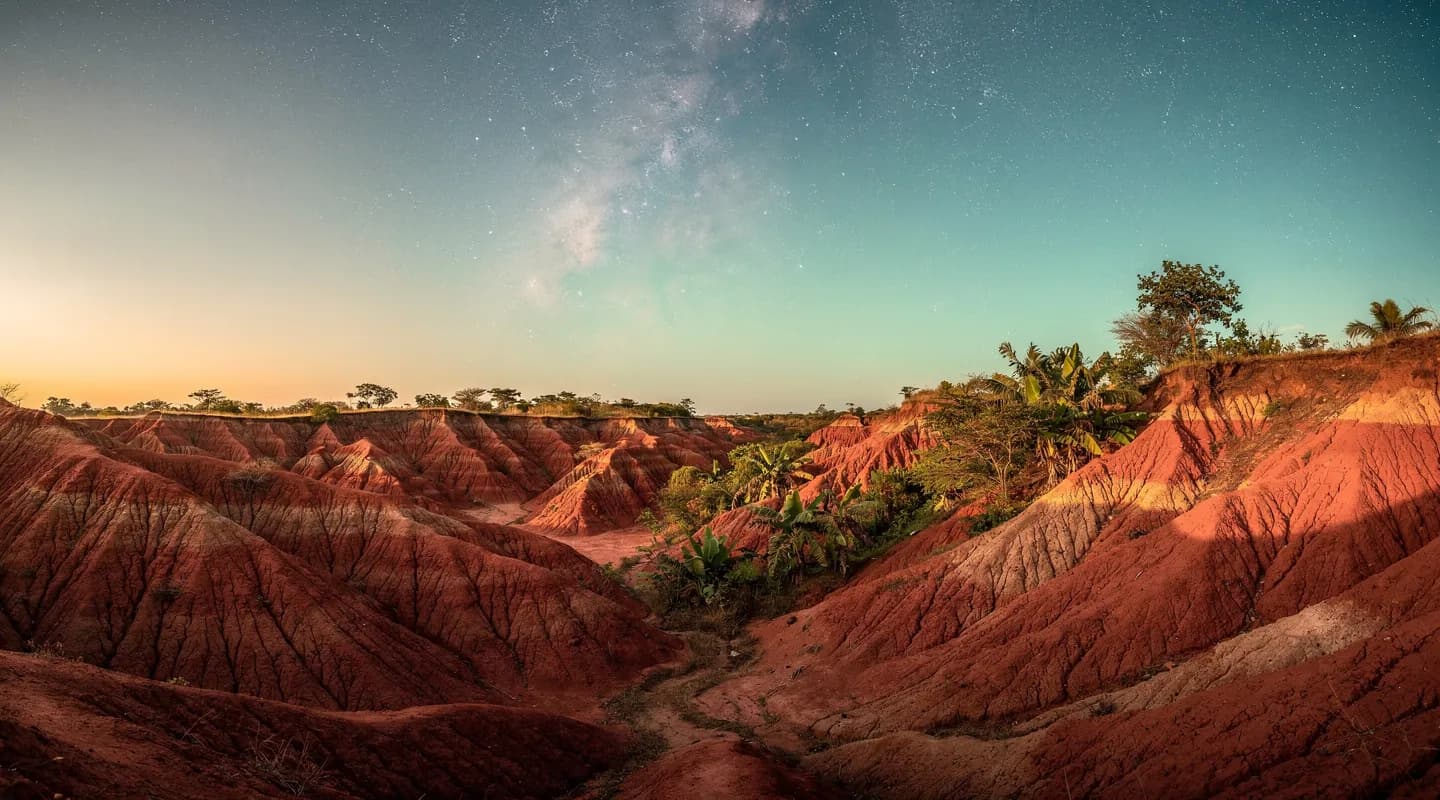
- Roughly December to February — drier. Clear, hot, dusty toward the end. Excellent for the Tatacoa drylands and long views; the hills lose some of their green by February.
- Roughly March to May — wet. The first rainy peak, and the main coffee harvest in southern Colombia. The landscape is at its most spectacular and the afternoons are the least reliable.
- Roughly June to September — drier, and the driest of all in July and August. Warm, bright, comparatively predictable. The best window for hiking, stargazing and anything that depends on a clear sky.
- Roughly October to December — the wettest. October and November regularly deliver the heaviest rainfall of the year in this department. Mountain roads can close after landslides, and river levels rise.
Averages, not promises. Colombian rainfall is strongly influenced by the El Niño–La Niña cycle: a La Niña year can be far wetter than the pattern above and an El Niño year hotter, drier and more prone to fire in the dry areas around the Tatacoa. Check a recent forecast rather than a climate chart.
Altitude decides more than the month
Huila is not one climate. It is a valley floor with mountains on both sides, and four hundred metres of elevation will change your day more than four weeks on the calendar.
Neiva, at about 442 metres, is genuinely hot: afternoons in the mid-thirties, most of the year. Rivera, at around 700 metres, is a few degrees kinder, which is a large part of why the town became a weekend destination in the first place. Continue south and you keep climbing — San Agustín, above 1,700 metres, needs a jacket after sunset — and if you go up into the cloud forest above the valley you will be reaching for a waterproof at 14°C in the middle of the afternoon.
Pack for all of it. A single day can include a hot valley morning, a cold ridge and a warm evening in mineral water.
What rain actually looks like here
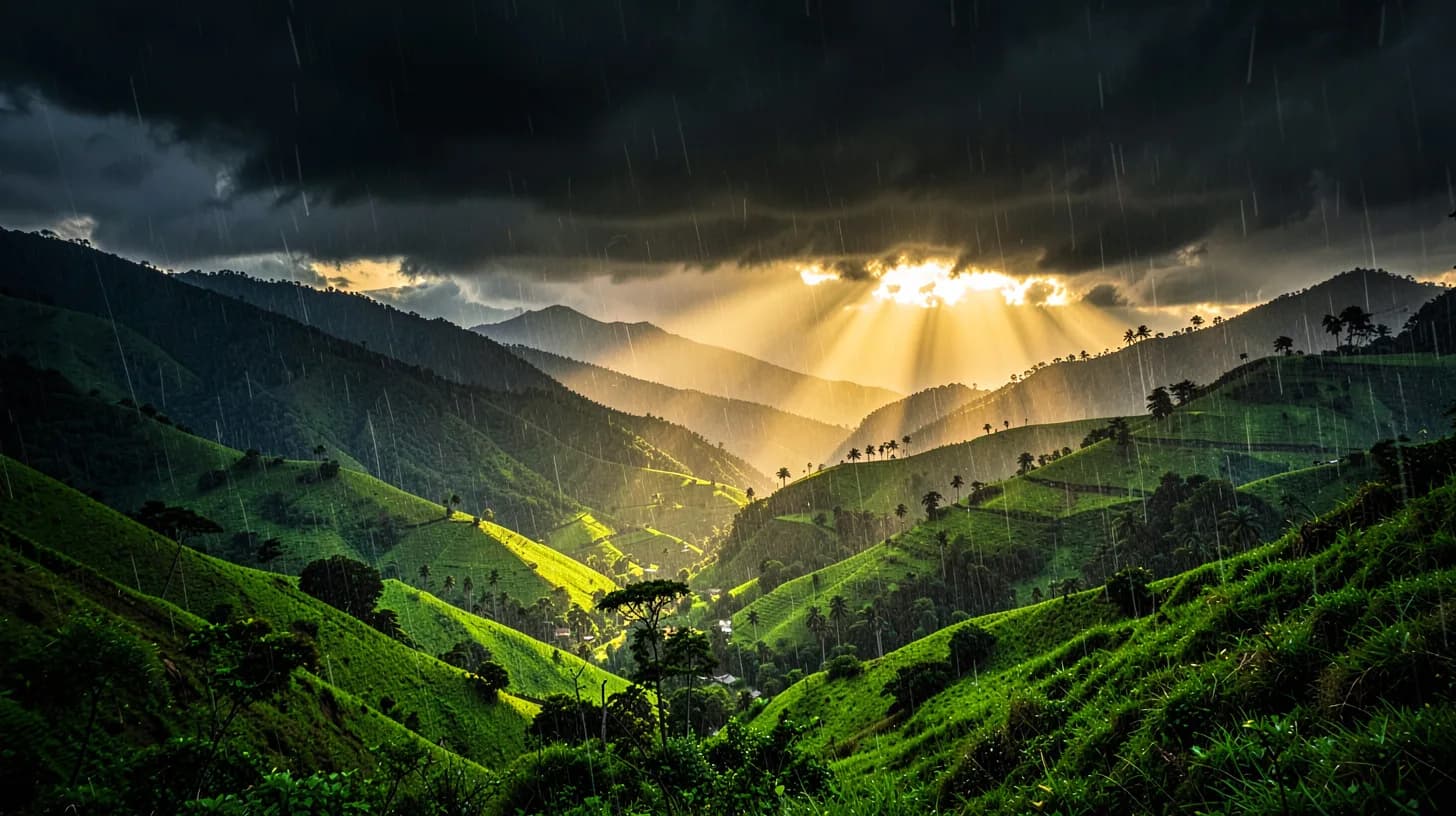
The wet season in the tropical Andes is not a British November. In this valley, wet-season days very often begin clear and beautiful, build cloud through the middle of the day, and release a heavy, dramatic downpour in the late afternoon or evening. Two hours later it stops. The air is washed, the light is extraordinary, and the frogs start.
The practical consequence is that a rainy month rarely ruins a trip; it reorganises it. Do your walking, riding and climbing in the morning. Keep the afternoon for water, food and doing nothing, which is exactly what the local rhythm does anyway.
Choose by what you actually want
- Clear night skies. June to August, in the Tatacoa drylands north of Neiva. Low humidity, minimal light pollution, an astronomical observatory on site. Nights remain warm.
- Maximum green. April to May, or the end of the October–November rains. Waterfalls run hardest at these times too.
- Coffee at full tilt. March to June for the main harvest of the south, when every finca is working from first light.
- Festivals. The last week of June, without contest. Neiva's Festival Folclórico y Reinado Nacional del Bambuco, built around the feasts of San Juan on 24 June and San Pedro on 29 June, is the biggest event in the departmental calendar, and the San Juanero Huilense is danced in every town.
- Quiet. Late January to early March, or September. The towns belong to the people who live in them.
When Colombians travel, and what it costs you
Colombia has one of the longest lists of public holidays in the world, and most of them fall on a Monday, creating the famous puente. Domestic travel concentrates in three windows: Holy Week; mid-June to mid-July, when school holidays begin; and mid-December to mid-January.
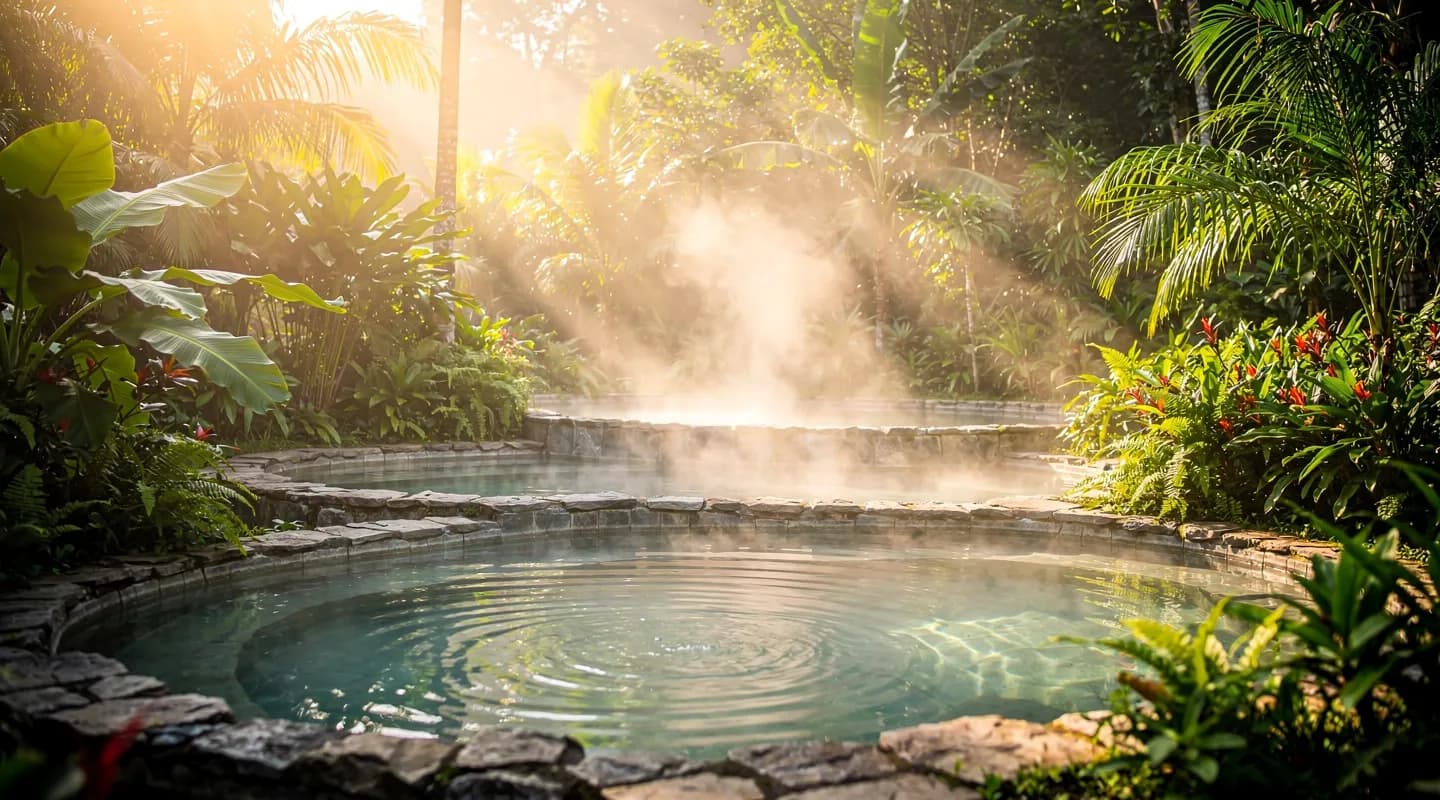
In those windows the thermal baths of Rivera fill with families, hotels raise prices and sell out, and the road out of Bogotá is at its worst. None of it is unpleasant — Colombian holiday crowds are cheerful and well fed — but it is not a quiet week either. If you want the region at its most relaxed, travel between the peaks and on weekdays.
Two details nobody tells you
Sun. The equatorial sun at 700 metres is far stronger than the thermometer suggests. Sunburn here happens on cloudy days, at eleven in the morning, to people who considered themselves careful.
Mud. In the wet months, any unpaved track becomes something else entirely. If your plans include a farm, a waterfall or a cloud forest, bring footwear you are willing to ruin, and add an hour to every estimate.
The date that is already in the calendar
Phoenix Oasis will open on 30 June 2028 on 30 hectares near Rivera, and that date sits neatly at the seam of the Huila year: the day after San Pedro, at the start of the drier, brighter stretch that runs through July and August. First departures are planned for July 2028.
Whatever drove the choice of date, it lands in the best-lit weeks of the calendar. The centre is still under construction; the valley, meanwhile, keeps its own schedule — two rains, two dry spells, and the same sunrise every morning of the year.
More on the region in the Journal, and on the future stays on the retreats page.

 Colombia & Surroundings