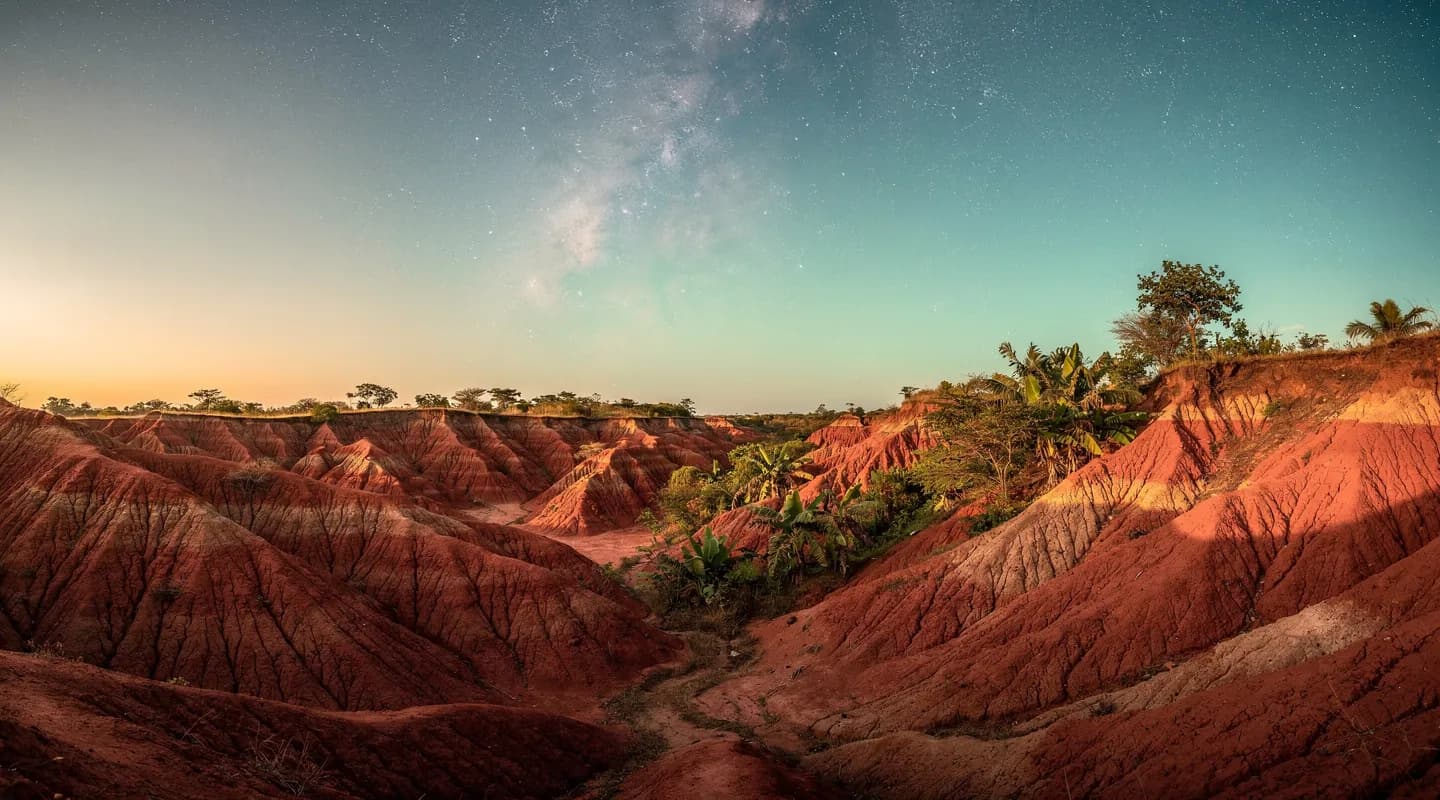
Rivera sits 24 kilometres south-east of Neiva, at about 700 metres above sea level, in the upper valley of the Magdalena River. There is no airport in Rivera, no train, and no passenger boat up the river. Every route to this small green town in Huila passes through one of two doors: the sky above Neiva, or the road out of Bogotá.
Both work. They are not equivalent, and most articles about Colombian travel are strangely vague about how long things actually take. What follows is the honest version, including the parts that are tedious.
One thing to settle first: almost everyone arriving from Europe or North America lands at El Dorado in Bogotá, at 2,640 metres. From there the journey is downhill in every sense — Neiva sits at 442 metres, Rivera at 700, and the air gets warm and thick again the moment you drop out of the savanna.
Option 1: fly Bogotá–Neiva
In the air: about 50 to 55 minutes. The distance is only around 230 kilometres. Benito Salas airport (code NVA) sits roughly 4 kilometres from the centre of Neiva, so the transfer at the other end is genuinely short.
Avianca operates the route daily, and Satena and Clic also serve Neiva; schedules cluster around early morning and late afternoon, which matters if you are connecting.
Door to door: realistically four to five hours. Add the drive to El Dorado (40 to 90 minutes from most of Bogotá, depending entirely on traffic), the recommended two hours before a domestic departure, the flight, and the 30 to 40 minutes from the airport to Rivera. If you are connecting from a long-haul flight, allow three hours in Bogotá: you will collect your bags, clear immigration and customs, and check in again. Confirm which terminal your domestic flight uses — El Dorado has a second terminal, the Puente Aéreo, a shuttle ride from the main one.
Option 2: the bus from Terminal Salitre
On paper: five and a half to six hours. In practice: six to eight. The route runs 310-odd kilometres south on Ruta 45, through Girardot, Espinal, Natagaima and Aipe. Departures from Bogotá's Terminal Salitre are frequent throughout the day, operated by Huila companies including Coomotor and Cootranshuila, and tickets typically cost somewhere between 55,000 and 75,000 pesos — roughly fifteen to twenty US dollars.
The variable is the first hour and a half. The corridor out of Bogotá towards Girardot is one of the most congested stretches of road in the country on Friday evenings, Sunday afternoons and every long weekend. When it clogs, it adds two hours and there is no way around it.
The night bus leaves late in the evening and reaches Neiva around dawn. It saves you a hotel night and a day of daylight. It also costs you a night of real sleep, and arriving at 5 a.m. in a town you do not know is a mixed pleasure.
Option 3: driving yourself
Roughly 330 kilometres and six to seven hours in good conditions, on the same Ruta 45, with several toll booths along the way. The road is mostly a well-surfaced two-lane highway shared with slow, heavy trucks, and overtaking is the whole skill of it. Colombian drivers do this route constantly and competently; it is not a beginner's road for a jet-lagged visitor.
Two honest cautions: avoid driving it after dark, and budget for the descent from the savanna — the temperature climbs from around 14°C in Bogotá to the low thirties in the valley, and so does the tiredness.
The last 24 kilometres
From Neiva to Rivera is 25 to 35 minutes by road, south-east along the main highway towards Campoalegre and Garzón.
- Taxi from Neiva airport or bus terminal. The simplest option, particularly with luggage. Agree the fare before you get in.
- Shared cars and intermunicipal buses. They leave from Neiva's terminal all day. Any service heading south towards Campoalegre, Garzón or Pitalito passes the Rivera turn-off; tell the driver where you are getting out.
- Private transfer. Worth arranging in advance for late arrivals, and standard practice for anyone travelling alone at night.
Coming from somewhere other than Bogotá
- From Cali, the road crosses the Central Cordillera via La Plata — spectacular, mountainous, and slow. Count seven to nine hours, weather permitting. Many travellers fly Cali–Bogotá–Neiva instead, which is faster but feels absurd on a map.
- From Medellín, flying via Bogotá is the practical answer; the road is very long.
- From Ecuador or the far south of Huila, Pitalito's Contador airport is served by Satena. It is convenient if you are combining the trip with the San Agustín archaeological park, but it lies three and a half to four hours by road from Rivera.
The honest recommendation
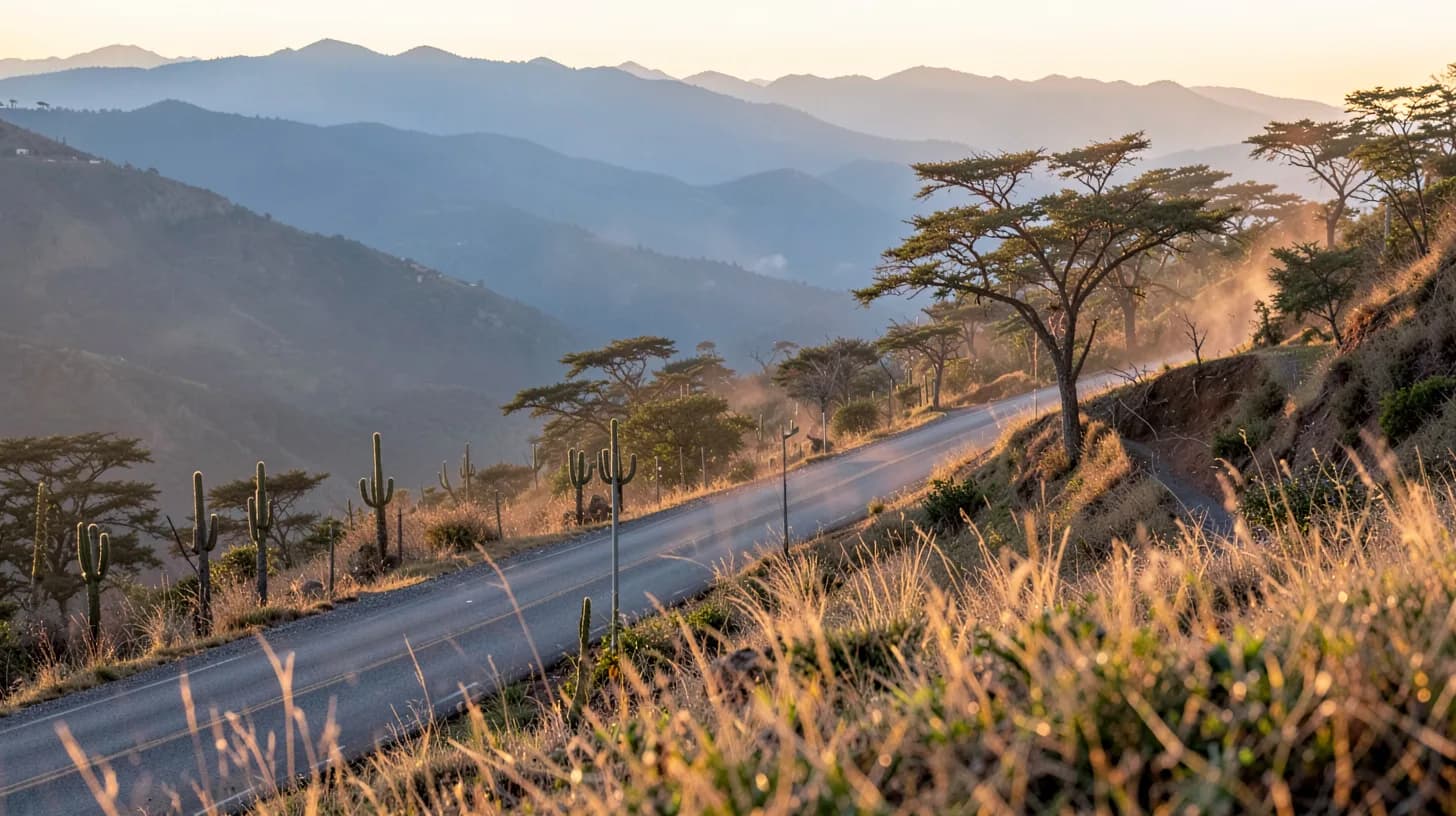
If your time in Colombia is short, fly to Neiva and accept the cost: you convert a full travel day into a morning. If you have a day to spend and want to see the country change — savanna, then dry canyon, then the green shoulder of the valley — take a daytime bus and sit on the left-hand side. The night bus is for people who have done the route before.
Phoenix Oasis will open on 30 June 2028 on 30 hectares near Rivera, and arrival logistics are part of what the project is designing now rather than something guests will be left to solve alone. Details of how transfers will work are being finalised as the opening approaches; what will not change is the geography, so the routes described here are the ones any future traveller to this valley will be choosing between.
More on the region in the Journal, and on the future stays themselves on the retreats page.

 Colombia & Surroundings