 Foundation
Why the Social Work Is a Foundation, Not a CSR Department
A separate legal entity is slower, costlier and harder to control. That is the argument for it — and the reasons a foundation can fail just as easily.
5 min read

Foundation
Phoenix Initiative4 min read
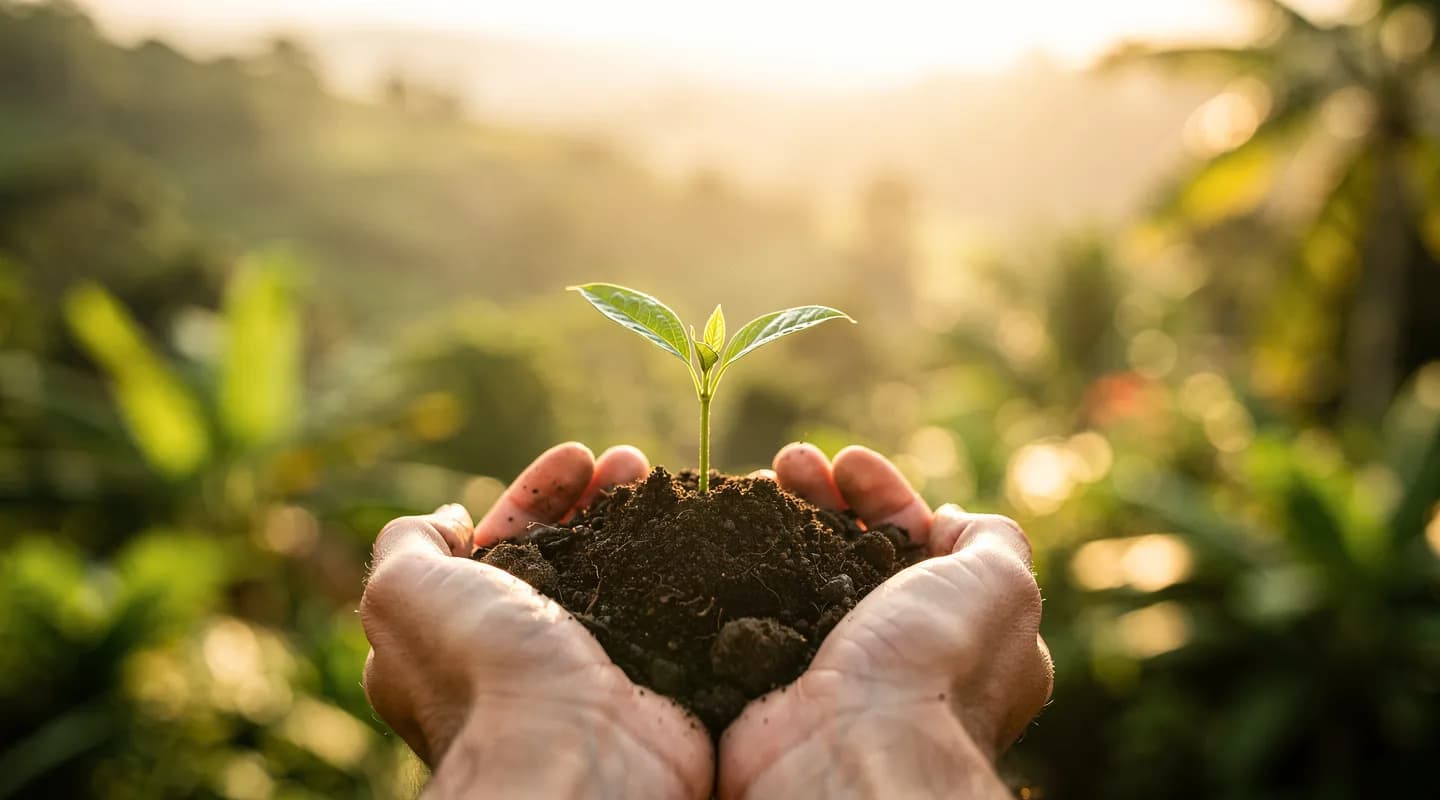
Before it is a retreat, it is a piece of the Earth. The land where Phoenix Oasis is being built, in Rivera, Huila, spans 30 hectares — with six waterfalls, three freshwater springs and one thermal spring threading through it. You could look at a landscape like that and see a backdrop: scenery for future sunrise workouts and sunset meditations. The Phoenix project chooses to see something else — a living system that was here long before the first foundation stone, and one that deserves to be healthier when we are done than when we arrived. That intention has a name, and it is one of the three pillars of the Phoenix Initiative Colombia foundation: land regeneration.
Sustainability, at its core, means doing no further harm — taking no more than the land can give back. It is a decent floor, but it is a low ceiling. Regeneration aims higher: it asks how a place can be actively restored, so that soil grows richer, water runs cleaner and ecosystems grow more diverse over time, not merely no worse.
For a project like Phoenix, the difference is philosophical before it is technical. A sustainable mindset asks: how do we minimize our footprint? A regenerative mindset asks: what does this land need, and how can our presence help provide it? It is, if you think about it, the 1% philosophy applied to a landscape — small, consistent acts of care that compound over years into a visibly healthier place. Land does not transform overnight. Neither do we. That is rather the point.
When your land carries six waterfalls, three freshwater springs and a thermal spring, water is not a feature — it is the main character. Everything alive on those 30 hectares depends on it, and so will everyone downstream.
Stewarding water well is one of the oldest disciplines of land care, and its principles are widely shared: protect the sources and the vegetation around them, keep watercourses clean and shaded, disturb natural drainage as little as possible, and treat every drop that passes through your land as borrowed rather than owned. For the Phoenix project, water stewardship is intended to be a first-order design constraint — the kind of consideration that shapes where paths go and how spaces are laid out, rather than an afterthought once the concrete is poured.
The most visible expression of the project's land ethic is in what the buildings are planned to be made of. The accommodation follows a single eco bungalow model — Le Bungalow Phoenix — designed in wood, guadua and volcanic stone.
Guadua, the giant bamboo of the Andes, is one of the most celebrated building materials in Colombian tradition: fast-growing, renewable, strong and light on the land that produces it. Wood and volcanic stone share that same logic of proximity and honesty — materials the landscape recognizes. Building this way is a form of respect, but it is also a bet on beauty: structures made from the land's own vocabulary tend to age into a place rather than against it.
Beyond water and buildings, regeneration lives in the slowest layer of all: soil and vegetation. The playbook of land regeneration is well established even when every site applies it differently — protect existing trees and native plants, rebuild organic matter in the soil, favor species that belong to the ecosystem, and let natural processes do the heavy lifting wherever possible.
The honest truth about this work is that it runs on patience. Soil rebuilds in seasons and years, not weeks. A regeneration commitment is therefore a commitment to time itself — to still be doing the quiet, uncelebrated work years after the opening photos have been taken. That is why it sits inside the foundation, alongside education and sport for social impact: pillars meant to outlast any single milestone, including opening day.
Here is the beautiful consequence of all this, for you. When the Oasis opens on June 30, 2028, the women who come to Rivera will not be visiting a landscaped resort; they will be guests of a working landscape. The programs are designed to bring you into it gradually — hikes that earn their views, recovery sessions within hearing of falling water, a sunset spiritual zone for the hour when the land does its best talking.
A place that is being cared for teaches care, without saying a word. You arrive planning to work on yourself, and somewhere between the springs and the trails it becomes obvious that you and the land are on the same program: restore, strengthen, regenerate — 1% at a time.
The stays being designed for that landscape range from 7 to 28 days, with departures on the 1st and 15th of each month. If you want to see how a regenerating land and a transforming woman are meant to meet, have a look — explore the planned stays.
FoundationA separate legal entity is slower, costlier and harder to control. That is the argument for it — and the reasons a foundation can fail just as easily.
5 min read
 Foundation
Most programmes lose single mothers at the timetable, not at the door. The Foundation intends to design around care work from the first sketch.
5 min read
 Foundation
Not a tournament, not a launch event. A design for recurring open days in Rivera — and an honest list of the ways this kind of thing usually fails.
5 min read