 Foundation
Why the Social Work Is a Foundation, Not a CSR Department
A separate legal entity is slower, costlier and harder to control. That is the argument for it — and the reasons a foundation can fail just as easily.
5 min read

Foundation
Phoenix Initiative5 min read
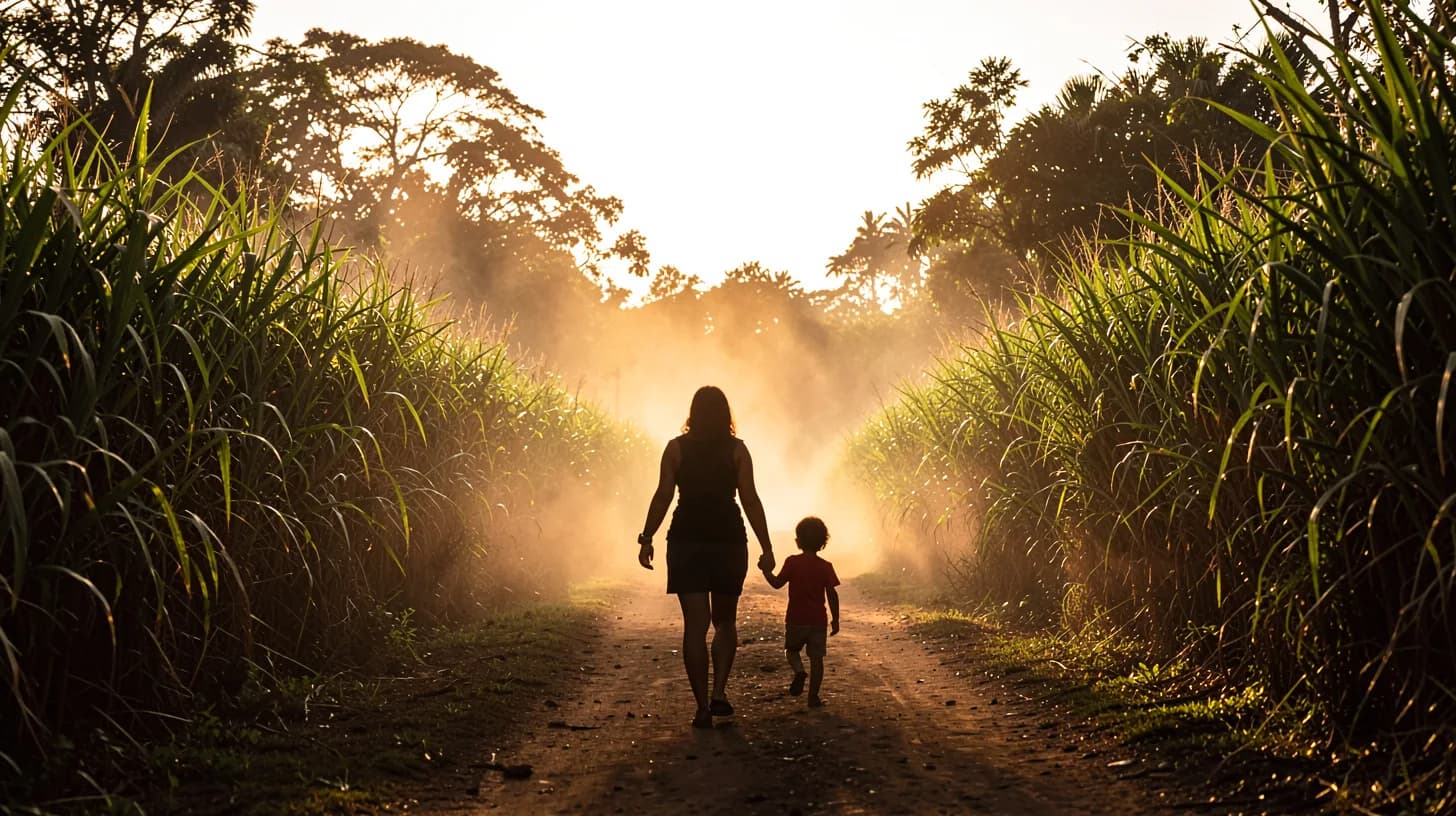
There is a version of this article that would open with a story about a woman in Huila raising children alone. It would be moving, and it would be invented, because Phoenix Initiative Colombia has not yet run a programme, does not have participants, and has never spoken to anyone as a beneficiary. So this article is about design, not about people we have not met.
The design question is narrow and unglamorous: what does a programme have to look like for a woman raising children on her own to be able to attend it? Not want to attend — be able to.
Most social programmes answer that question late, once attendance turns out to be uneven, and then patch it with a crèche in the corner. The intention here is to answer it first, on the drawing board, when the timetable and the budget are still soft.
Care work is not evenly shared, and this is one of the better documented facts in social statistics. Colombia's national time-use surveys have consistently shown women carrying the large majority of unpaid domestic and care work, a pattern repeated in country after country. For a woman raising children without a partner, that is not a statistic; it is a calendar with no gaps in it.
Now put a community programme on top. It runs at seven in the evening, when children need feeding. It requires attendance every week, with no allowance for a sick child. It is held somewhere reachable only by a bus that stops at six. There is nowhere for a four-year-old to be while she is in the room.
Nobody in that chain intended to exclude anybody. The programme is simply built for a person with either a partner at home or no dependants. And afterwards, the low attendance gets explained as a lack of interest, which is the most convenient explanation available and almost never the right one.
The commitment is that the following are treated as part of the programme, budgeted from the start, rather than as an add-on that gets cut when money is tight.
A crèche in the corner of a room is not childcare. If care provision is going to exist, it has to be good enough that a mother can stop thinking about it, which is the entire point of providing it.
That means people who are trained and paid, in numbers appropriate to the children's ages; a safe, shaded, enclosed space; safeguarding rules that apply exactly as they do everywhere else in the foundation's work; and a clear protocol for illness and emergencies. Colombia has real institutional experience in community childcare, and the sensible route is to work with what exists and is already trusted locally rather than to improvise a parallel system.
Paid, trained childcare has a second effect worth naming. It is itself employment, in a field where skills are recognised and transferable.
There is an obvious-looking alternative: create a dedicated programme for single mothers. It is well-intentioned and it usually backfires.
A separate programme labels the people in it. In a small town, being publicly designated as a case is a cost, and some women will simply not pay it. It also concentrates fragility instead of mixing it into a wider group, and it is always the first budget line to disappear.
The intention is the other approach: ordinary programmes, open to everyone, built so that the woman with the least flexible life can attend without asking for anything special. Design of that kind is invisible when it works. Nobody notices the barrier that was never there.
No stories, no counting of "mothers supported." The plan is to look at whether participation of women with young children matches their presence in the local population, whether they are still attending at the six-month mark, and whether continuity differs from the rest of the group. If a gap shows up, it will be published as a gap — a design failure on our side, not a lack of commitment on theirs.
Every element above is a plan. There is no crèche, no session, no timetable, no woman who has attended anything.
Phoenix Oasis will open on 30 June 2028, and the foundation's work in Huila is intended to begin before that and to continue long after. Writing the access rules now, before there is a room to fill, is the only way to be sure they are not written afterwards to justify who happened to show up. The mission and its commitments are set out on the foundation page.
FoundationA separate legal entity is slower, costlier and harder to control. That is the argument for it — and the reasons a foundation can fail just as easily.
5 min read
 Foundation
Not a tournament, not a launch event. A design for recurring open days in Rivera — and an honest list of the ways this kind of thing usually fails.
5 min read
 Foundation
Four women hold the Foundation's four pillars. Here is what the role actually involves, what it can decide, and why it is not an influencer arrangement.
4 min read