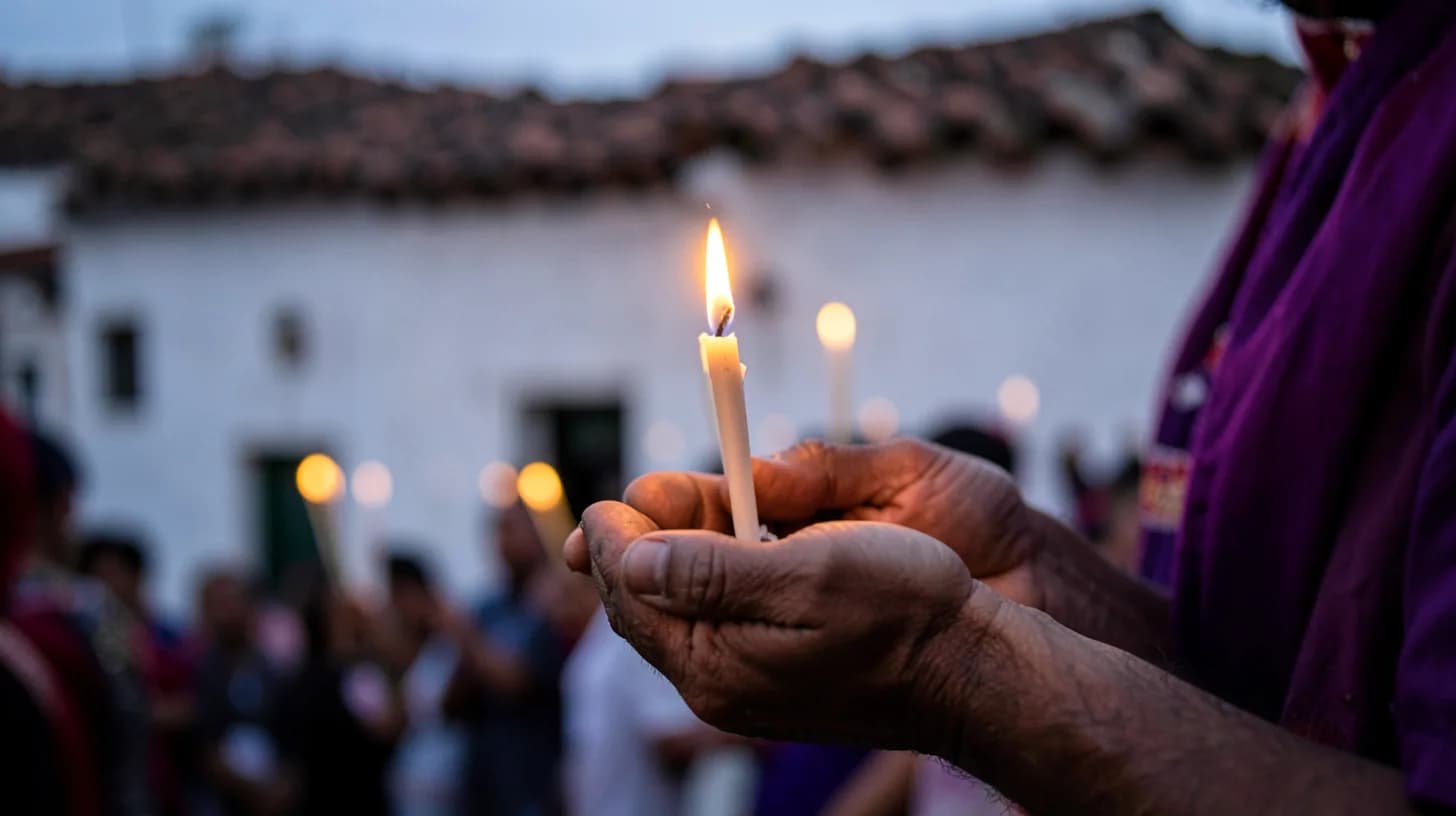
Somewhere between late March and late April, depending on the moon, the department of Huila changes tempo. Shops close earlier. Buses fill with people going home rather than away. In towns whose names rarely appear in guidebooks — Timaná, Nátaga, La Jagua, Paicol, Villavieja — the church doors stay open until midnight and the streets belong to slow-moving processions carrying candles and wooden saints.
Colombia's most famous Holy Week belongs to Popayán, in neighbouring Cauca, whose night processions were inscribed on UNESCO's Representative List of the Intangible Cultural Heritage of Humanity in 2009. Huila's version is less photographed and, for that reason, easier to enter. It is not a spectacle staged for visitors. It is a week that a whole region observes at the same time, which is a rarer thing to witness.
If you are planning a trip to this part of Colombia and the dates happen to fall across Semana Santa, here is what actually happens, town by town, and how to be present without being in the way.
The shape of the week
Holy Week is a movable feast, tied to the first full moon after the March equinox. Easter Sunday falls on 28 March in 2027 and on 16 April in 2028, so the week ahead of it shifts each year. The rhythm, however, does not.
- Palm Sunday opens it. In Neiva and across the diocese, congregations gather outside the church with woven palm fronds and walk in together, marking the entry into Jerusalem.
- Monday to Wednesday are quieter: evening masses, sacred music concerts, the Stations of the Cross carried through neighbourhood streets.
- Maundy Thursday brings the washing of feet and, in many towns, an all-night vigil where families visit several churches in turn.
- Good Friday is the heart of it — the long viacrucis by daylight, and after dark the procession of the Holy Sepulchre, walked in near-silence.
- Holy Saturday is a day of waiting, ending with the Easter Vigil.
- Easter Sunday releases everything: bells, brass, and lunch tables that stretch into the afternoon.
Towns worth choosing
Timaná, founded in 1538 and one of the oldest Spanish settlements in the region, keeps the most striking of Huila's traditions. Parishioners of San Calixto carry an enormous wooden cross, built by the community itself, along the Stations of the Cross. The town's Sanctuary of the Virgin of Miracles — a single-nave church of rammed earth — fills well before each service.
Garzón, seat of the diocese, is the department's ceremonial centre, and the nearby village of La Jagua has become known for concerts that pair sacred music with the regional symphonic band during the Easter Triduum.
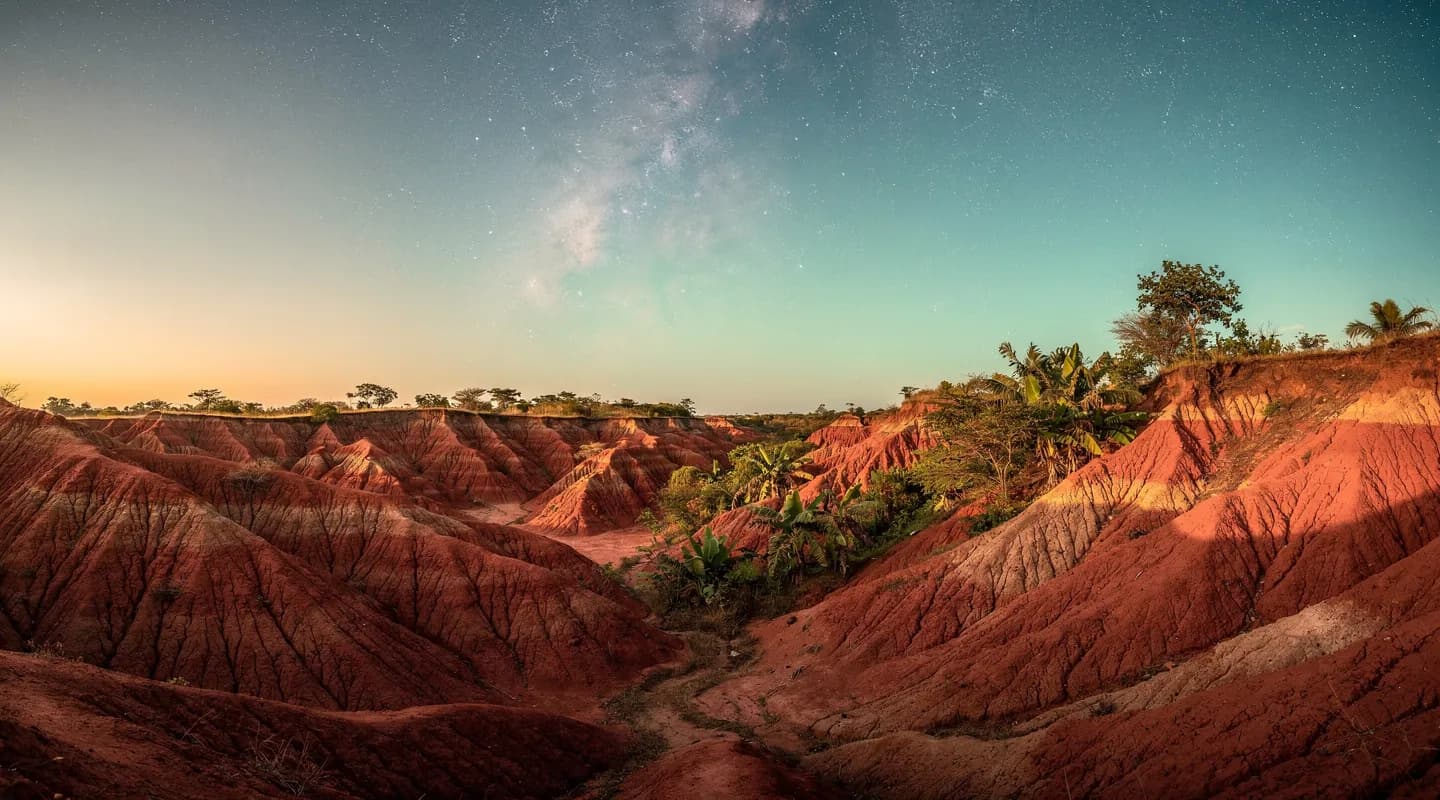
Neiva, the capital, offers the largest gatherings and the easiest logistics; Villavieja, at the edge of the Tatacoa drylands, celebrates in front of a whitewashed chapel that has stood since the turn of the nineteenth century. Nátaga, Paicol, La Plata and San Agustín each run their own programme of processions, craft markets and open-air concerts, published every year by the departmental government.
What people eat
Meat disappears from Good Friday tables, and the Magdalena River takes over. Huila's signature dish for the week is viudo de capaz: river fish cooked with yuca, plantain and potato, traditionally over wood, eaten communally. Lentils, rice and river fish soups fill the rest of the week, and the sweets arrive in earnest — dulce de guayaba, cuajada con melao, rice pudding, candied figs. Households that keep the old form make enough on Wednesday to last until Sunday, so that no one is cooking during the solemn days.
Being a good guest
- Expect a dry law. Many Huila municipalities restrict alcohol sales for part of the week. It is not a suggestion; it is a local decree, and it changes the entire mood of the towns for the better.
- Book early. Hotels in Neiva, Rivera and the southern towns are reserved months ahead, and long-distance buses sell out. Prices rise.
- Dress plainly. No one will stop you at the door, but shoulders covered and beachwear left behind is the minimum courtesy.
- Photograph sparingly. A procession is not a parade. Stand at the edge, keep the flash off, and put the phone away during the readings.
- Follow, don't lead. If you join a procession, walk at the back, at the pace of the crowd, in silence. That is the whole practice.
Why a week like this stays with you
Strip away the theology and something universal remains: an entire region agreeing, for seven days, to slow down together. No one negotiates it individually. The shops close, the music changes, the food is decided in advance, and the streets are used for walking rather than for going somewhere. Very few cultures still hold a collective pause of that scale.
Phoenix Oasis will open on 30 June 2028 on 30 hectares near Rivera, an hour or so north of the Holy Week towns of central Huila, and the idea of a deliberate, communal pause is not foreign to what is being built there. The programmes in preparation are designed around the same principle in miniature: effort, then a rest that is scheduled rather than earned. Guests arriving from July 2028 onward will find these towns within reach of the estate, going about their year — and if their stay ever coincides with the week the moon decides, they will hear the bells from the valley.
Until then, the calendar is public and the towns are open. Read more about the region in the Journal, or see how the future stays are taking shape on the retreats page.

 Colombia & Surroundings