Most packing advice for Colombia is written as though the country has a season. It does not. Sitting almost on the equator, it has a daylength that barely moves all year — roughly six in the morning to six in the evening, every month — and instead of summer and winter it has altitude.
That is the fact that should organise your bag. On a single day in Huila you can leave Bogotá at 2,640 metres in a jacket, land at Neiva at 442 metres in heat, and go to sleep somewhere green and humid in between. Nobody packs for a temperature; you pack for a range.
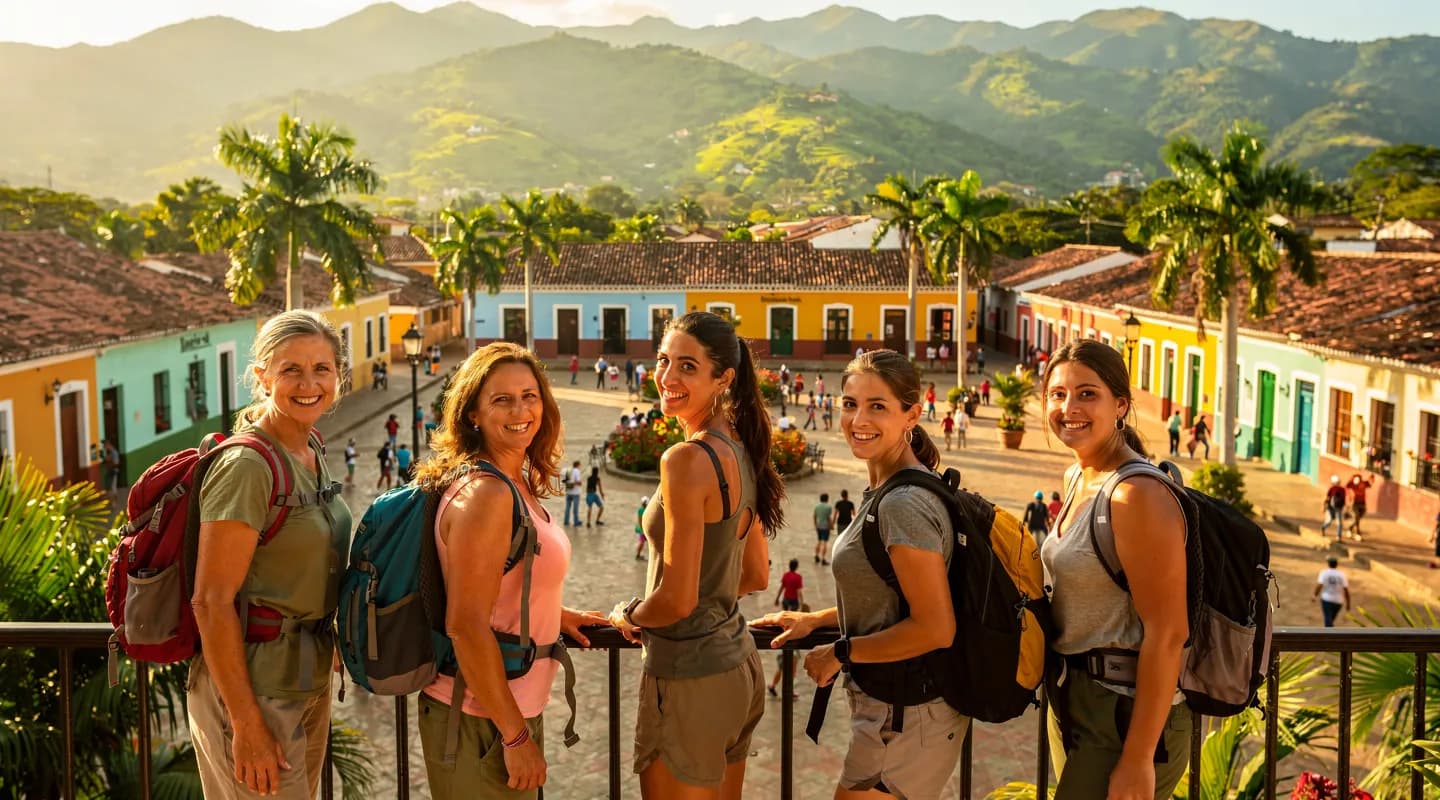
What follows assumes a trip of one to three weeks, a carry-on-sized bag, and a woman travelling alone who would rather not be carrying things she does not use.
Understand the two rainy seasons
Andean Colombia has a bimodal pattern rather than a wet season and a dry one. Broadly, the wetter months are around March to May and October to November, and the drier stretches fall around December to February and June to August.
Rain here is not a British drizzle. It arrives hard in the afternoon, lasts an hour, and stops. The correct response is a light waterproof shell and shoes that dry, not an umbrella and a sulk.
Clothes: three climates, one bag
- Base layer of light, quick-dry clothing. Linen, technical fabric or fine cotton. Three or four tops, two bottoms. Laundry is inexpensive and fast almost everywhere.
- Long sleeves and long trousers, at least one set. Useful against sun at altitude, against mosquitoes in the lowlands, and in small rural towns where local dress is fairly modest.
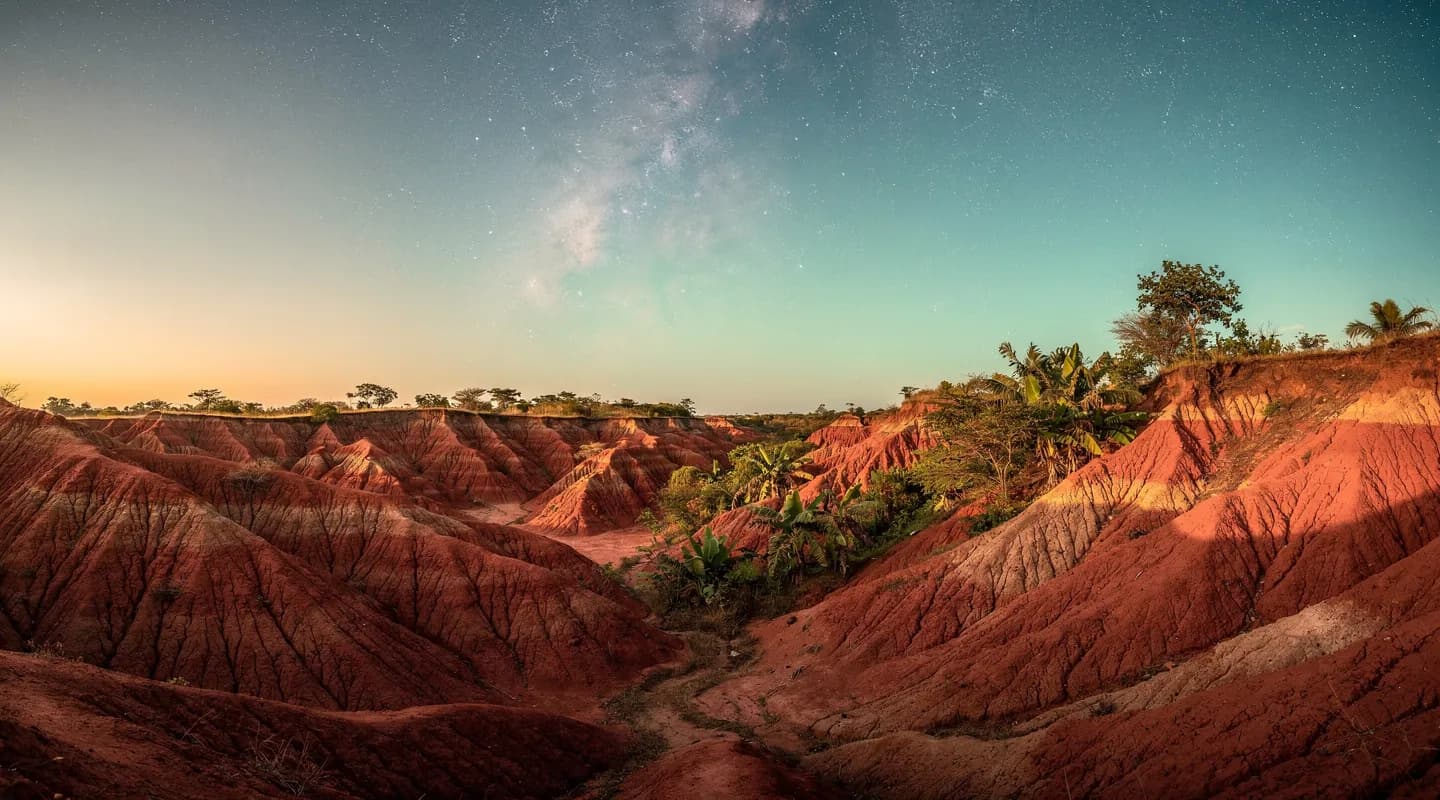
- One genuinely warm layer. A fleece or light down. Bogotá is cold at night, the páramo is colder, and the Tatacoa desert drops sharply after dark even though the day was above 35 degrees.
- A waterproof shell, light and packable.
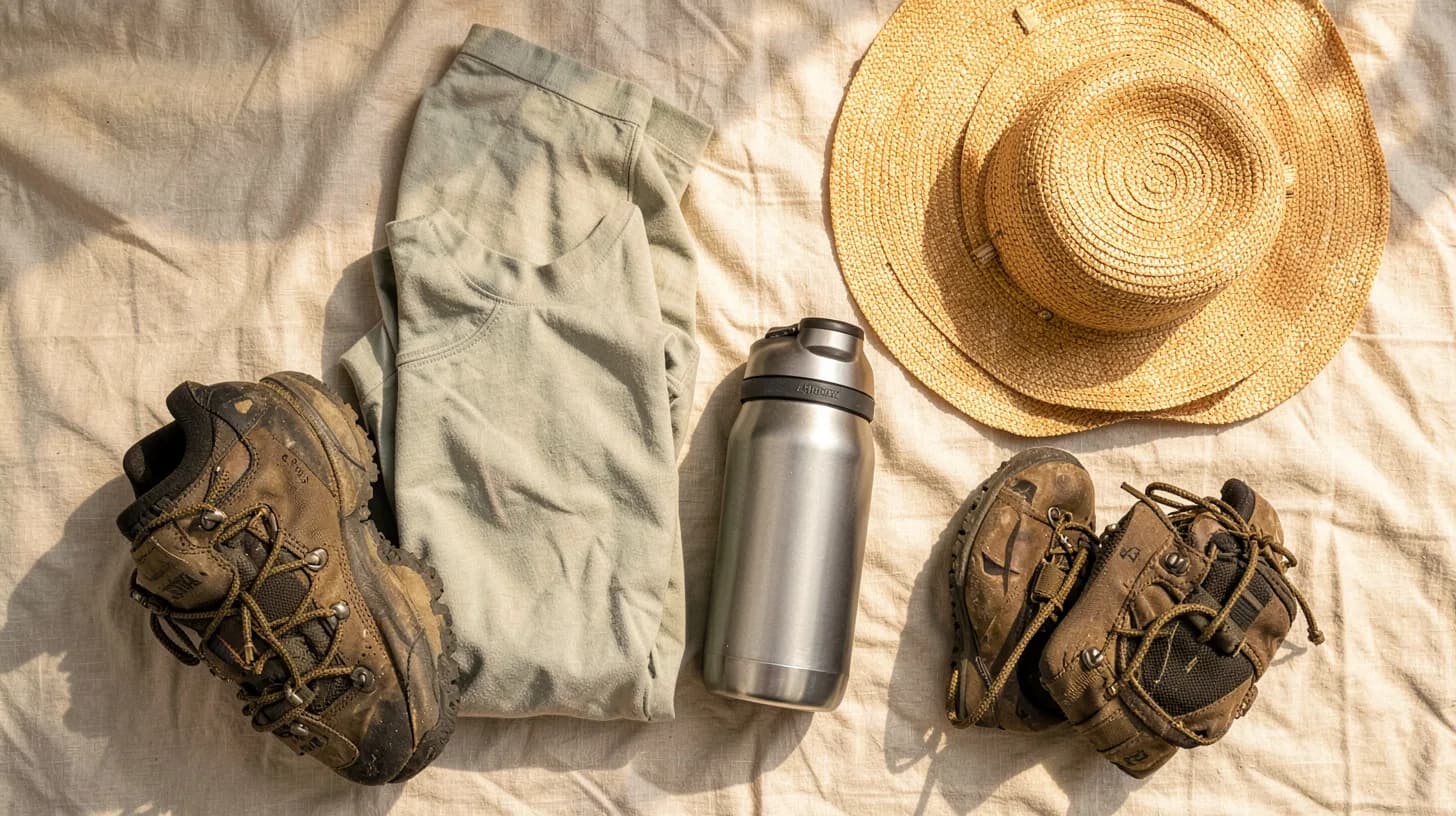
- Trail shoes with real grip. The red clay in Huila becomes slick within minutes of rain. Sandals for towns and thermal springs.
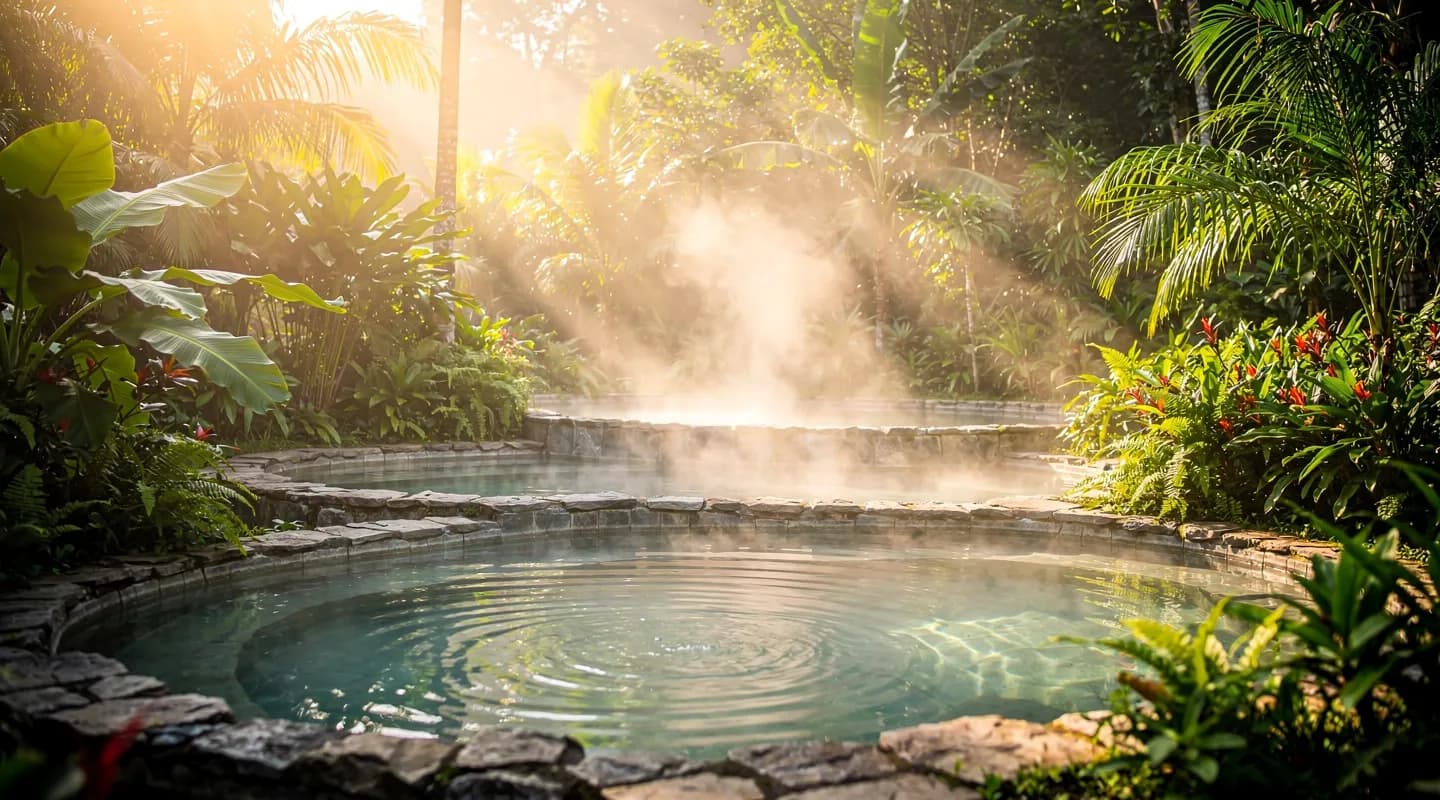
- Swimwear, non-negotiable. Rivera has thermal springs, and the department is full of waterfalls and rivers.
- A wide-brimmed hat. Buy one when you arrive — the Suaza palm hats made in southern Huila are the local answer and better than anything you brought.
Sun, water and insects
Equatorial sun at altitude is stronger than most visitors expect, and it does not feel hot enough to warn you. High-factor sunscreen, sunglasses and a hat are the whole strategy.
Bring a reusable bottle, ideally with a filter. Tap water is safe in Bogotá and in many Colombian cities, but in small towns and rural areas filtered or bottled water is the norm, and a filter bottle removes a great deal of single-use plastic from your trip.
Mosquitoes are a lowland issue rather than a highland one, and the Magdalena valley is lowland. Pack a repellent you trust, and long sleeves for dusk.
On vaccinations, altitude and anything else medical: this is a question for a travel health professional, not for a travel article. Check your own country's official travel health guidance and speak to a clinic well before you fly. Some recommendations need weeks of lead time.
The small things people forget
- Plug adapters. Colombia uses 110 volts and North American style flat-pin sockets. European and British travellers need an adapter; North Americans need nothing.
- Cash. Cards work in cities, and much less reliably in villages, at trailheads and at craft stalls. Carry small notes; changing a large bill in a rural shop is genuinely difficult.
- A headlamp. For desert nights, for early starts, and for the occasional power cut.
- A dry bag. Waterfalls, river crossings and afternoon downpours all involve your phone getting wet.
- Menstrual products. Pads are available everywhere; tampons are harder to find outside larger cities. A cup or disc, if you use one, solves the problem completely and takes no space.
- A local eSIM or SIM. Data is cheap in Colombia and makes solo travel considerably easier.
- Copies of your passport, digital and paper, kept separately from the original.
Travelling on your own
Colombia has a phrase for the essential precaution: no dar papaya — do not leave yourself unnecessarily exposed. It is not about fear. It is about not putting your phone on the café table, not flashing cash, not walking unfamiliar streets at three in the morning. Colombians apply it to themselves constantly.
Beyond that: use registered taxis or a ride app rather than flagging cars, tell someone your route on hiking days, and learn twenty words of Spanish. Effort in Spanish changes how people treat you, and in Huila that is a real advantage.
What you can leave at home
Formal clothes. Heavy boots. A hairdryer. Six pairs of shoes. A large towel — quick-dry is better. Anything you are bringing "just in case" that weighs more than 300 grams.
Phoenix Oasis will open on 30 June 2028 in Rivera, Huila, and future guests will receive a specific packing list built around the programme they choose. But the underlying logic will not change, because it is set by geography rather than by any centre: warm days, cool evenings, sudden rain, strong sun, and a landscape that expects you to move through it.
Pack for that. Everything else is detail.

 Colombia & Surroundings