Walk into almost any gym and you will see it: rows of women on cardio machines, and a weights area that still feels like it belongs to someone else. That divide was not built by biology. It was built by decades of myths — repeated in magazines, locker rooms and well-meaning advice — that quietly convinced women strength training was not for them. Let us take those myths apart, because on the other side of them is one of the most powerful things you can do for your body and your confidence.
Myth 1: "Lifting weights will make me bulky"
This is the big one, and it deserves a direct answer: building large, visible muscle mass is extremely difficult, and it does not happen by accident. Women typically have far lower levels of testosterone than men — the hormone that plays a major role in rapid muscle growth. The women you see with dramatic physiques have usually trained specifically for that goal for many years, eating and programming with surgical precision.
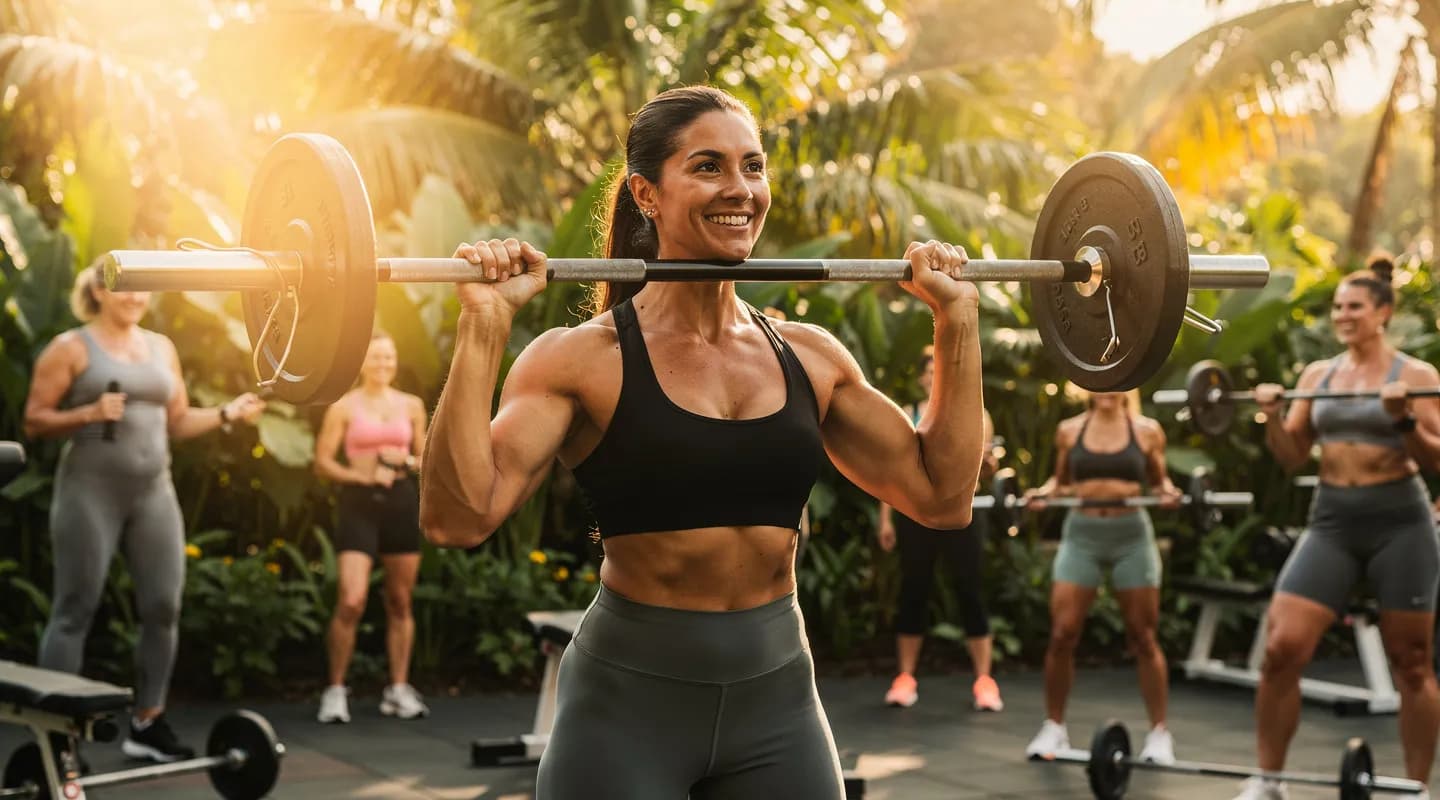
What actually happens when you strength train two or three times a week? You get stronger. Your posture improves. Your body composition shifts gradually — a little more muscle, often a little less fat — and most women describe the result as feeling more athletic and more at home in their bodies, not bigger. Muscle is also metabolically active tissue and supports healthy aging. You cannot accidentally become a bodybuilder any more than you can accidentally run a marathon.
Myth 2: "Heavy weights are dangerous — women should use light weights"
The pink-dumbbell aisle was a marketing decision, not a scientific one. Here is the truth: your body adapts to the demands you place on it. Lifting a weight that feels genuinely challenging for 5 to 12 controlled repetitions is precisely what signals your muscles and bones to get stronger. Endless repetitions with a weight you barely feel mostly builds patience.
Done with proper form and sensible progression, lifting heavy is remarkably safe — injury rates in supervised strength training are low compared with many recreational sports. The real risk hides elsewhere: in avoiding challenge altogether. Muscle mass and bone density both decline with age unless we actively maintain them, and strength training is one of the best-supported tools for protecting bone health — especially relevant for women, who face a higher risk of osteoporosis after menopause. "Heavy" is relative, of course. For a beginner it might be a pair of moderate dumbbells or just slow, controlled bodyweight work. The principle is what matters: challenge, recover, progress.
Myth 3: "I'm too old to start"
Of all the myths, this one costs women the most. The research here is genuinely encouraging: people who begin strength training in their 50s, 60s, 70s and beyond can make significant gains in strength and muscle. Your body does not lose the ability to adapt — it just asks for a little more patience and a little more recovery.
If anything, the case for lifting grows stronger with every decade. Strength training supports bone density, balance, joint health and the everyday capabilities — carrying groceries, climbing stairs, getting up from the floor with ease — that define independence later in life. Starting at 55 is not a compromise. It may be the single highest-impact decision you make for the next thirty years. The best time to start was years ago; the second-best time is genuinely this week.
Myth 4: "Cardio burns fat, weights are just for toning"
"Toning" is not a real physiological process — there is no exercise mode that polishes a muscle. What people call toned is simply muscle you have built, becoming visible. And while cardio absolutely has its place for heart health and endurance, strength training pulls its weight in body composition too: more muscle raises your resting energy expenditure, and challenging sessions keep your metabolism working during recovery.
The honest answer is that you do not have to choose. A week that combines strength work, some higher-intensity intervals, and easy movement like walking covers nearly everything your body needs. That combination — not either/or — is how sustainable results are built.
How to actually begin
Starting is simpler than the fitness industry makes it look:
- Master five patterns: squat, hinge (like a deadlift), push, pull, and carry. Nearly everything else is a variation.
- Start with two sessions a week. Full body, 40–50 minutes, focusing on quality reps rather than exhaustion.
- Progress one small step at a time — a little more weight, one more rep, slightly better form. One percent better each session compounds into transformation.
- Get your form checked early, whether by a qualified coach, a knowledgeable friend, or careful video self-review.
- Track something. Writing down your weights turns vague effort into visible progress, and visible progress is addictive in the best way.
Strong is not a body type — it's a practice
Every myth we have covered shares the same root: the idea that strength belongs to someone else. It does not. It belongs to any woman willing to pick up something challenging, put it down, and come back next week. That belief — that strength is trainable, at any age, in any body — is woven into everything we are building at Phoenix Oasis, where strength training will stand alongside HIIT, boxing and recovery as a core pillar of the program. Curious which style of stay would suit the goals you are carrying? Take the quiz and find out.

 Training