 Foundation
Why the Social Work Is a Foundation, Not a CSR Department
A separate legal entity is slower, costlier and harder to control. That is the argument for it — and the reasons a foundation can fail just as easily.
5 min read

Foundation
Phoenix Initiative5 min read
Reforestation is one of those words that sounds finished as soon as you say it. Someone plants trees, a photograph is taken, the problem is declared solved. Anyone who has actually restored land knows the photograph is taken at roughly the five percent mark, and that everything difficult happens in the three dry seasons that follow.
The Phoenix Initiative's third pillar is land regeneration, and the 30 hectares on which Phoenix Oasis is being built are its first working site. Parts of that land are in good condition. Parts of it are not: slopes worn by decades of grazing and clearing, thinned of the tree cover that once held the soil together.
This article sets out the restoration approach being designed for those slopes. No planting programme has been completed, and there are no survival figures to report. What exists is a method, and a set of principles the project intends to be held to.
Degradation on Andean slopes is rarely dramatic. It looks like ordinary pasture, and that is precisely the problem.
When trees are removed from a steep slope and cattle are put on it, three things happen in sequence. Hooves compact the surface, so rain runs off rather than soaking in. The root networks that held the soil together die back. And with less water entering the ground and more of it moving across the surface, topsoil leaves — first in sheets, then in gullies, and in the worst cases in slips after heavy rain.
The consequences do not stay on the hill. Huila sits at the headwaters of the Magdalena, Colombia's principal river, which rises in the Colombian Massif to the south of the department. What washes off a slope here ends up in a watercourse that supplies a very large number of people downstream. Restoring a hillside is a water project as much as a tree project.
The instinct is to order saplings immediately. The plan resists it, for a straightforward reason: on many degraded tropical slopes, the cheapest and most effective first move is to stop the pressure and let the land start itself.
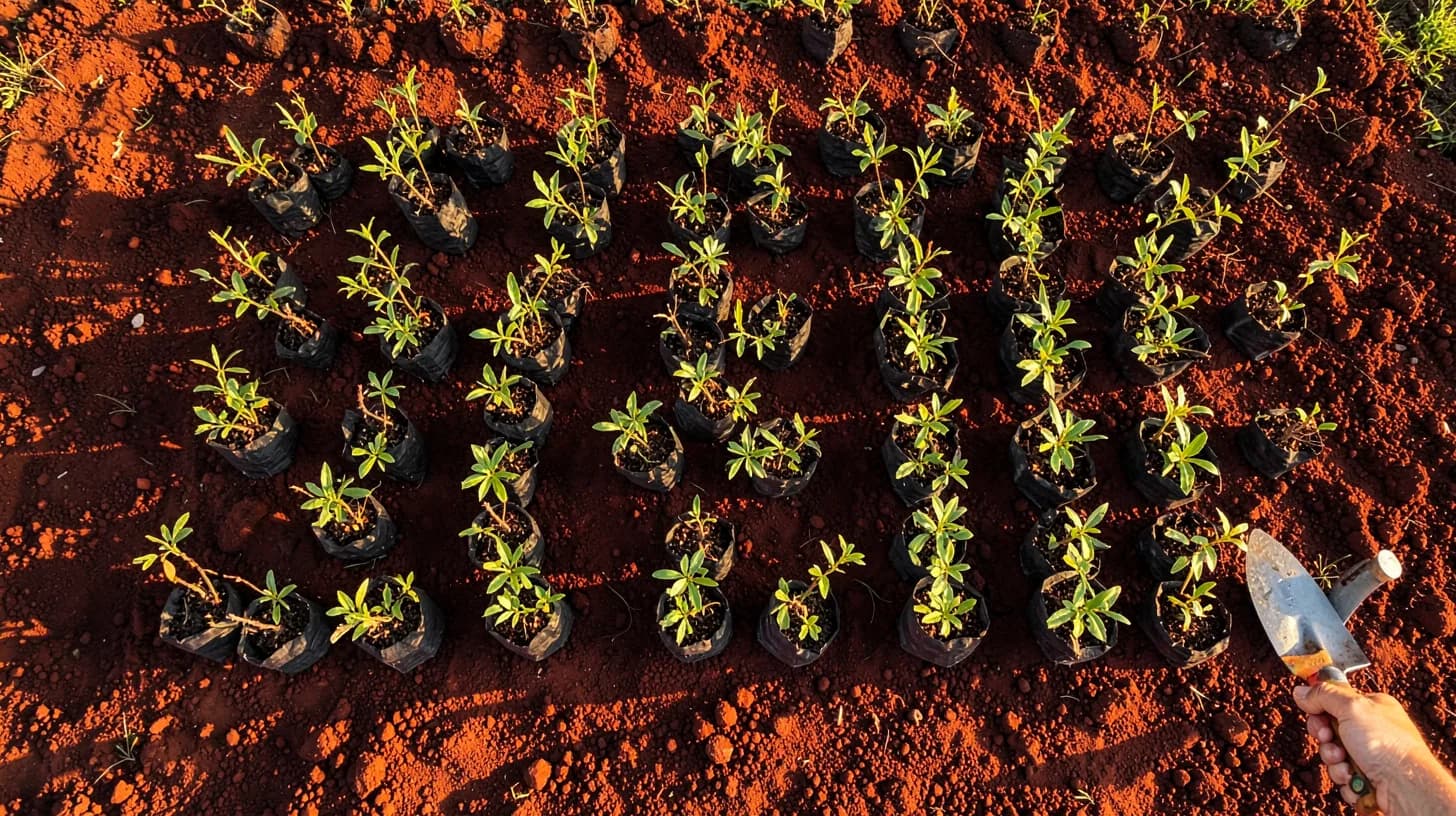
This approach — often called assisted natural regeneration — means excluding grazing, controlling aggressive grasses around whatever is already coming up, and protecting the seedlings that arrive on their own from birds, bats and wind. Tropical soils hold a seed bank, and neighbouring forest supplies more. Where that natural process can do the work, planting is an expensive way to achieve a worse result, because naturally established seedlings tend to be better matched to the exact spot they landed in.
Planting is therefore planned as the targeted intervention, not the default: used on the sections too far gone to recover on their own, and on the areas where a specific structure is wanted.
Where planting is required, the design commits to native Andean species rather than fast-growing exotics. A block of eucalyptus or pine will produce green cover quickly and a biological desert underneath it. Colombia is one of the most biodiverse countries on Earth — it holds more bird species than any other — and a restoration that ignores that is a wasted opportunity.
The species being considered are the ones that already work in this landscape:
The intended sequence follows how a forest actually assembles itself: pioneers first, shade-tolerant species underneath them later.
Where restoration begins matters as much as what goes in the ground. The plan prioritises the strips of land along the estate's watercourses — the six waterfalls and three freshwater springs — before the open slopes.
Riparian buffers do a disproportionate amount of work. They shade and cool the water, hold banks in place, filter what runs off the land above, and act as corridors that let animals move through a landscape rather than being stranded in fragments. In a restoration with limited resources, the strip beside the stream is where the first effort should go.
A commitment worth making publicly, because it constrains what can later be claimed: the meaningful measure of this work is not how many trees go into the ground. It is how many are alive and self-sustaining after three years, and what has changed in the soil and the water underneath them.
Trees planted is an input, and an easy one to inflate. Survival through the dry stretches is the actual outcome, and it requires the unglamorous part — maintenance, replacement, keeping grazing out, and returning to the same slope for years after the interesting phase has ended.
That is also why the plan involves local nurseries and local knowledge rather than imported stock. Seedlings raised from nearby seed sources are better adapted, and the money stays in Huila.
The honest framing is this: the pioneers may close a canopy within a few years, but the hardwoods being planned for these slopes will be reaching maturity long after everyone involved has stopped working on it.
Phoenix Oasis opens on 30 June 2028. The slopes will not be finished by then, or by 2038. What can be committed to now is the method, the choice of natives over quick cover, and a promise to report survival rather than planting. If you want to see how land regeneration sits alongside the foundation's other pillars, the Phoenix Initiative sets out the whole picture.
FoundationA separate legal entity is slower, costlier and harder to control. That is the argument for it — and the reasons a foundation can fail just as easily.
5 min read
 Foundation
Most programmes lose single mothers at the timetable, not at the door. The Foundation intends to design around care work from the first sketch.
5 min read
 Foundation
Not a tournament, not a launch event. A design for recurring open days in Rivera — and an honest list of the ways this kind of thing usually fails.
5 min read