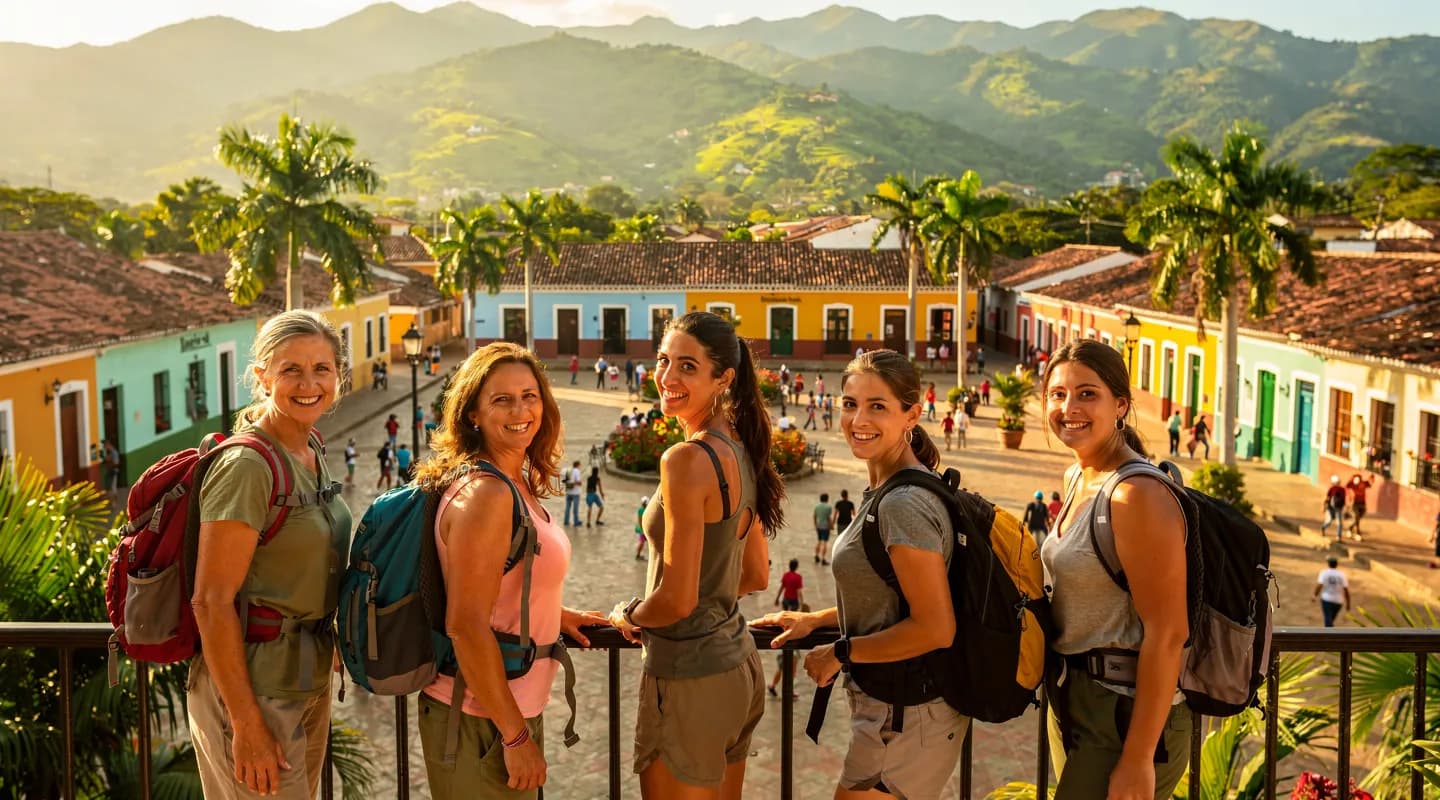
Villavieja is a small town in northern Huila with a whitewashed square, a church, and about seven thousand people. Nothing about it prepares you for what is stored one street back: a museum full of animals that should not exist.
A caiman skull the length of a bathtub. The jaw of a monkey that lived thirteen million years ago. Turtles the size of dining tables. Teeth from a creature with a trunk and tusks that was not an elephant and was not related to one.
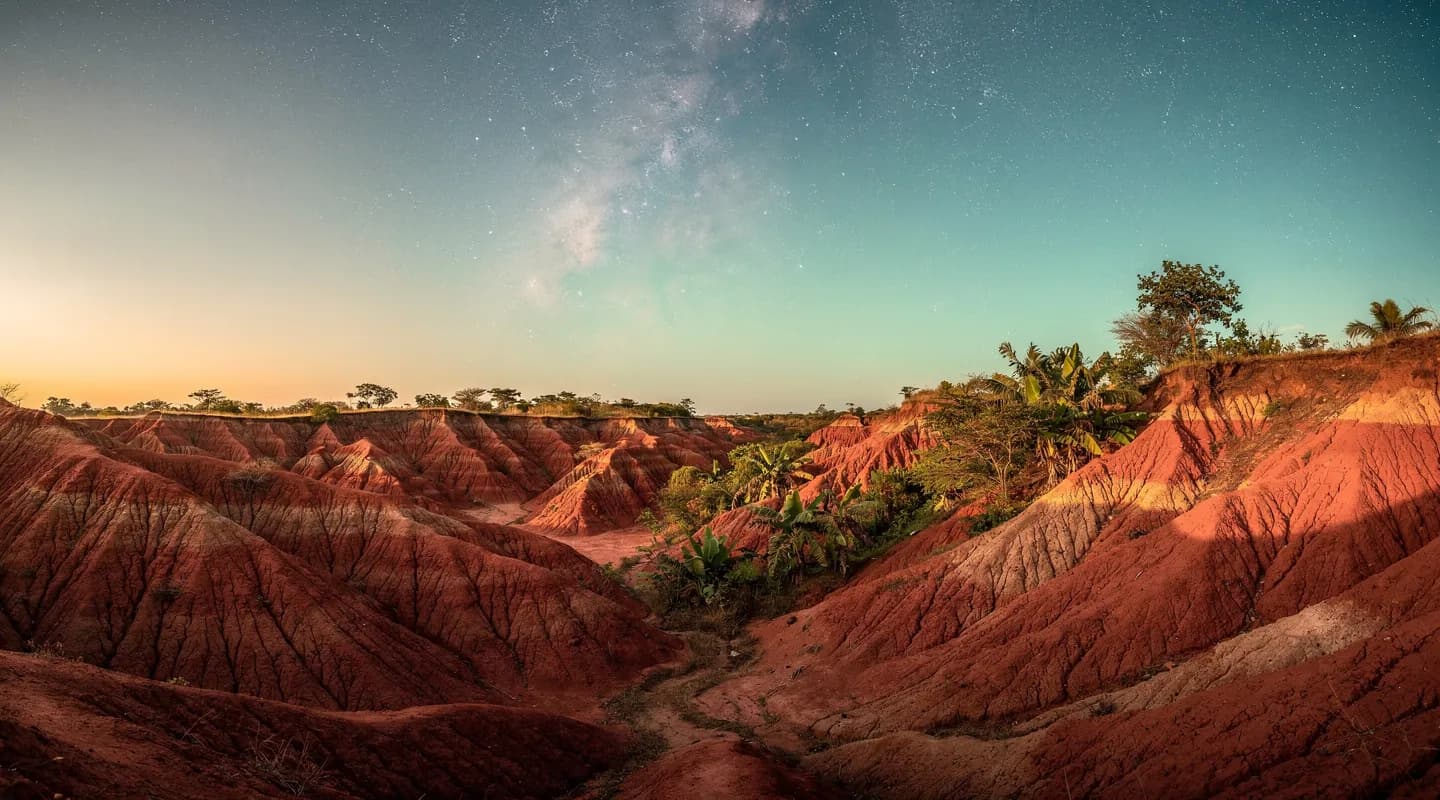
These came out of the ground a few kilometres away, in the ochre badlands everyone calls the Tatacoa desert — and the story of how they got there is not the one most visitors are told.
Not a desert, and not a sea
Two corrections, both worth making because the real version is more interesting.
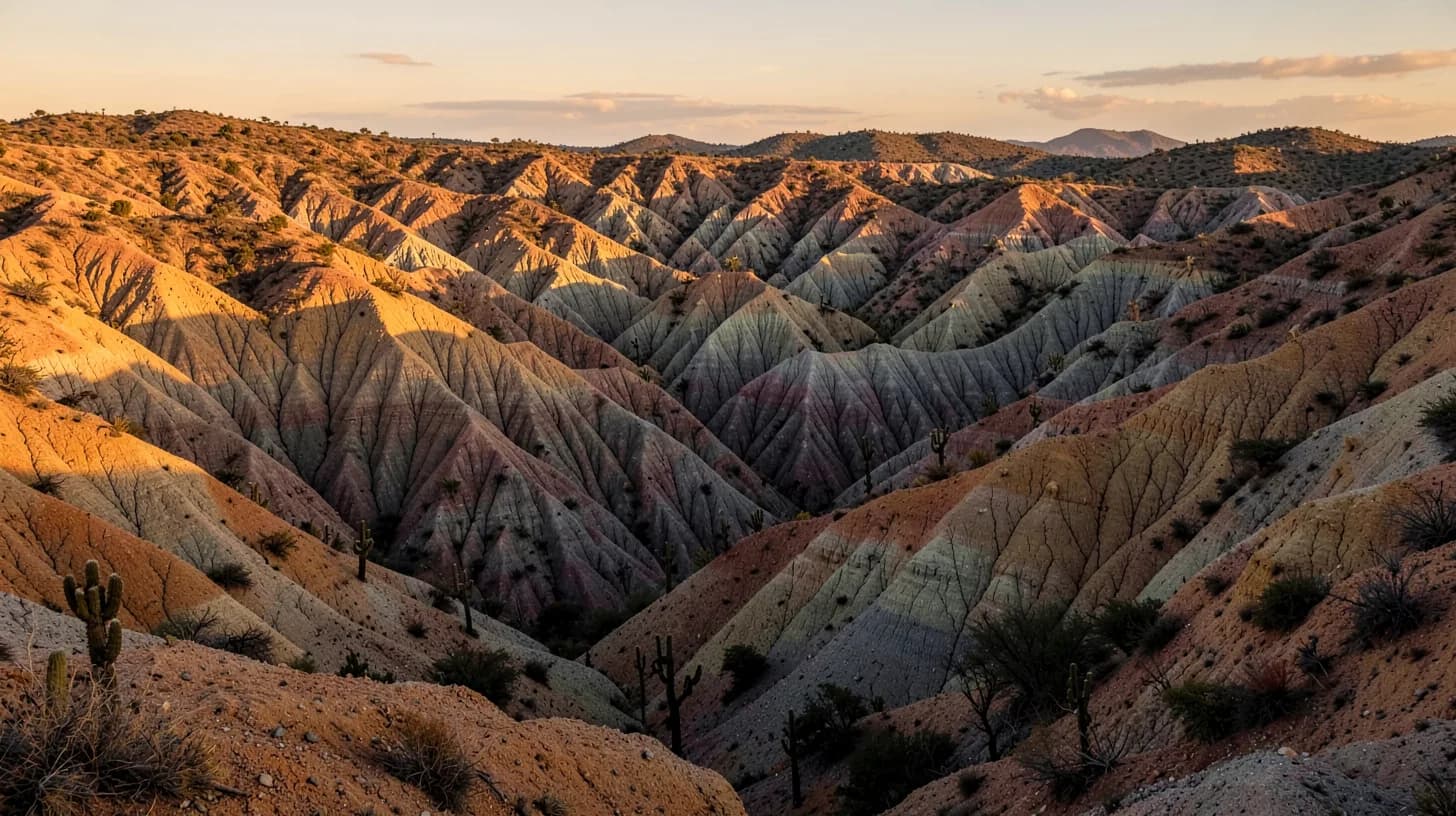
It is not a desert. The Tatacoa is a tropical dry forest, one of the most endangered ecosystems in the Americas — roughly 330 square kilometres of cactus, thorn scrub and eroded clay in a rain shadow. It looks lunar because the soil is bare and the erosion is spectacular, not because nothing can grow.
And the fossils did not come from a sea. You will hear that a sea once covered this place. It is half true in a very roundabout way: shallow seas did cover much of what is now Colombia during the Cretaceous, tens of millions of years earlier, and marine rocks from that period do exist in the wider Upper Magdalena valley.
But the famous fossils — the ones in the museum — are much younger and entirely freshwater. They were laid down by rivers, in a hot, humid floodplain crossed by braided channels and oxbow lakes. The Andes had not finished rising. Much of this water drained east and north into an enormous inland wetland system rather than south into the Amazon as it does today. The Tatacoa is not a dried-up sea. It is a dried-up jungle river.
La Venta: thirteen million years, precisely
The fossil beds here are known internationally as La Venta, and they belong to the Honda Group, deposited during the middle Miocene roughly 13 to 12 million years ago.
La Venta matters far beyond Colombia. It is the reference site for an entire chapter of the continent's prehistory — the interval palaeontologists call the Laventan, named after this place. It is one of the richest fossil vertebrate assemblages in tropical South America, and it is by some distance the most important Miocene primate site on the continent.
That last point deserves emphasis. Monkeys fossilise badly: they live in forests, where bones rot. La Venta is one of the very few windows onto how South American monkeys became what they are.
What was living here
The cast list is genuinely difficult to believe:
- Purussaurus neivensis — a caiman relative whose species name honours Neiva. Estimates of the largest Purussaurus individuals run to well over ten metres.
- Gryposuchus — a long-snouted, gharial-like crocodilian sharing the same waters.
- Stirtonia tatacoensis — an early relative of today's howler monkeys, named for this desert.
- Neosaimiri and Cebupithecia — ancestral relatives of squirrel monkeys and saki monkeys.
- Granastrapotherium snorki — a tusked, probably trunked plant-eater from a South American order, the astrapotheres, that has no living descendants at all.
- Anachlysictis gracilis — a marsupial relative with sabre teeth, from a lineage of predatory pouched mammals that vanished entirely.
- Ground sloths, giant freshwater turtles, catfish over a metre long, and lungfish.
None of these lineages survived intact. South America was an island continent for most of the age of mammals, and it evolved an entire fauna of its own before land connections and climate change dismantled it.
The museum on the square
The Museo Paleontológico de Villavieja occupies a colonial-era building beside the main square and has been open since the early 1970s. It is small, unpolished and entirely unlike a national museum, and that is its charm: much of the collection was assembled with local people who found things in their own fields.
Go with a guide from the town. The fossils in the badlands are not obvious to an untrained eye — a vertebra weathering out of a clay slope looks exactly like a stone until someone points at it. Guides here also know which gullies are safe, which matters more than it sounds when the ground is loose and the heat is above 35 degrees.
And do not remove anything. Colombian law protects fossil material, and the erosion that exposes these bones also destroys them quickly; leaving them in place, reported, is how the record survives.
The other reason people come
At night, everything changes. The Tatacoa has very little light pollution and sits at roughly three degrees north of the equator, which means you can see stars from both celestial hemispheres in a single night — the Southern Cross low on one horizon, Polaris skimming the other.
An astronomical observatory operates in the desert, and the standing local advice is to come in a dark moon phase and stay late. Days here are punishing; nights are the payoff. Temperatures drop sharply after dark, so bring a layer even though it will feel absurd at four in the afternoon.
Two hours from the hills
Villavieja sits roughly two hours north of Neiva by road.
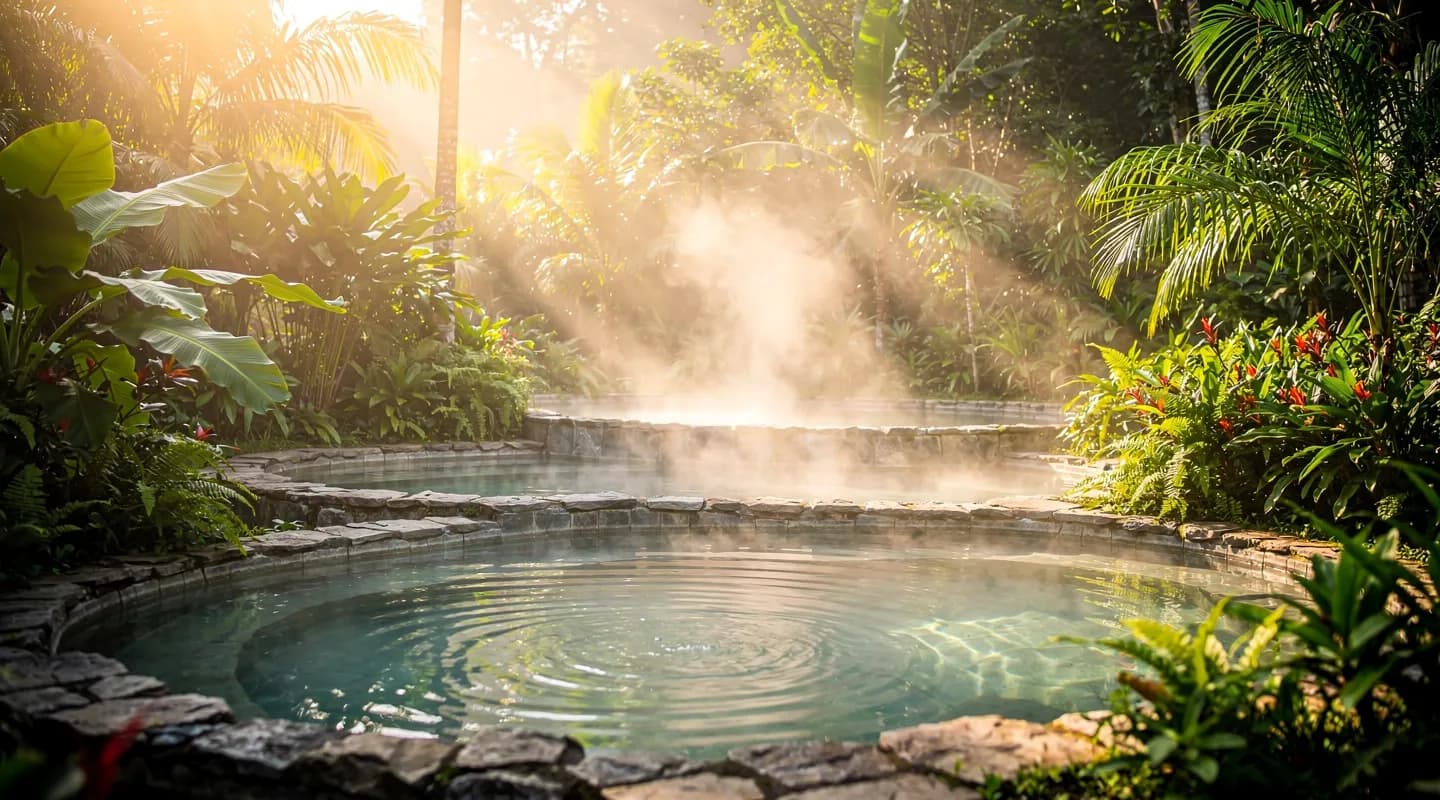
Phoenix Oasis is being built on thirty hectares in Rivera, in the green thermal hills south of the capital, and will open on 30 June 2028. The Tatacoa will be within reach of a day's excursion from it — a deliberate contrast, and a useful one. Rivera is water, shade and orange blossom. Villavieja is bare rock, deep time and a sky with nothing in the way.
Both belong to the same department. Standing in one and then the other is the fastest way to understand what Huila actually is.

 Colombia & Surroundings