 Foundation
Why the Social Work Is a Foundation, Not a CSR Department
A separate legal entity is slower, costlier and harder to control. That is the argument for it — and the reasons a foundation can fail just as easily.
5 min read

Foundation
Phoenix Initiative5 min read
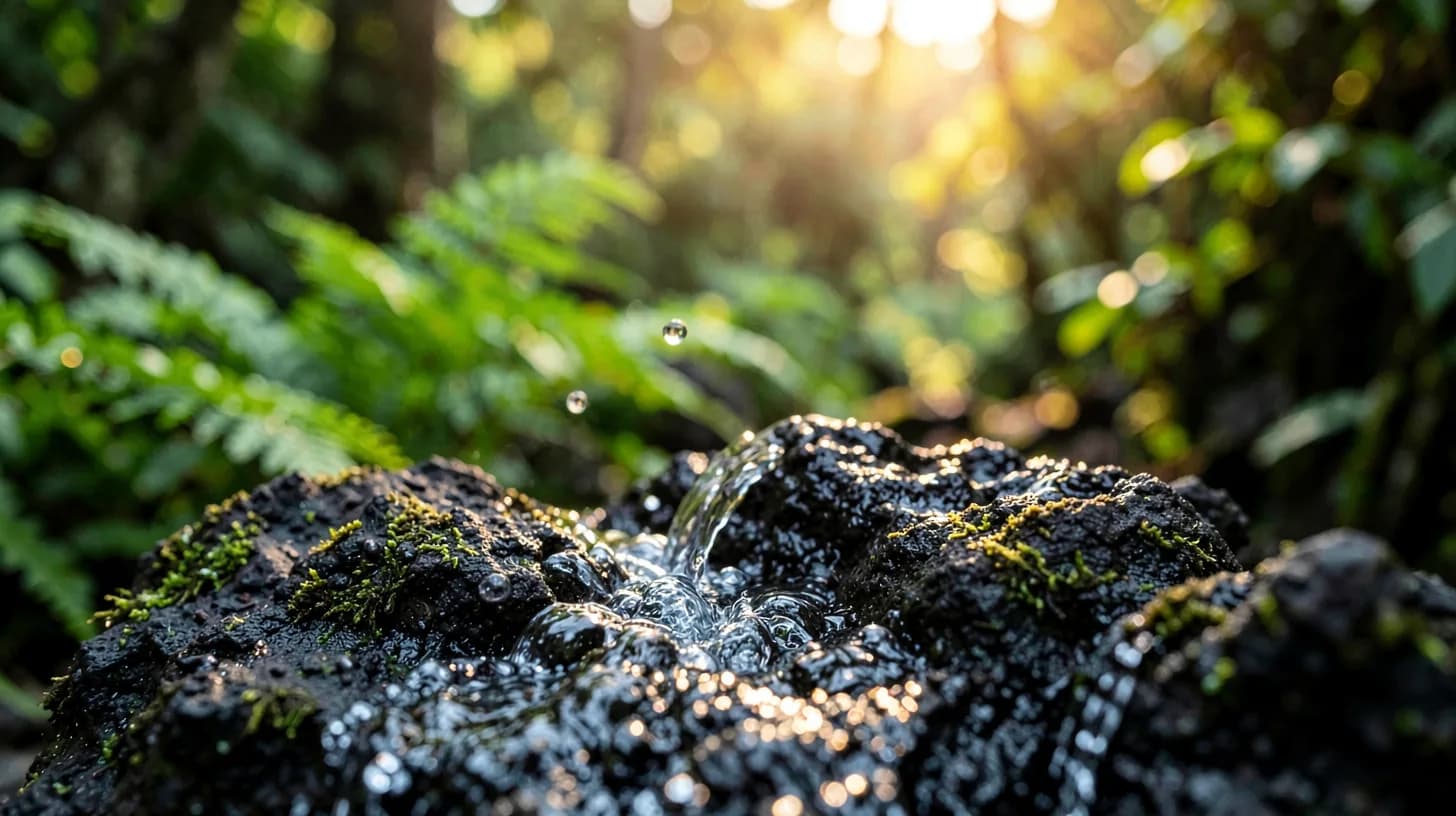
There is a sentence in the description of the estate at Rivera, Huila, that reads like a luxury and is actually a responsibility: six waterfalls, three freshwater springs and one thermal spring across 30 hectares. Water like that is not an amenity. It is a system that was there long before any plan existed and will be there long after, and everything it touches is downstream of somebody.
Phoenix Initiative Colombia has not yet undertaken any water work. No spring has been surveyed, no riparian strip planted, no measurement taken. What follows is not an account of what has been done. It is a set of commitments written down now, while they still cost something to make, about how water will be treated on and around the land where Phoenix Oasis is being built.
They are deliberately specific, because a vague promise about water is worth precisely nothing.
Huila sits in the upper valley of the Magdalena, Colombia's principal river. The Magdalena rises in the Colombian Massif in the south of the country and runs roughly 1,500 kilometres north to the Caribbean, and for centuries it has been the country's spine — the route along which goods, people and history travelled. A stream leaving a hillside in Rivera is a tributary of that story.
This is the first thing water stewardship asks you to understand. A watershed does not respect property lines. What happens on 30 hectares affects the quality and timing of water for everyone below, and what happens above affects us. Ownership of land is not ownership of water, in Colombia or anywhere else worth living.
Springs are damaged in unglamorous ways: by clearing the vegetation immediately around them, by letting cattle trample the edges, by compacting the soil that lets rain soak in rather than run off, by pushing the wrong things into the ground uphill.
So the commitments start there. The intention is to define and protect a vegetated buffer around every spring and watercourse on the estate, to keep those margins planted with native species rather than mown, and to treat them as no-build zones in the site plan rather than as decorative features to be photographed. Infiltration matters more than storage: land that lets rain soak in slowly releases it slowly, which is what keeps a stream alive in the dry months.
Written before any of it is tested, and meant to be quoted back to us.
None of these are achievements. They are the terms of a contract we are writing with a place, in public, in advance.
A thermal spring is a particular kind of gift. Rivera is known in Huila precisely for its thermal waters, and geothermal systems are not a renewable tap in the ordinary sense: they depend on a deep circulation that can be disturbed by heavy extraction or careless drilling.
The commitment here is caution over ambition. Thermal water use will be sized to what the source can sustain rather than to what a spa brochure would prefer, monitored for temperature and flow, and reduced if the source shows strain. That is an easy promise to write today and a hard one to keep later, which is exactly why it belongs in writing today.
Water is one of the few areas where an organisation can be checked properly, because the indicators are physical and can be read by someone who does not work for us.
The plan is a baseline survey before construction reaches the watercourses, fixed monitoring points, an outside hand in the sampling, and annual publication alongside the rest of the foundation's reporting. A drop in dry-season flow, if it happens, will be published. There is no version of this in which we only report the good years.
Water stewardship has an awkward property: almost all of the important decisions are made before anything visible exists. Where the buildings sit, where the roads run, how the rain moves across a slope once it has been cut — these are settled in drawings, and they are very expensive to reverse afterwards.
Phoenix Oasis will open on 30 June 2028, and the eco bungalows are planned in wood, guadua and volcanic stone. Long before any guest arrives, the more consequential work is the invisible kind: the margins left alone, the slope not cut, the spring left with its skirt of forest. If you want to follow how the foundation intends to be held to it, start on the foundation page.
FoundationA separate legal entity is slower, costlier and harder to control. That is the argument for it — and the reasons a foundation can fail just as easily.
5 min read
 Foundation
Most programmes lose single mothers at the timetable, not at the door. The Foundation intends to design around care work from the first sketch.
5 min read
 Foundation
Not a tournament, not a launch event. A design for recurring open days in Rivera — and an honest list of the ways this kind of thing usually fails.
5 min read