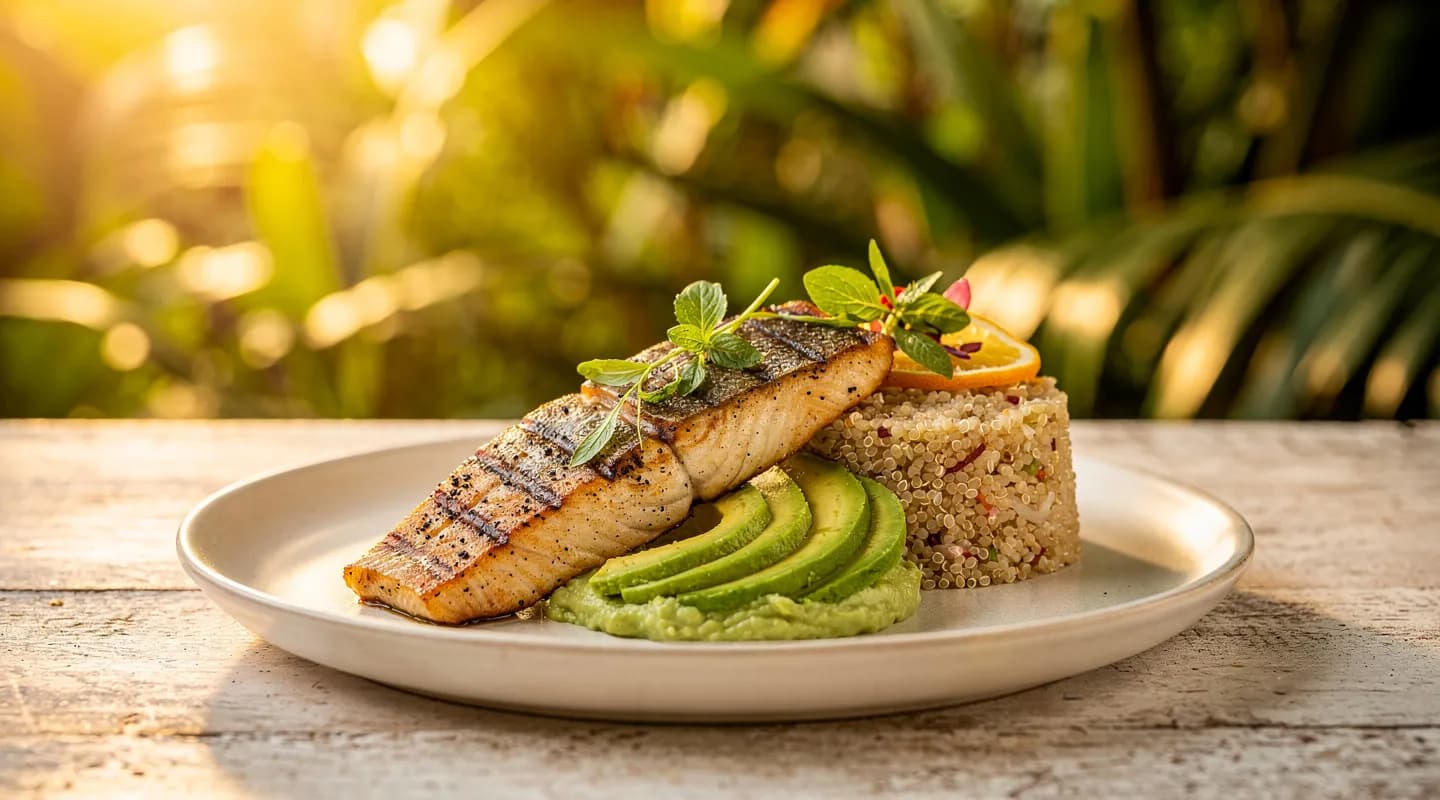
 Nutrition
Protein for Active Women: Needs, Sources and Timing Myths
How much protein do active women really need, where should it come from, and does the post-workout window matter? A calm, evidence-informed guide without the bro-science.
5 min read

Nutrition
Phoenix Initiative4 min read
Somewhere in the last twenty years, eating became an accounting exercise. Grams logged, macros balanced, an app consulted before a meal that a grandmother would have simply cooked. For some people, in some situations, measuring is genuinely useful. For most of us most of the time it adds precision to a number that was never the point, and quietly turns dinner into homework.
There is an older method, and it fits in a paragraph: build the plate by proportion, not by weight. Decide what the shape of a meal looks like, apply it, and stop. It is how professional kitchens plan menus, how most traditional cuisines already work, and how public health bodies have communicated the same idea for years through the various "healthy plate" diagrams.
Picture the plate divided rather than counted.
Your hand travels with you, scales to your body and needs no batteries. That is the entire technology.
Three reasons, and none of them is about willpower.
The first is that a plate built this way tends to arrive at reasonable energy, protein and fibre without anyone calculating anything. Vegetables occupy volume at low energy density; protein and fat drive satiety; the starch portion is bounded by the shape rather than by restraint.
The second is that it is robust. It survives restaurants, other people's cooking, unfamiliar ingredients, travel and a bad week. A method that only works when you control every variable is not a method; it is a laboratory condition.
The third is psychological, and it is the one that matters most over years. Weighing food invites a moral frame — good days and bad days, compliance and failure. Proportion invites a structural one: this meal was built like this, the next one can be built like that. Nothing to atone for.
The method is not a European import imposed on local food. The traditional Colombian plate is already close to it, and the adjustments are small.
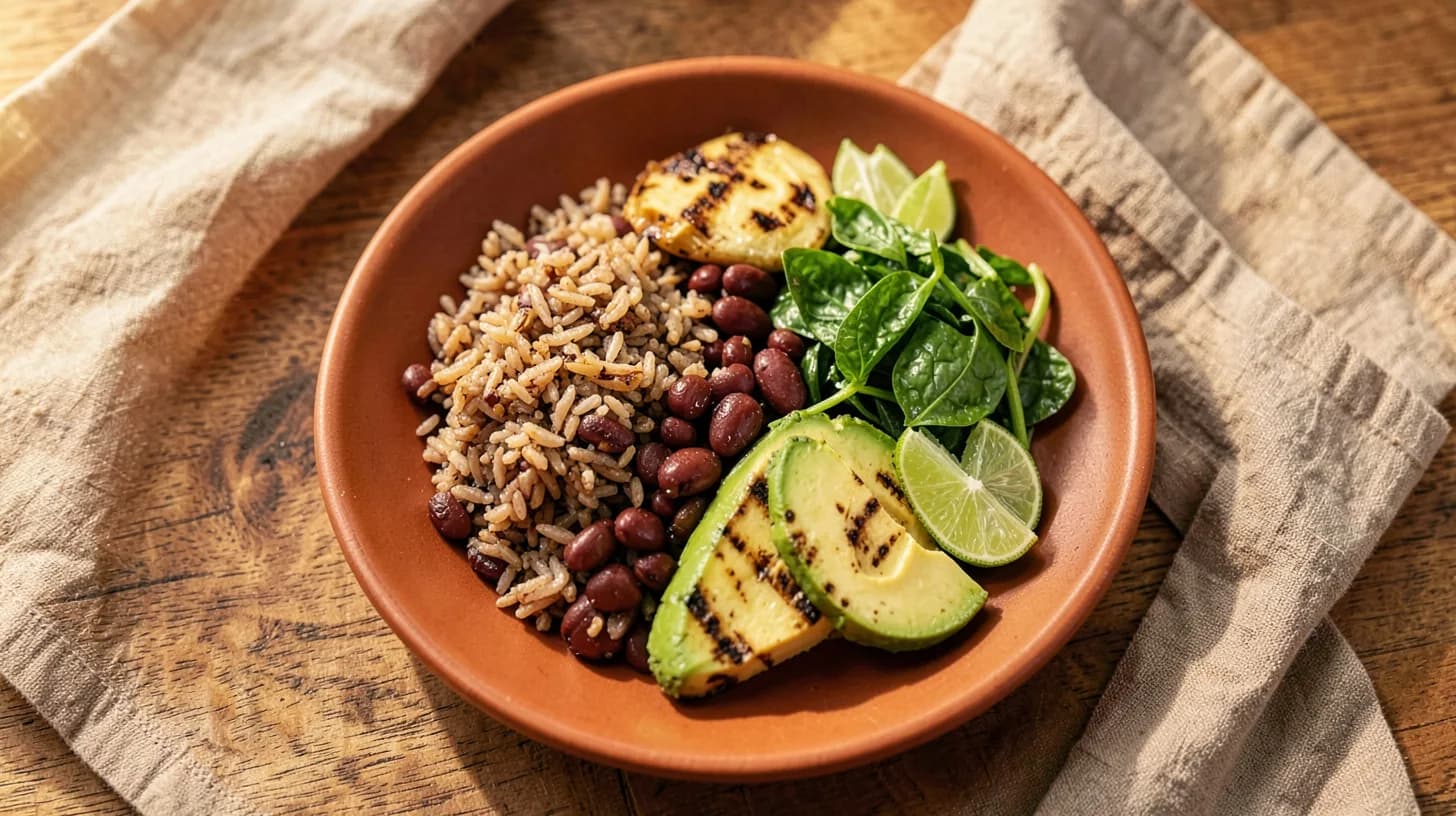
Rice and beans together cover starch and a good share of protein. Add an egg, a piece of fish or chicken and the protein quarter is complete. Plantain — patacón or ripe and fried — is starch, and it counts as part of that quarter rather than as a free extra. Avocado supplies the fat. What the classic plate is usually short of is the vegetable half: this is where a guiso of tomato and onion, a big pile of cooked greens, a shredded cabbage salad with lime, or habichuelas change the balance most.
The sopa that opens a Colombian lunch is an ally here, particularly when it is built on vegetables and pulses. So is the habit of fresh juice — though whole fruit brings the fibre that the juice leaves behind, so it is worth having both in rotation.
Honesty about limits is what separates a useful heuristic from a slogan.
Proportion says nothing about how much you need. Energy requirements differ enormously with body size, activity, sleep and life stage, and the same plate is generous for one person and insufficient for another. Hunger and energy across the day are better feedback than any diagram.
It also does not replace clinical guidance. If you are pregnant, managing diabetes or coeliac disease, recovering from an eating disorder, taking medication that interacts with food, or training at a competitive level, you need advice built around you — from a doctor or a registered dietitian. Nothing in a general article can do that job, and anything that claims to should be treated with suspicion.
Cook more often than you do now. Almost every measurable difference between diets that work and diets that do not comes down to how much of the food was assembled by the person eating it.
Eat sitting down, without a screen, for at least one meal a day. Satiety signalling takes time to arrive; eating quickly and distractedly reliably outruns it. This is not a discipline exercise, it is simply giving the mechanism a chance to work.
Phoenix Oasis will open on 30 June 2028, on thirty hectares in Rivera, Huila. The kitchen is being designed around exactly this logic — plates composed by proportion, built from what the surrounding farms and the garden are producing, with no calorie counts printed on anything.
If you want to start tonight, do not change what you eat. Change the proportions of what is already on the plate, and see how four hours later feels. More about how the stays are being designed is on the retreats page.
NutritionHow much protein do active women really need, where should it come from, and does the post-workout window matter? A calm, evidence-informed guide without the bro-science.
5 min read
 Nutrition
Most of us eat on autopilot — at desks, over screens, in cars. Here is what happens when you slow the meal down, and how to bring the retreat table home with you.
5 min read
 Nutrition
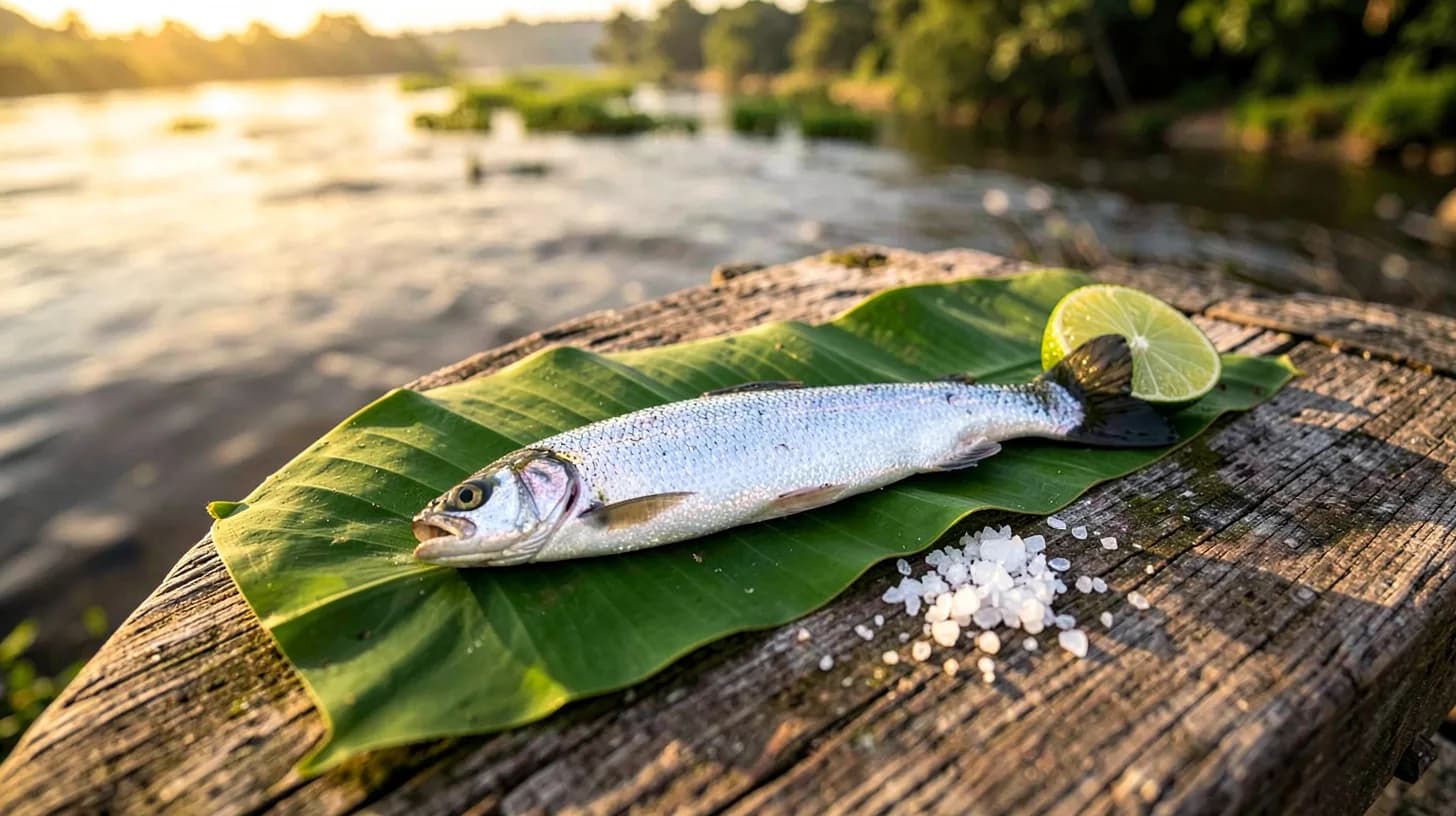
Bocachico, capaz, tilapia from Betania. What Huila's river actually feeds people, what that fish gives your body, and why the catch is getting harder to find.
5 min read