 Foundation
Why the Social Work Is a Foundation, Not a CSR Department
A separate legal entity is slower, costlier and harder to control. That is the argument for it — and the reasons a foundation can fail just as easily.
5 min read

Foundation
Phoenix Initiative5 min read
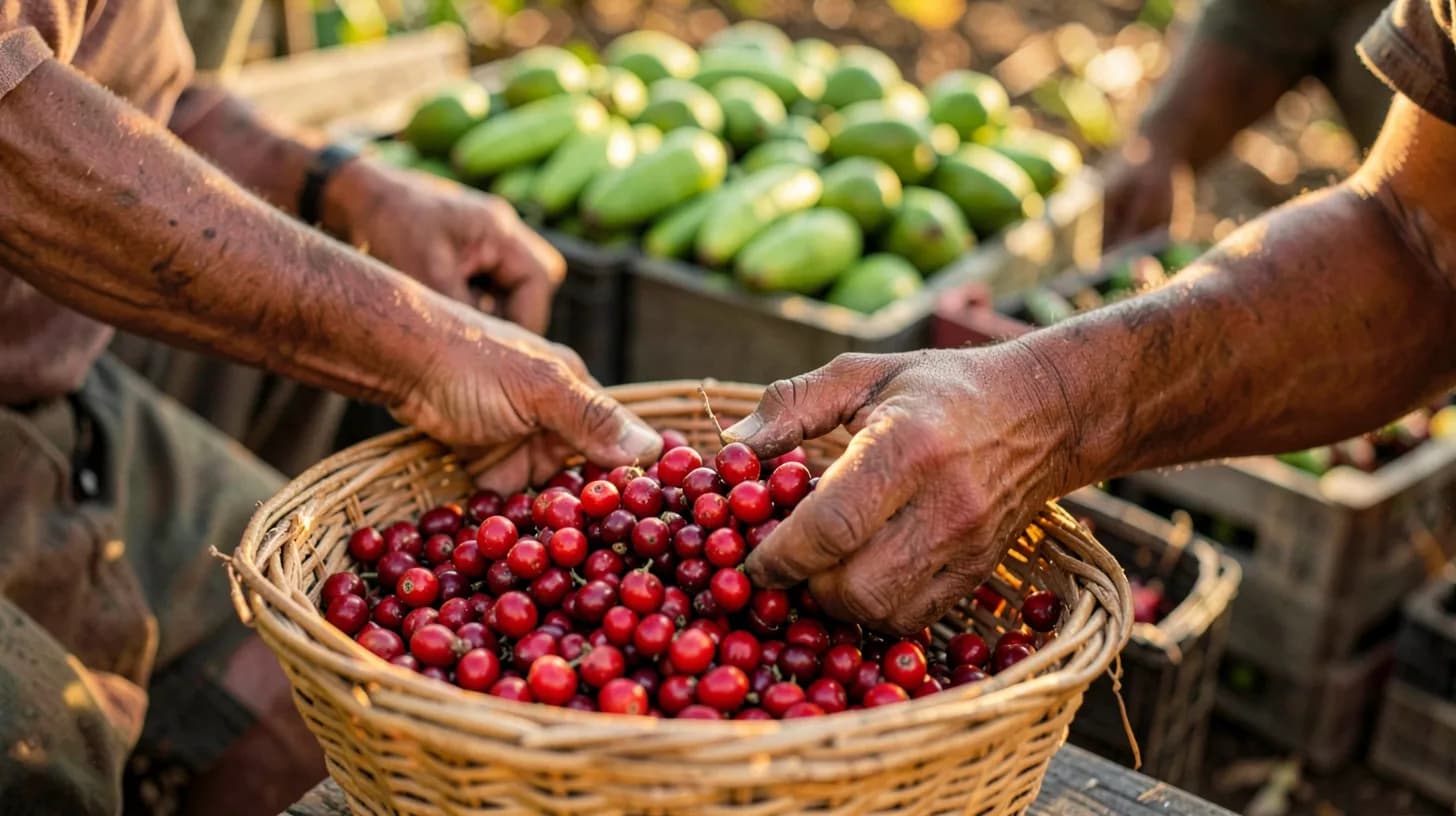
"We source locally" is one of the emptiest sentences in hospitality. It can mean a genuine, long-term relationship with a farm forty minutes away. It can also mean a wholesaler in the nearest city who buys from anywhere. Both statements are printed on menus in exactly the same font.
Phoenix Oasis will open on 30 June 2028 in Rivera, Huila. Nothing has been bought yet; no supplier agreement has been signed. What is being written now are the procurement commitments — the specific, checkable version of a promise that is usually left vague.
This article sets out what the region actually produces and what the project intends to commit to. It is a statement of intent, published before any contract exists, so that the eventual reality can be compared to it.
The case for buying locally here is unusually strong, because the department is one of Colombia's agricultural heavyweights.
Coffee is the headline. Huila is one of the country's largest coffee-producing departments and its coffee is recognised with its own denomination of origin — a legal designation, not a marketing term, tied to where and how it is grown. The region's altitude, volcanic soils and the shape of the Magdalena valley produce a profile that specialty buyers travel for.
But the department is far more than coffee:
A kitchen in Rivera that cannot build most of a menu from within a couple of hours' drive is not trying.
The commitments being drafted are deliberately written as measurable statements rather than sentiments. The current working set:
There is a failure mode worth naming, because it is how well-meaning procurement policies end up excluding exactly the producers they meant to support.
A commercial kitchen has legitimate food safety obligations. Meeting them usually requires suppliers to hold certifications, keep records and handle product in specific ways. A large distributor has all of this. A three-hectare family farm frequently does not — not because the produce is worse, but because the paperwork infrastructure is expensive and unfamiliar.
Applied bluntly, a food safety policy becomes a rule that says: only buy from large suppliers. The intent here is the opposite approach — to treat the gap as something to help close, through practical support in meeting the requirements, rather than as a filter that quietly hands the contract to the biggest bidder.
This connects directly to the foundation's education pillar. Training that makes a producer able to sell into more demanding markets is worth more than a single purchase order, and it is useful whether or not the Oasis ends up being the buyer.
Honesty about the limits is part of the commitment. Some things a retreat kitchen needs will not come from Huila, and a project that implies otherwise is overclaiming.
Certain equipment, some specialised ingredients, and any product the region does not grow will be bought elsewhere. The intended discipline is simply to be explicit about which categories those are rather than letting a general "locally sourced" claim cover the whole operation.
One last commitment, more cultural than commercial. It is very easy for a foreign-facing project in a coffee region to turn its suppliers into content — the weathered hands, the sack of cherries, the story of the farm used to sell a stay.
The intention is to buy coffee at a price that reflects what it costs to grow well, and to name the producers who want to be named while leaving alone those who do not. A supplier is a business partner, not a narrative asset.
None of this has been tested. The first purchase order has not been written, and the first harvest the Oasis buys is still years out. Publishing the commitments now is the point: it makes them something to be held to once 30 June 2028 arrives. To see how local partnership sits within the wider mission, the Phoenix Initiative sets out the three pillars.
FoundationA separate legal entity is slower, costlier and harder to control. That is the argument for it — and the reasons a foundation can fail just as easily.
5 min read
 Foundation
Most programmes lose single mothers at the timetable, not at the door. The Foundation intends to design around care work from the first sketch.
5 min read
 Foundation
Not a tournament, not a launch event. A design for recurring open days in Rivera — and an honest list of the ways this kind of thing usually fails.
5 min read