 The Oasis
Why Rivera, Huila: How the Land for Phoenix Oasis Was Chosen
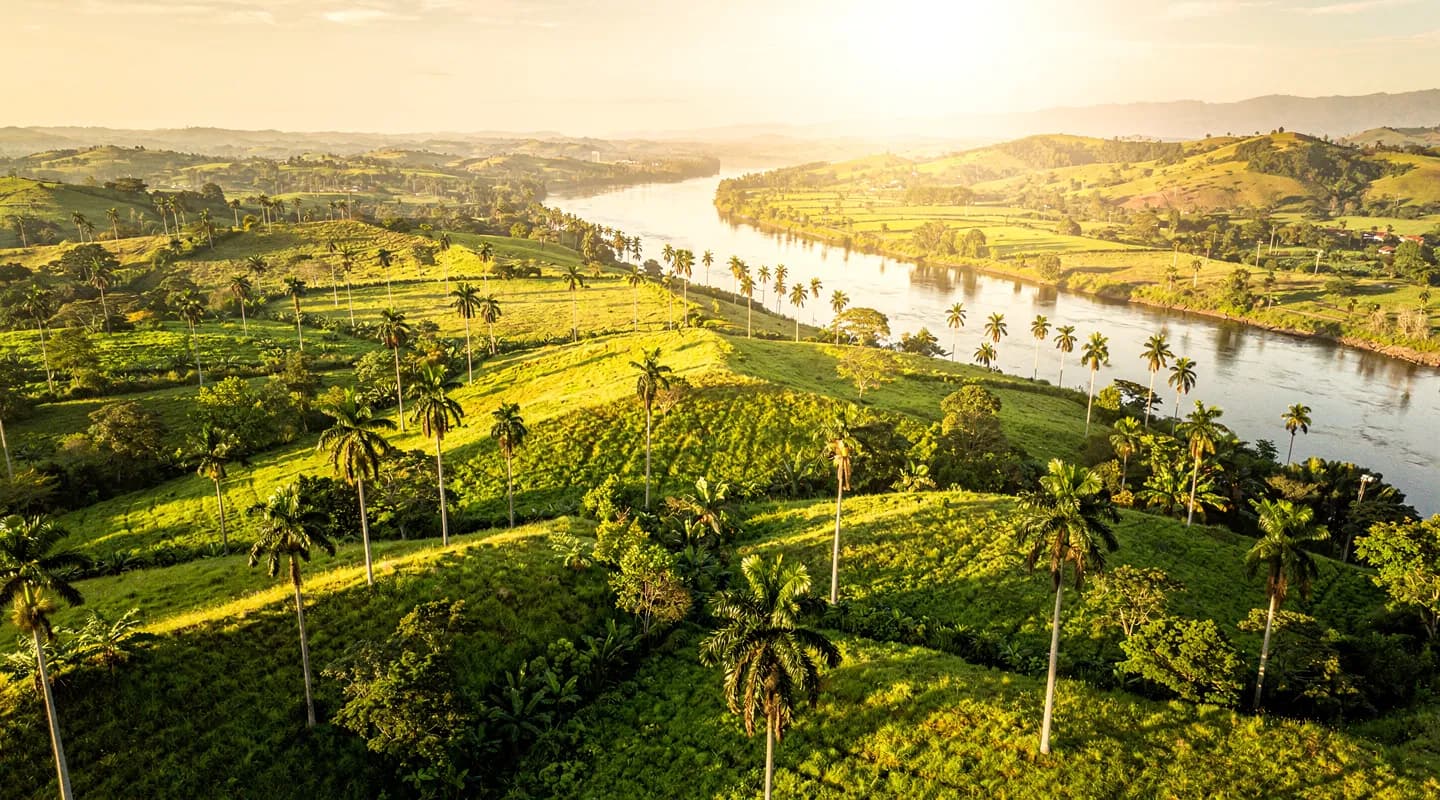
Thermal water, a climate made for training year-round, and a community worth building with: the founding intentions behind choosing Rivera, Huila, Colombia.
4 min read

The Oasis
Phoenix Initiative5 min read
Somewhere around day four of a hard training week, a lot of people discover accessibility for the first time. Quadriceps that will not obey on a descent. A knee that objects to steps. The specific, humbling experience of standing at the bottom of a slope you walked up easily on Monday and deciding, honestly, that you are not going up it today.
That is the argument in one paragraph. Accessibility is not a feature added for a category of visitor. It is a state most human beings pass through — after surgery, during pregnancy, with a sprained ankle, at seventy, or simply at six in the evening after a session that took everything. A place that only works for the strongest version of you works for you a surprisingly small fraction of the time.
Phoenix Oasis will occupy thirty hectares of hillside in Rivera, Huila. Hillsides are, by definition, the hardest possible case. Here is what designing for every body on terrain like that actually requires — and where the honest limits sit.
International law has largely settled this framing. The United Nations Convention on the Rights of Persons with Disabilities, adopted in 2006 and ratified by Colombia, treats accessibility as a precondition for participation rather than as a concession. Colombia's own Ley Estatutaria 1618 of 2013 puts the same principle into national law.
Designers reached the same conclusion by a different road. The classic example is the curb cut: the sloped dip at a street corner, fought for by disability activists in the United States in the 1970s, which turned out to serve parents with strollers, delivery workers, cyclists, travellers with suitcases and anyone carrying something heavy. The phrase for it is the curb-cut effect — build for the person with the hardest constraint, and you improve the experience for everyone.
On a retreat estate, the beneficiaries multiply. A path that a wheelchair can use is a path someone can walk at three in the morning without a torch. A handrail installed for balance is a handrail everyone grabs when it rains.
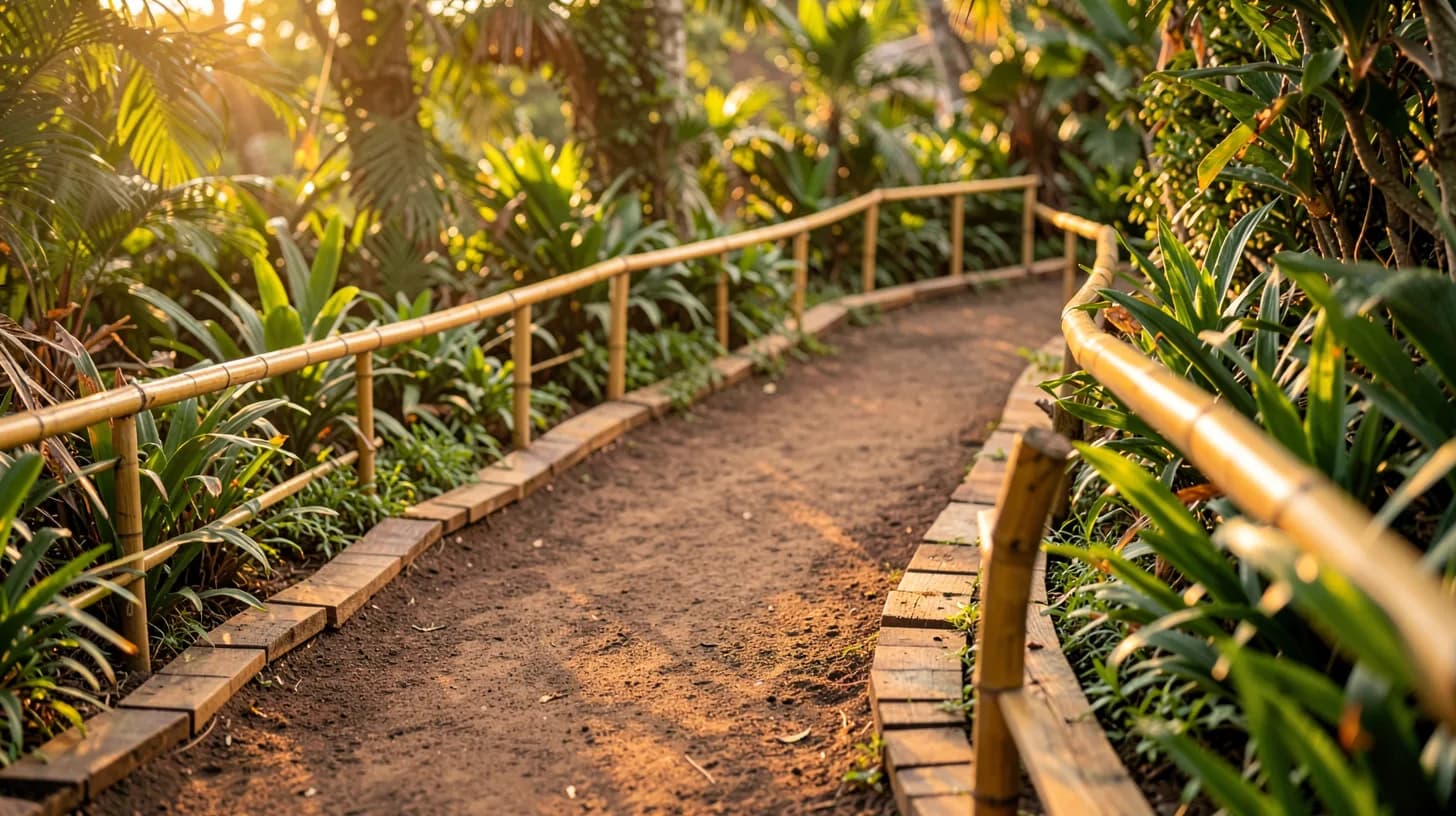
Accessible route design is unusually specific, and the specificity is the point — a path is either usable or it is not, and the difference is a few degrees.
The least discussed element of accessible design is the bench. For anyone with limited stamina — cardiac, respiratory, arthritic, pregnant, recovering, or simply tired — the usable length of a route is not measured in metres but in the distance between places to sit down.
Good practice on accessible routes puts seating at regular intervals rather than at scenic viewpoints only. It sounds trivial. It decides whether half the estate exists for you. Shade belongs in the same category: on a tropical slope, an unshaded rest point in the middle of the afternoon is not a rest point at all.
Mobility is the visible part of accessibility and not the largest part.
Here is where integrity is required. On thirty hectares of Andean slope, not every square metre can be step-free. A waterfall in a ravine is not going to have a ramp. Pretending otherwise is worse than admitting it.
The workable standard is different, and higher in a way: every core function should have an accessible route, and every signature experience should have an accessible equivalent. If there is water to be in, there should be water you can reach. If there is a place to watch the sun leave the valley, at least one such place should be reachable by anyone. And the information has to be published honestly — real gradients, real surfaces, real distances — so that people can make their own decisions instead of discovering the truth on arrival.
The centre is due to open on 30 June 2028. Nothing on the estate is finished, which means the routes, the gradients and the surfaces are still questions on a drawing rather than concrete that has set. That is the only moment when accessibility is cheap; retrofitted later, it is expensive and always compromised.
The commitment worth making at this stage is not a promise that everything will be flat. It is a promise that the question will be asked about every path before it is cut, and answered honestly on the page before anyone books.
You can see what else is planned for the estate on the facilities page.
The OasisThermal water, a climate made for training year-round, and a community worth building with: the founding intentions behind choosing Rivera, Huila, Colombia.
4 min read
 The Oasis
This is a projection, not a timetable. A day-by-day sketch of how a seven-day stay is currently designed to unfold, with the caveats stated plainly up front.
5 min read
 The Oasis
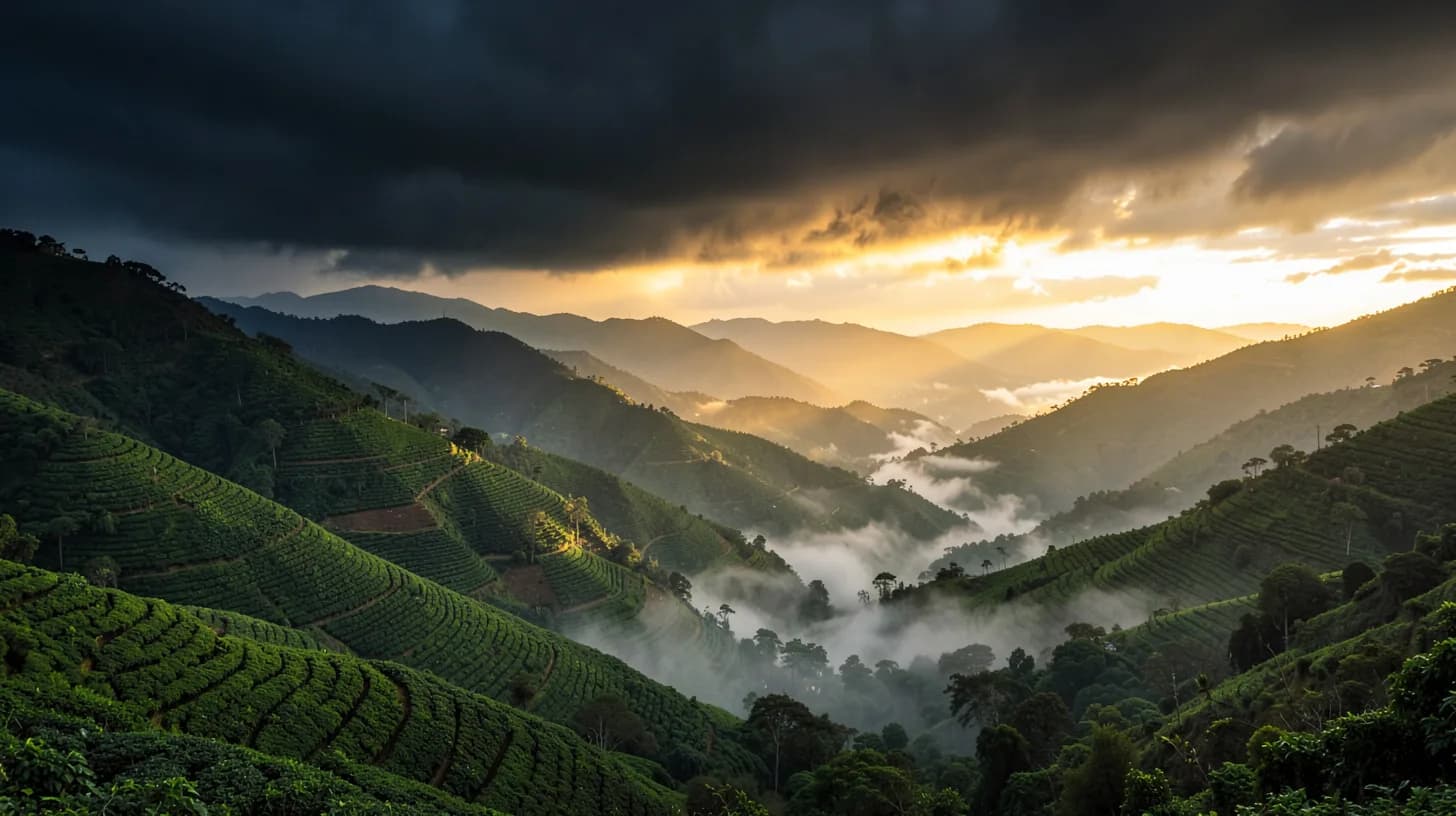
Close to the equator there is no summer and no winter, but there is a calendar. Here is how the year in Huila is expected to shape training, food and the rhythm of a stay.
5 min read