 The Oasis
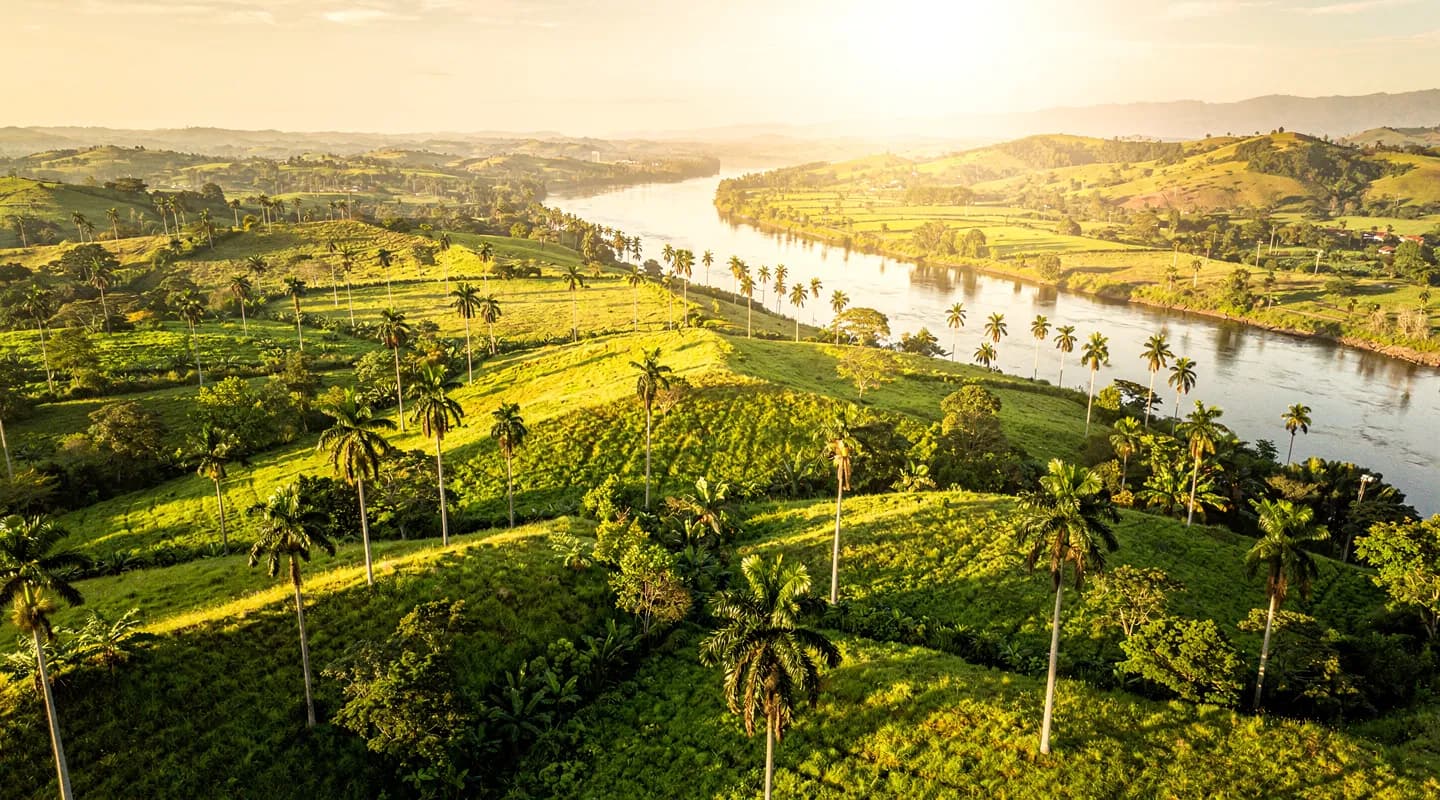
Why Rivera, Huila: How the Land for Phoenix Oasis Was Chosen
Thermal water, a climate made for training year-round, and a community worth building with: the founding intentions behind choosing Rivera, Huila, Colombia.
4 min read

The Oasis
Phoenix Initiative5 min read
Ask most travellers what season it is in Colombia and you will get a puzzled look. The country sits across the equator, and Rivera, in Huila, lies close enough to it that the sun rises and sets at almost the same hour every day of the year. There is no long summer evening. There is no dark February afternoon. Daylight is a flat twelve hours, more or less, from January to December.
It would be easy to conclude that the year has no shape here, and to design a programme that runs identically fifty-two weeks in a row. That is not the plan. The Huila year has a very definite shape — it simply runs on water rather than on temperature, and on a human calendar rather than a solar one.
Phoenix Oasis will open on 30 June 2028, and the programmes are being designed to move with that year rather than pretend it away. Here is what that means in practice.
Much of the Colombian Andes follows a bimodal rainfall pattern: two wetter stretches and two drier ones, roughly alternating. The wetter periods tend to fall around March to May and again around October to November; the drier stretches around December to February and again in the middle of the year. Local variation is significant — valleys and slopes make their own weather — but the pattern is real and farmers plan around it.
Temperature, meanwhile, barely moves across the year. What changes is how much water is falling, how loud the waterfalls are, how saturated the trails are, and how heavy the air feels in the afternoon. A visitor arriving in a dry month and one arriving in a wet month will describe two different places, and neither will be wrong.
The design intent is substitution, not cancellation. A wet week should not become a week of sitting indoors watching rain and feeling cheated.
In the drier months the balance tips the other way: longer distances, more time on the land, more use of the open-air spaces, and an earlier start to stay ahead of the heat.
Nothing in a retreat reveals seasonal thinking faster than the food. A menu that never changes is a menu built for logistics rather than for the place it is served in.
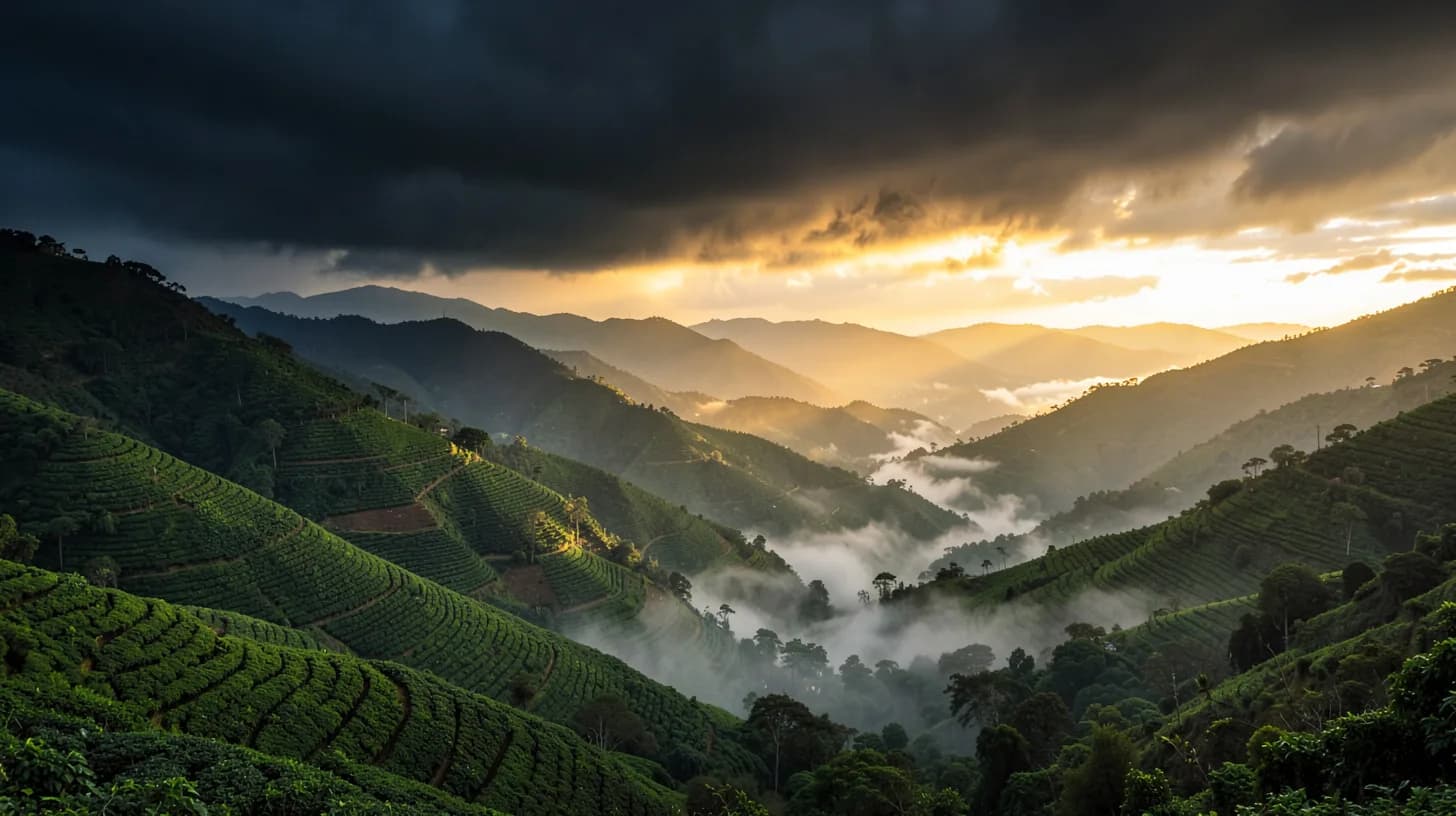
Huila is one of Colombia's great agricultural departments and one of its most important coffee-growing regions, and coffee is only the headline. The area produces cacao, granadilla, lulo, plantain, cane for panela and a long list of fruit that arrives in waves rather than in a steady stream. In the south of the country the main coffee harvest falls in the middle of the year, with a second, smaller picking later — which means the kitchen's relationship with its suppliers will look different in April than in November.
The plan is therefore a seasonal core rather than a fixed card: a stable structure of protein, vegetables and whole carbohydrates, with the specific fruit, the specific greens and the specific preparations changing across the year. It is more work to run. It is also the only version that respects the place.
Weather is one seasonality. The human calendar is the other, and it matters just as much to how a stay will feel.
The most striking example sits almost exactly on the Oasis opening date. Every year around the end of June, Neiva — half an hour up the road — holds the San Juan and San Pedro festivities and the Festival Folclórico y Reinado Nacional del Bambuco, one of the most important traditional music and dance festivals in Colombia. Semana Santa, in March or April, reshapes the region again, as does the December holiday period.
Programmes are being designed with awareness of these weeks rather than in ignorance of them. Some will be times to keep a stay quiet and internal; others will be an obvious moment to let guests meet the region as it actually is, loud and dancing.
There is one more seasonal quirk worth knowing. Huila also contains the Tatacoa desert, near Villavieja — a dry, eroded landscape a couple of hours north that is one of Colombia's best-known places to look at the night sky, precisely because it stays arid when the rest of the department is wet. Its best viewing falls in the drier stretches of the year.
It is a useful reminder that "the season" in Huila is not one thing. Within a single department you can move between coffee slopes, cloud forest and near-desert in an afternoon.
None of this has been tested yet — no cohort has trained here in the rain, and no kitchen has yet had to rebuild a menu around a late harvest. What can be said is that the design starts from an unusual premise for a retreat: that the year should be visible from inside the programme.
When the Oasis opens on 30 June 2028, the intention is that a woman who comes in a wet month and a woman who comes in a dry one will each get a stay shaped by what was actually happening on those 30 hectares that week. To see what the land looks like across the year, the surroundings are the natural next stop.
The OasisThermal water, a climate made for training year-round, and a community worth building with: the founding intentions behind choosing Rivera, Huila, Colombia.
4 min read
 The Oasis
This is a projection, not a timetable. A day-by-day sketch of how a seven-day stay is currently designed to unfold, with the caveats stated plainly up front.
5 min read
 The Oasis
A retreat is only as good as the people holding it. Here is the training philosophy being written for the Phoenix Oasis team, and the standards it intends to set before opening day.
5 min read