 The Oasis
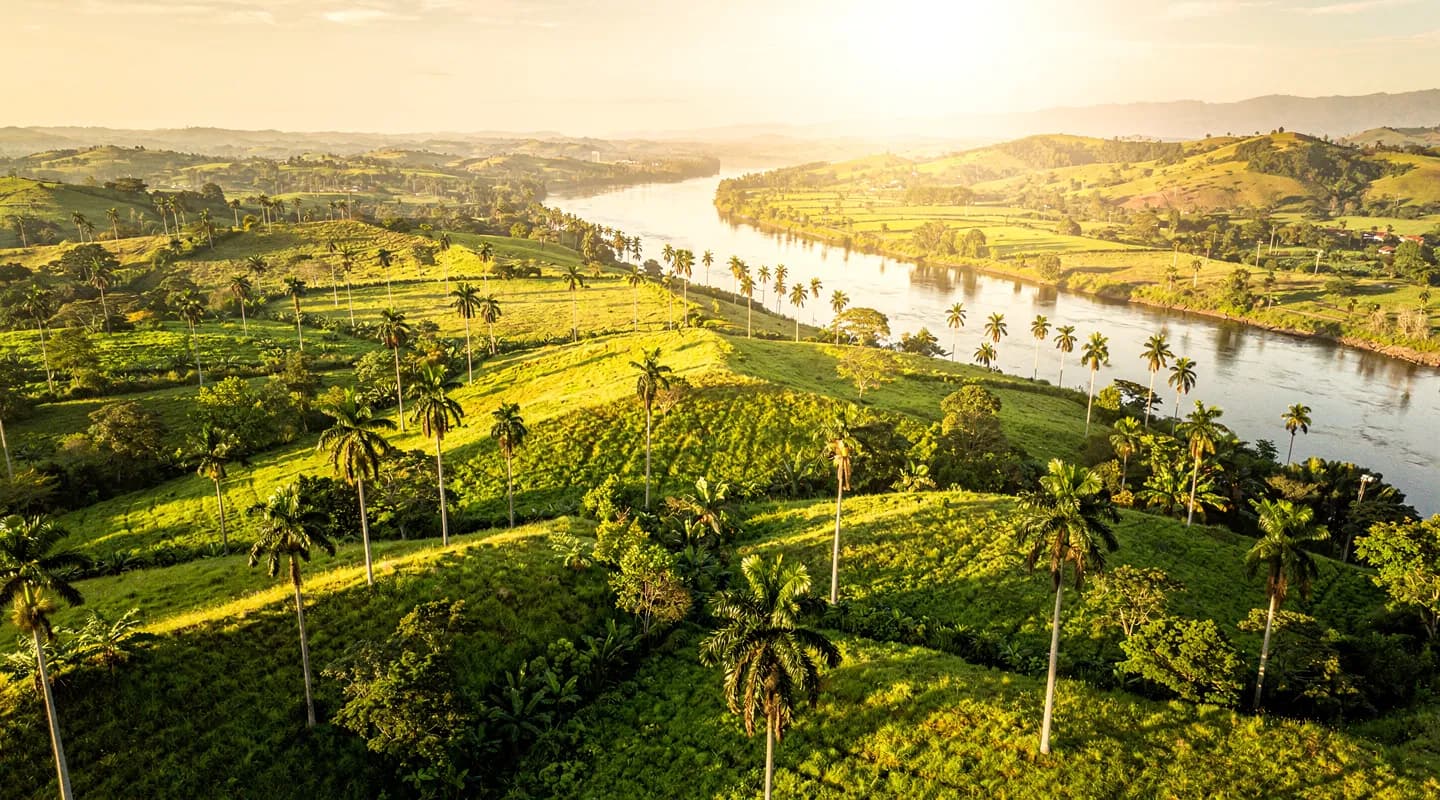
Why Rivera, Huila: How the Land for Phoenix Oasis Was Chosen
Thermal water, a climate made for training year-round, and a community worth building with: the founding intentions behind choosing Rivera, Huila, Colombia.
4 min read

The Oasis
Phoenix Initiative5 min read
You can build a beautiful place and still get it wrong. Architecture sets the stage; the people decide what happens on it. A woman remembers who noticed she was struggling in the third set, who refilled her water without being asked, who did not comment on her body. Those moments are not produced by buildings.
Which is why, of everything still to be done before 30 June 2028, the piece that keeps the project team up at night is not the roofing. It is the question of how the Oasis team will be recruited, trained and held to a standard, long before a single guest walks in.
This article describes a philosophy under construction. No cohort has been trained yet. What exists is a set of commitments the project intends to be judged on.
The working principle is simple to state and difficult to apply: technical skills can be taught, temperament largely cannot. A coach can learn a new strength progression in a fortnight. Learning to notice discomfort in a woman who will not say she is uncomfortable takes considerably longer, and some people never get there.
So the recruitment brief being drafted leads with attentiveness, steadiness under pressure and an ability to hold authority without performing it. Qualifications matter — they will be required — but they are the second filter, not the first.
There is a related commitment worth stating plainly. The intention is to recruit substantially from Huila and the surrounding region rather than importing an entire team, and to invest in bringing local candidates up to the required standard. Colombia has a strong public vocational training system through SENA, the national learning service, which trains hundreds of thousands of people a year across trades including hospitality and tourism. Building on that infrastructure is both faster and more honest than flying expertise in.
Some things are not a matter of philosophy. The plan sets a floor of qualifications that no one on the operational team will be exempt from:
None of this is glamorous. All of it is the difference between a retreat and a liability.
The plan calls for the Oasis to open twice. The first time will be without guests.
Before any paying participant arrives, the intention is to run full programme weeks internally — staff living the schedule they will later deliver, eating the food, sleeping in the bungalows, walking the trails in the rain. Every service industry that takes itself seriously does some version of this, and it is the single cheapest way to find the flaws that only appear on day four.
The point is not to prove the plan works. The point is to find out where it does not, while the cost of being wrong is only a week of everybody's time.
A centre for women is not just a centre with a different guest list. It changes what the team has to be trained for.
The training curriculum being written draws on established principles for creating psychologically safe environments — the framework most widely used internationally rests on ideas like physical and emotional safety, transparency, peer support, collaboration, genuine choice, and cultural humility. Translated into daily practice, that becomes concrete rules: how consent is asked for before any physical correction, how a woman is allowed to leave a session without explaining herself, how conversations about bodies are conducted, and how they are not.
It also means a hard boundary the whole team will be trained on. Coaches are not clinicians. The Oasis team will not diagnose, will not advise on medication or medical conditions, and will refer anything of that nature to a guest's own doctor. That boundary protects guests, and it protects staff from being asked for something they are not qualified to give.
The Oasis will host an international, mostly non-Spanish-speaking clientele in a Spanish-speaking country. The obvious answer is bilingual staff, and that is part of the plan.
The less obvious problem is cultural translation. Colombian hospitality is warm, generous and indirect; a guest from northern Europe may read indirectness as evasion, and directness from that same guest may land as rudeness on a Colombian team member. The training programme is being designed to name this explicitly and work it both ways — not to sand down local warmth into corporate neutrality, but to make sure both sides can read each other accurately.
The last commitment is the least dramatic. Training is being planned as an ongoing budget line rather than a launch expense: scheduled continuing education, structured debriefs after every programme cycle, and a route for staff to say what is not working without it being a career risk.
The 1% philosophy the Oasis will ask of its guests has to apply first to the people who deliver it. A team that improves a little every cycle will, by 2030, be running something better than anything that can be designed on paper today. That is the intention, and it is a fair thing to hold the project to. If you want to see the setting all of this is being built for, start with the facilities.
The OasisThermal water, a climate made for training year-round, and a community worth building with: the founding intentions behind choosing Rivera, Huila, Colombia.
4 min read
 The Oasis
This is a projection, not a timetable. A day-by-day sketch of how a seven-day stay is currently designed to unfold, with the caveats stated plainly up front.
5 min read
 The Oasis
Close to the equator there is no summer and no winter, but there is a calendar. Here is how the year in Huila is expected to shape training, food and the rhythm of a stay.
5 min read