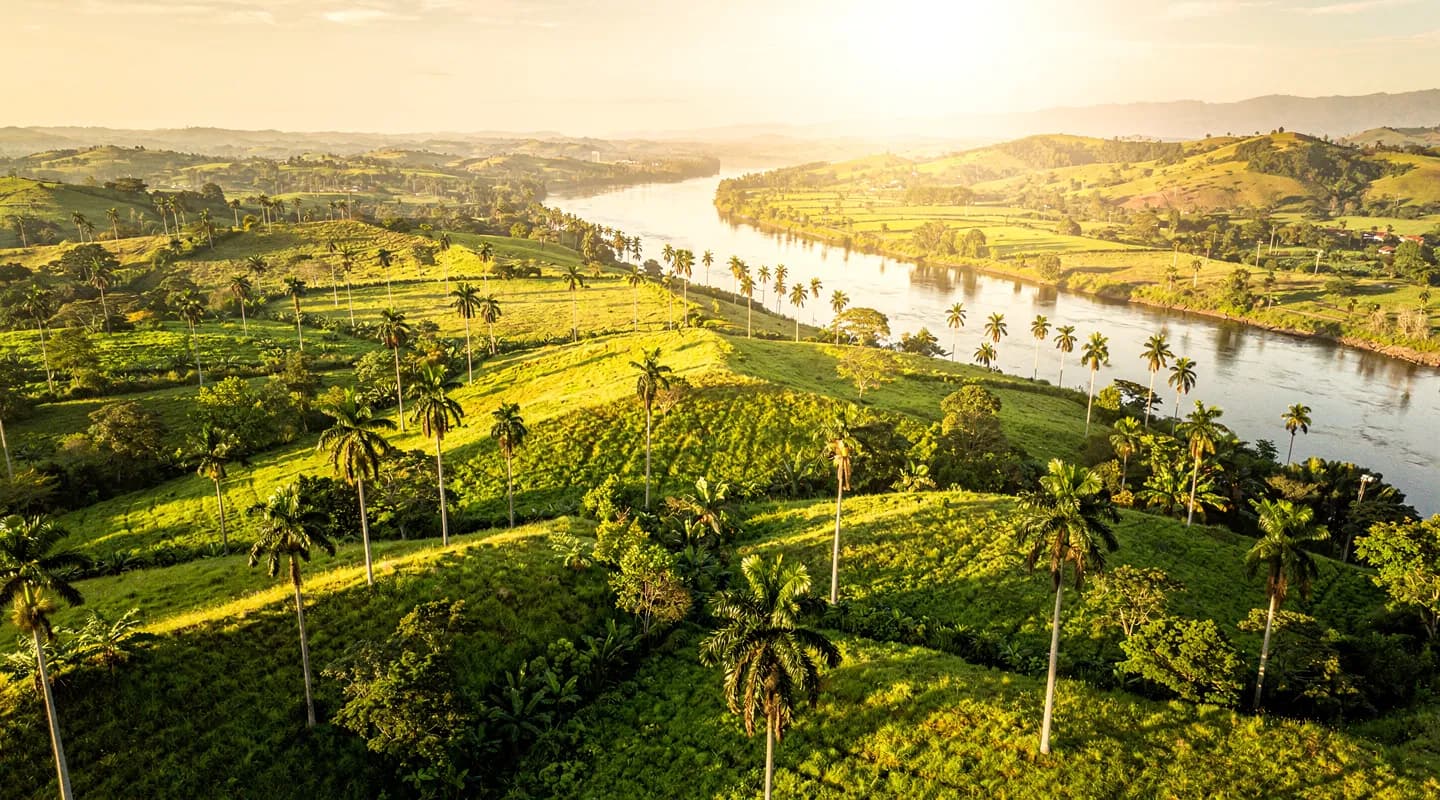
 The Oasis
Why Rivera, Huila: How the Land for Phoenix Oasis Was Chosen
Thermal water, a climate made for training year-round, and a community worth building with: the founding intentions behind choosing Rivera, Huila, Colombia.
4 min read

The Oasis
Phoenix Initiative5 min read
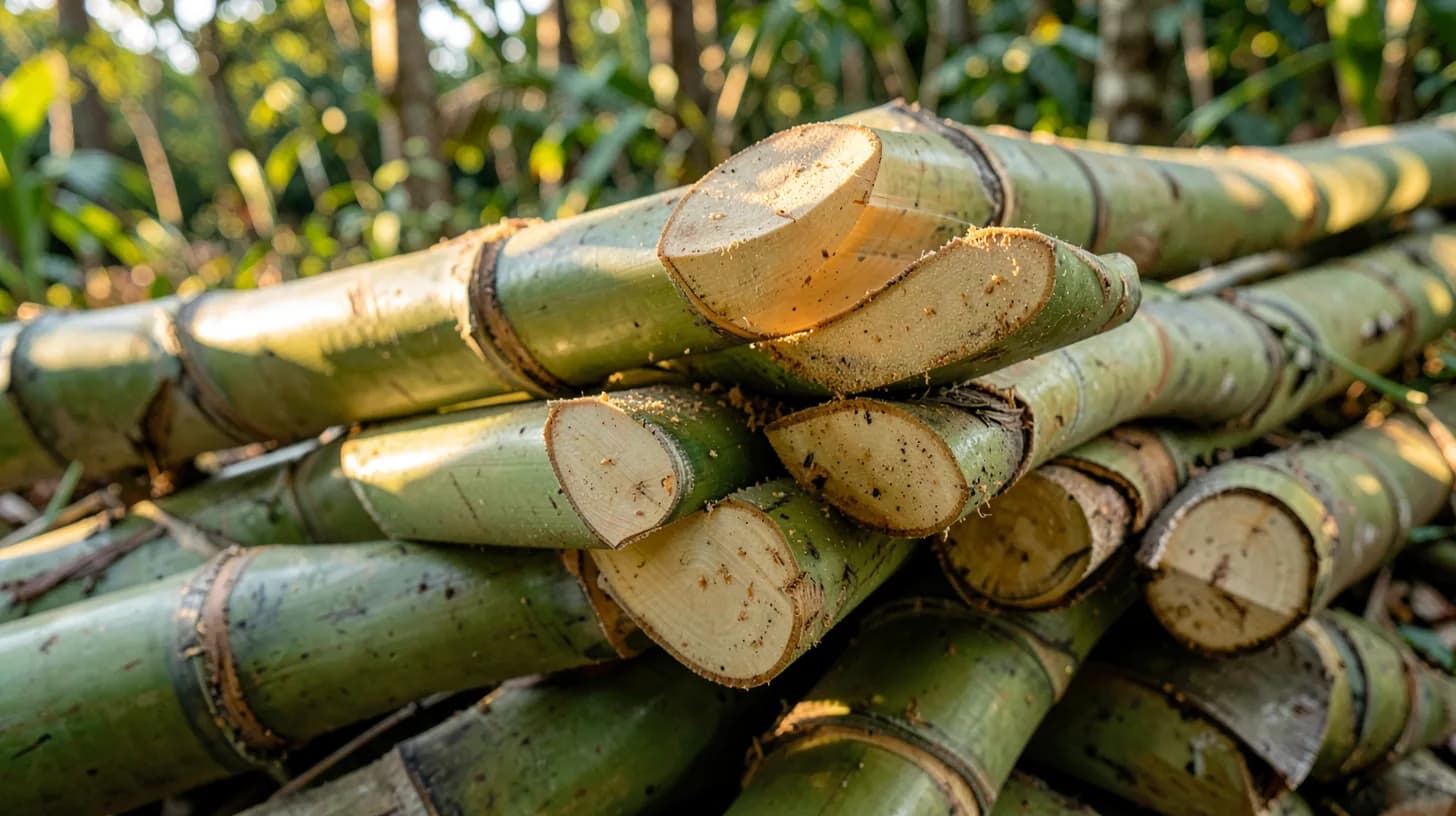
There is a plant in the valleys around Rivera that can put on ten centimetres in a single day. In about six months it reaches its full height — as much as twenty-five metres — and then it stops growing upward and spends the next four or five years doing something far more useful: hardening. It is not a tree. Guadua angustifolia is a grass, the largest bamboo in the Americas, and in this part of Colombia people have been building houses, bridges and coffee-drying sheds out of it for as long as anyone has kept records.
Phoenix Oasis is being built on thirty hectares in Rivera, in the department of Huila, and guadua will be one of the materials that holds it up. That is not a decorative choice, and it is not a nod to rustic charm. It is an engineering decision with a long paper trail behind it: a national technical code, an earthquake, and a pavilion that had to be built twice.
Here is what makes this plant worth understanding before the first post goes into the ground.
Bamboo's reputation for strength is not marketing. Guadua's fibres run lengthwise along a hollow tube, and the plant reinforces that tube at intervals with solid internal diaphragms — the nodes, visible from the outside as pale rings. Structurally it is the same trick as a bicycle frame: put the material at the outside of a tube, where bending stresses are highest, and leave the middle empty.
The result is a remarkable strength-to-weight ratio in tension, which is why guadua is sometimes called acero vegetal, vegetable steel. A culm one person can carry on a shoulder will span distances that would demand a far heavier timber beam. What guadua does not tolerate is being crushed across the grain or drilled carelessly — which is why everything interesting about building with it happens at the connections.
Guadua is harvested, not felled. A stand is effectively a single organism, connected underground by rhizomes; cutting a mature culm kills nothing, it signals the plant to send up replacements. Harvest is selective — mature culms only, four to six years old, identified by colour and by the lichen that has settled on them, cut just above a node so that rainwater cannot pool in the stump and rot the rhizome below.
Traditional practice in the coffee-growing regions is to cut on a waning moon and before dawn, when sap and starch content in the culm is at its lowest. Whatever the moon is doing, the underlying logic is sound: starch is what beetles and borers come for. Modern practice adds a second line of defence — immersion in a borax and boric acid solution, then weeks of drying under cover, raised off the ground, sheltered from sun that would split the culm and rain that would stain it.
An untreated, badly dried guadua post is firewood within a few years. A properly cured one, kept dry and away from soil contact, lasts decades. The difference is entirely process.
A round hollow tube is a beautiful column and an awkward thing to attach to anything else. For most of its history guadua was lashed, notched and pegged, which limited how far it could span and how much it could carry.
The Colombian architect Simón Vélez is the person most responsible for changing that. His contribution was disarmingly simple: drill through the culm at a node, fill the hollow chamber with cement mortar, then pass a steel bolt through the solid plug. The bolt now bears against a filled section instead of crushing a thin wall. That single detail moved guadua out of vernacular construction and into long-span architecture.
The proof arrived at Expo 2000 in Hannover, where Vélez designed the ZERI pavilion in guadua. German building authorities had no category for structural bamboo, so a full-scale prototype was built and load-tested in Colombia before the pavilion could be approved. It passed. It was built.
Colombia is one of very few countries where bamboo is not a legal grey area. The national seismic construction code, NSR-10, devotes a chapter to guadua structures — permissible stresses, moisture limits, connection design, minimum quality of culm. An engineer here can calculate a guadua building and put a signature on it.
That code did not appear from nowhere. After the earthquake that struck the coffee region in January 1999, engineers surveying the damage noted how well many traditional bahareque houses had behaved: light frames of guadua filled with earth and rendered, flexible enough to move with the ground rather than fight it. That same building culture is one of the reasons UNESCO inscribed the Coffee Cultural Landscape of Colombia on the World Heritage List in 2011.
The environmental argument for guadua is not only about carbon, though a fast-growing stand captures a great deal of it. The more immediate case is hydrological. Guadua rhizome networks knit steep slopes together and hold riverbanks in place — which matters enormously on land like Huila's, where volcanic soils are fertile and mobile in equal measure.
A guadua stand is also a permanent crop. It is not cleared and replanted; it is thinned, year after year, by people who live nearby and know by sight which culm is ready. Building with it keeps money and skill in the valley instead of exporting both to a steel mill.
None of this is standing yet. The centre is due to open on 30 June 2028, and what exists today is land, drawings, and decisions being made one at a time. But the material logic is already set: guadua alongside local timber and volcanic stone, worked by artisans from the region who have handled this plant their whole lives.
When you eventually walk under a guadua roof at the Oasis, you will be standing beneath a plant that grew a few valleys away, was cut on the right moon by someone who could read its lichen, and was joined by a technique a Colombian architect had to invent. That is a great deal of story to carry a roof — which is precisely the point.
You can follow what is planned for the estate on the facilities page.
The OasisThermal water, a climate made for training year-round, and a community worth building with: the founding intentions behind choosing Rivera, Huila, Colombia.
4 min read
 The Oasis
This is a projection, not a timetable. A day-by-day sketch of how a seven-day stay is currently designed to unfold, with the caveats stated plainly up front.
5 min read
 The Oasis
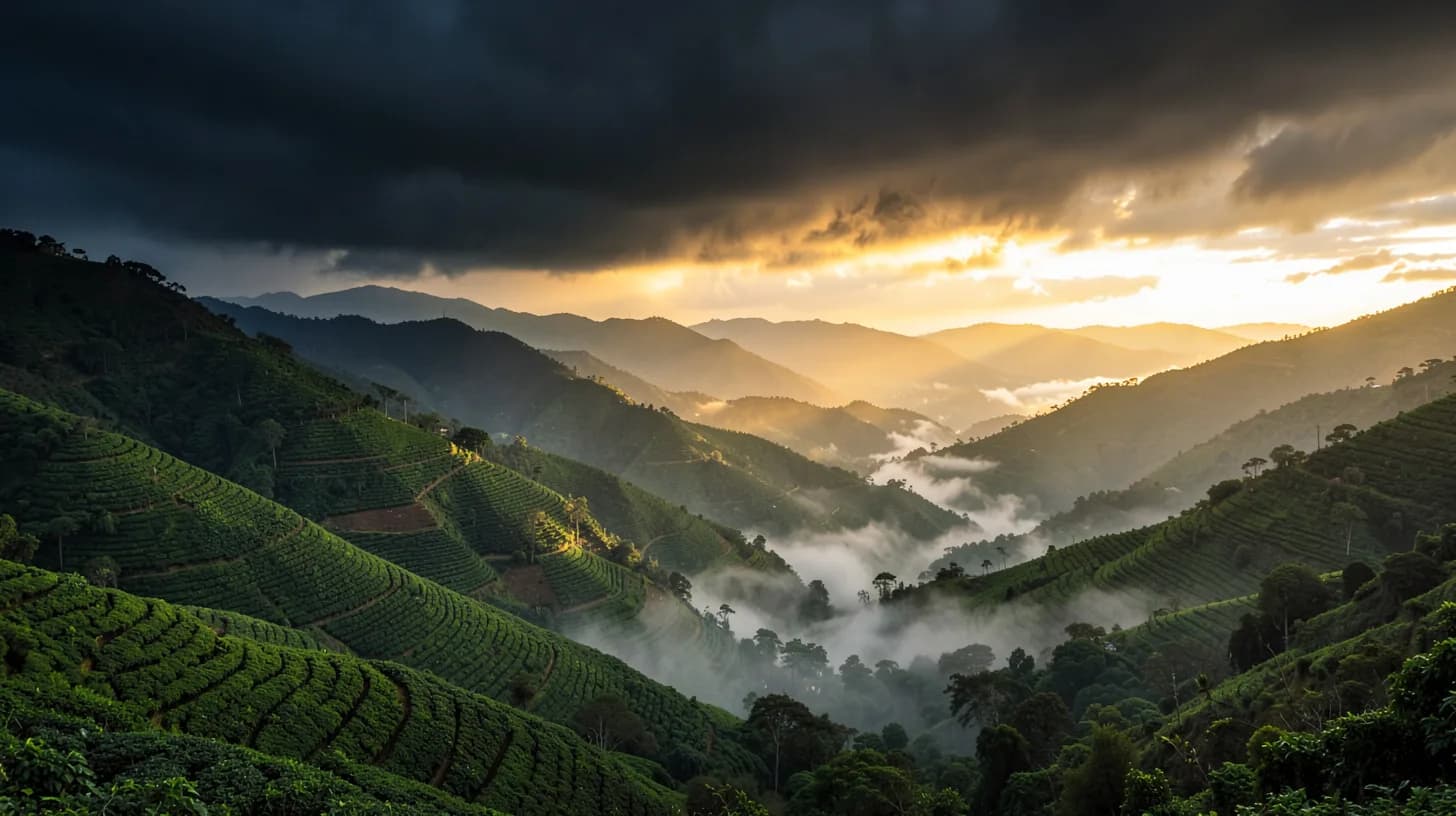
Close to the equator there is no summer and no winter, but there is a calendar. Here is how the year in Huila is expected to shape training, food and the rhythm of a stay.
5 min read