 The Oasis
Why Rivera, Huila: How the Land for Phoenix Oasis Was Chosen
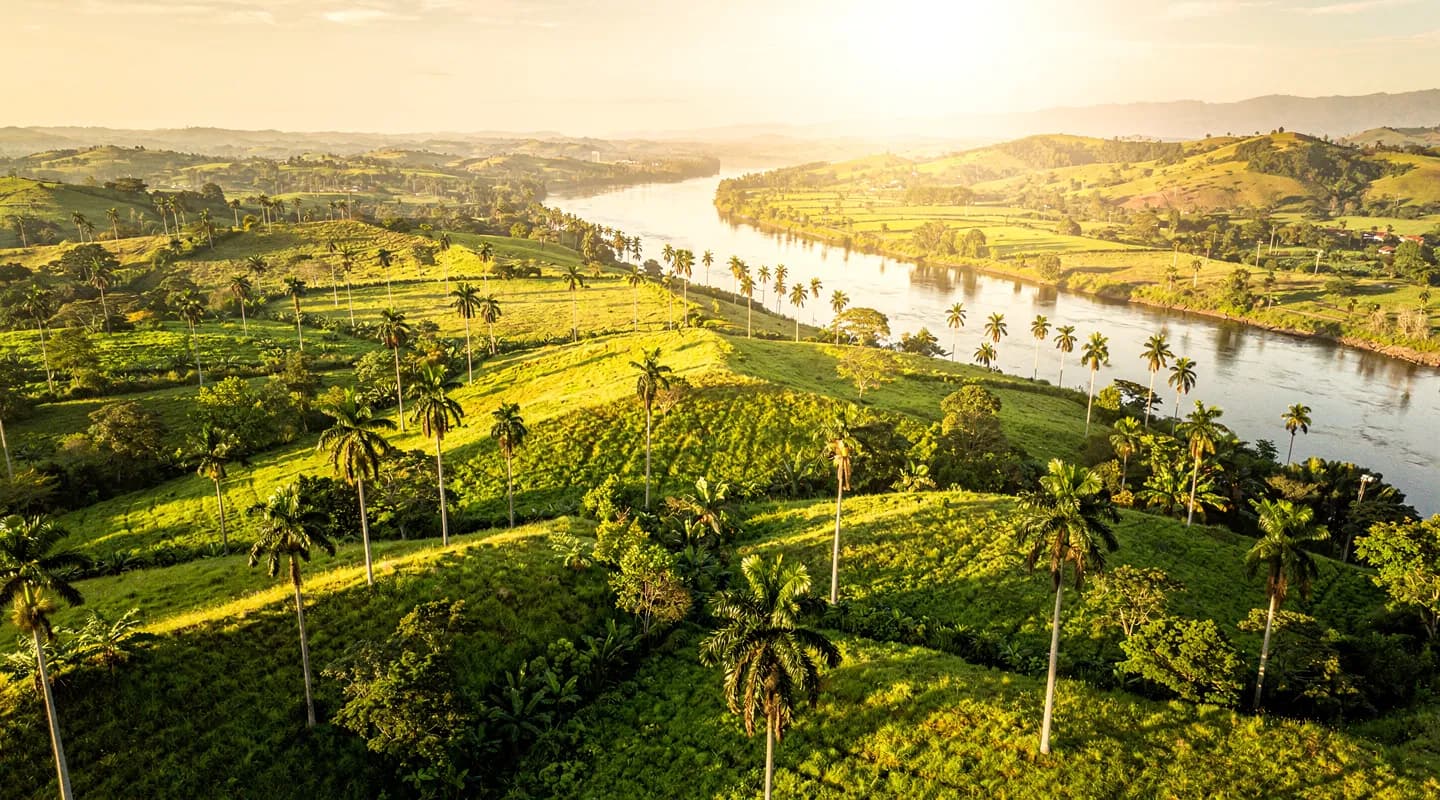
Thermal water, a climate made for training year-round, and a community worth building with: the founding intentions behind choosing Rivera, Huila, Colombia.
4 min read

The Oasis
Phoenix Initiative5 min read
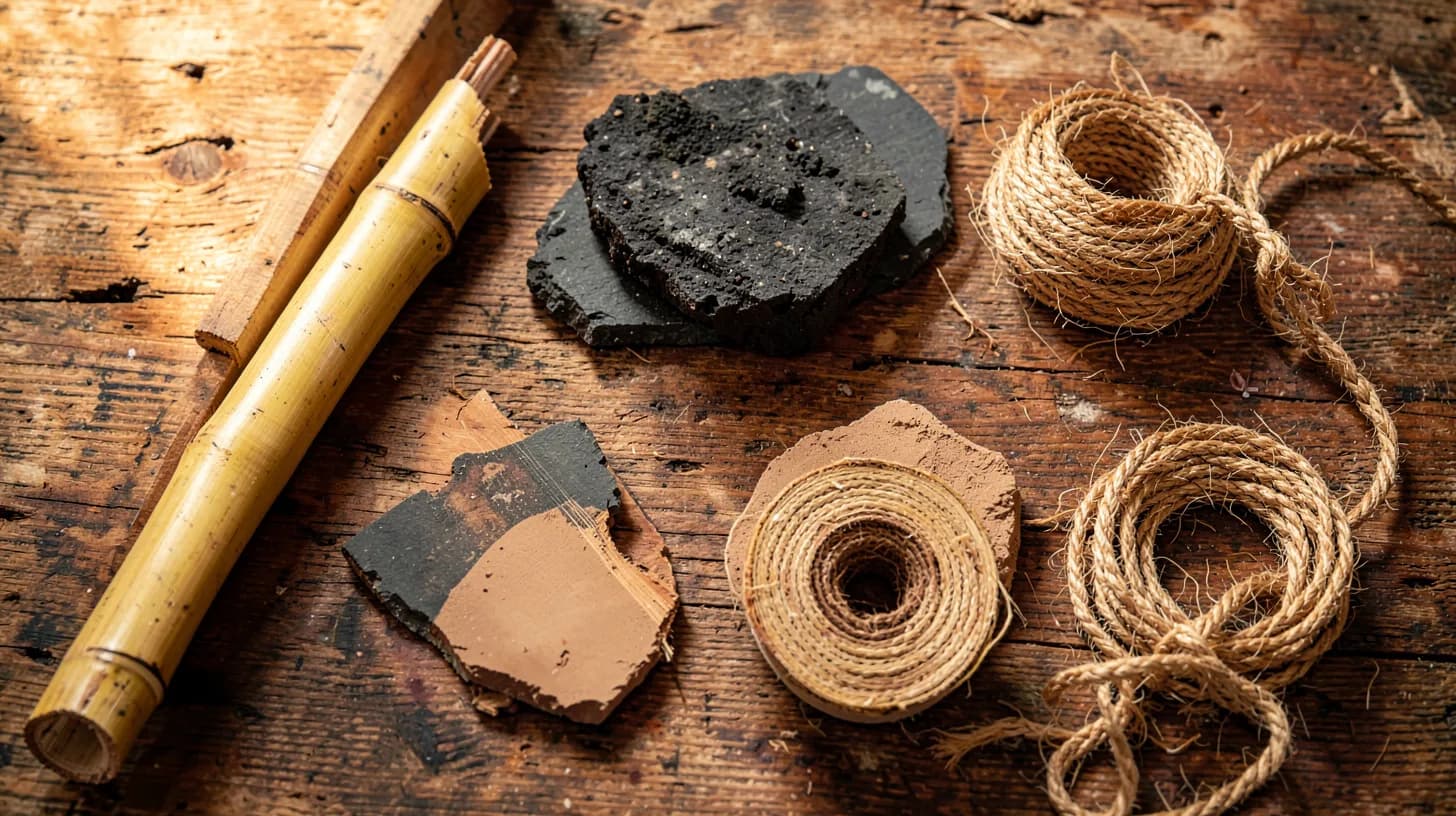
Every building is an argument made in objects. A place that says it cares about the land and then imports twenty tonnes of something across an ocean has told you what it actually believes, whatever the brochure says. Material choices are the least deniable part of any project.
They are also the part most often decided badly, because the decision usually gets made at the wrong moment — late, under time pressure, from a catalogue, on the basis of a photograph. By then the real questions have already been skipped.
Phoenix Oasis is being planned on thirty hectares in Rivera, Huila, and none of it is built. That is the point at which materials should be argued about. Here are the four questions worth asking of anything before it goes onto a site like this, and the honest place where the rules stop working.
Tropical humidity is a solvent for optimism. Materials that behave impeccably in a dry temperate country fail here in ways that are not always obvious in the first year.
The first question is therefore not "is it beautiful?" but "what does it look like here in fifteen years, and who noticed the problem in year three?"
This is the question that separates a building that ages well from one that decays politely. A material with no local expertise behind it is a permanent dependency: every repair needs a specialist, every specialist needs a flight, and eventually the repair simply does not happen.
The inverse is a quiet superpower. In this part of Colombia there are people who have worked guadua their whole lives, masons who know the local stone, carpenters who know which timber moves and which does not. Choosing what they already know keeps money in the region, keeps knowledge alive, and — most practically — means the building can be maintained by the people who are already there.
It also changes the pace of construction in a good way. Materials with living craft traditions carry their own quality control: the person cutting the bamboo knows what a bad culm looks like without being told.
Buildings emit in two ways. Operational carbon is what the place uses once it runs — lighting, pumping, cooling. Embodied carbon is what was spent before anyone walked in: extraction, processing, transport, construction. As buildings get more efficient to run, the embodied share becomes the larger share, and it is spent up front, at exactly the moment the climate can least afford it.
Cement is the headline. Making it accounts for a substantial slice of global carbon dioxide emissions — commonly put at around seven or eight per cent — and, unusually, most of that is not from burning fuel but from the chemistry itself: heating limestone releases carbon dioxide by definition. You cannot fix that with a cleaner kiln alone.
Transport matters most for heavy things. A tonne of stone quarried nearby and a tonne of stone shipped across a continent are not the same material. And the cheapest reduction of all is simply using less: a smaller building made of ordinary materials generally beats a larger one made of virtuous ones.
The last question is the one almost nobody asks. Can this assembly be undone?
Bolted connections can be unbolted. Lime mortar can be cleaned off a stone so the stone can be used again; a stone set in strong cement is rubbish the day the wall comes down. Glued composites and foamed-in-place materials are, for practical purposes, permanent — not because they last, but because nothing can ever be separated from them.
Designing for disassembly sounds like a distant concern on a site where nothing is built yet. It is actually the most consequential decision on this list, because it determines whether the materials on this land are a resource in fifty years or a disposal cost.
Any honest version of this article has to admit the exceptions, or it becomes marketing.
Concrete is the obvious one. For foundations on unstable ground, for water-retaining structures, for anything that must resist a tropical hillside for decades, there is often no responsible alternative — and using a small amount of the right material in the right place is better than using a large amount of the wrong one out of principle. The same applies to steel connections that allow bamboo to span further with less material.
Two other tensions deserve naming. Local is not automatically low impact; badly managed local extraction can do more damage than a well-regulated import. And durability sometimes conflicts with reversibility: the toughest solution is frequently the least recoverable. These are trade-offs to be made openly, case by case, rather than resolved by slogan.
The Oasis is due to open on 30 June 2028. Every material for the buildings is still a decision rather than a delivery, which is the only moment when questions like these are free to ask.
The commitment that can honestly be made now is about method rather than outcome: that each material will have to answer for itself on climate, on craft, on carbon and on reversibility — and that "it photographs well" will not be accepted as an answer.
You can see what else is planned for the estate on the facilities page.
The OasisThermal water, a climate made for training year-round, and a community worth building with: the founding intentions behind choosing Rivera, Huila, Colombia.
4 min read
 The Oasis
This is a projection, not a timetable. A day-by-day sketch of how a seven-day stay is currently designed to unfold, with the caveats stated plainly up front.
5 min read
 The Oasis
Close to the equator there is no summer and no winter, but there is a calendar. Here is how the year in Huila is expected to shape training, food and the rhythm of a stay.
5 min read