 The Oasis
Why Rivera, Huila: How the Land for Phoenix Oasis Was Chosen
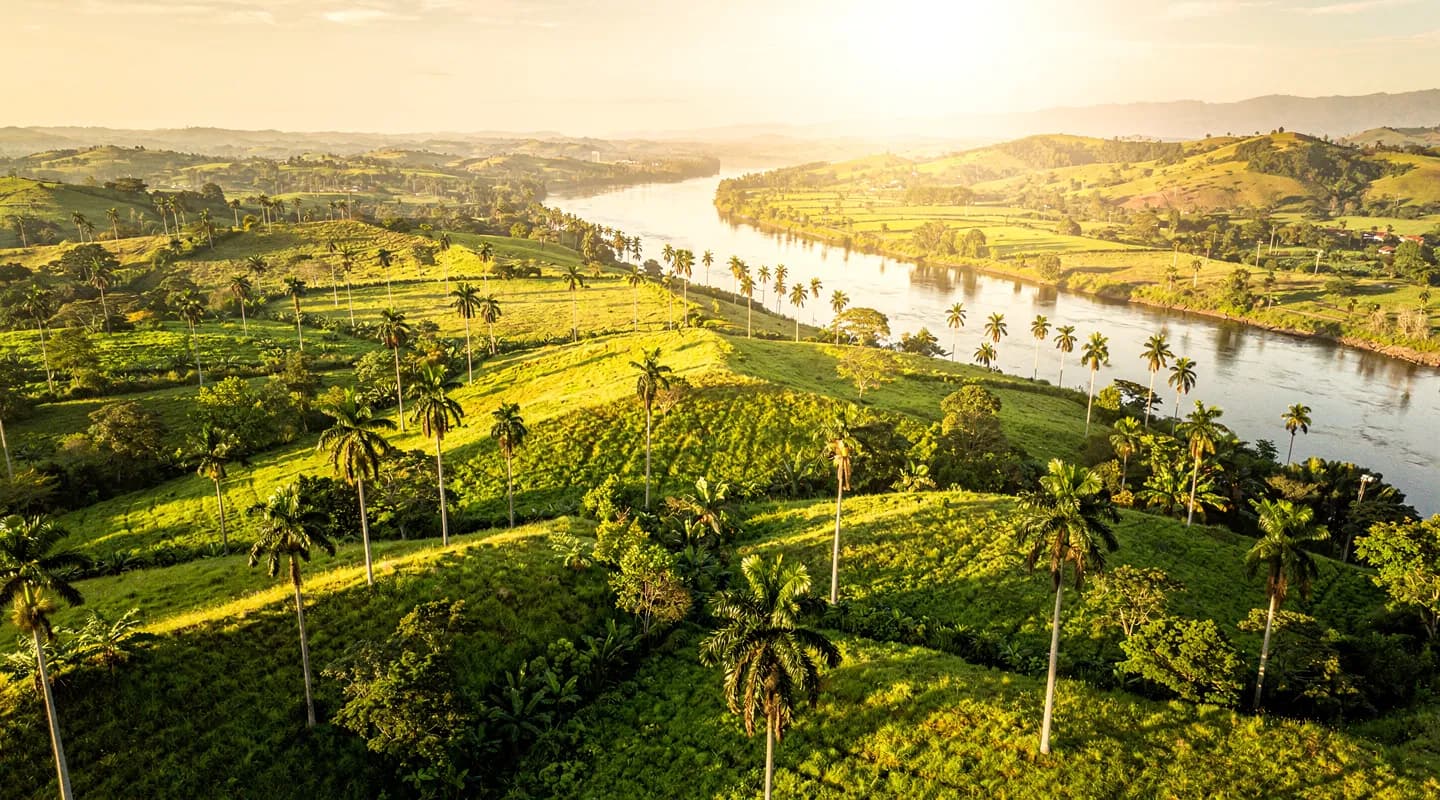
Thermal water, a climate made for training year-round, and a community worth building with: the founding intentions behind choosing Rivera, Huila, Colombia.
4 min read

The Oasis
Phoenix Initiative5 min read
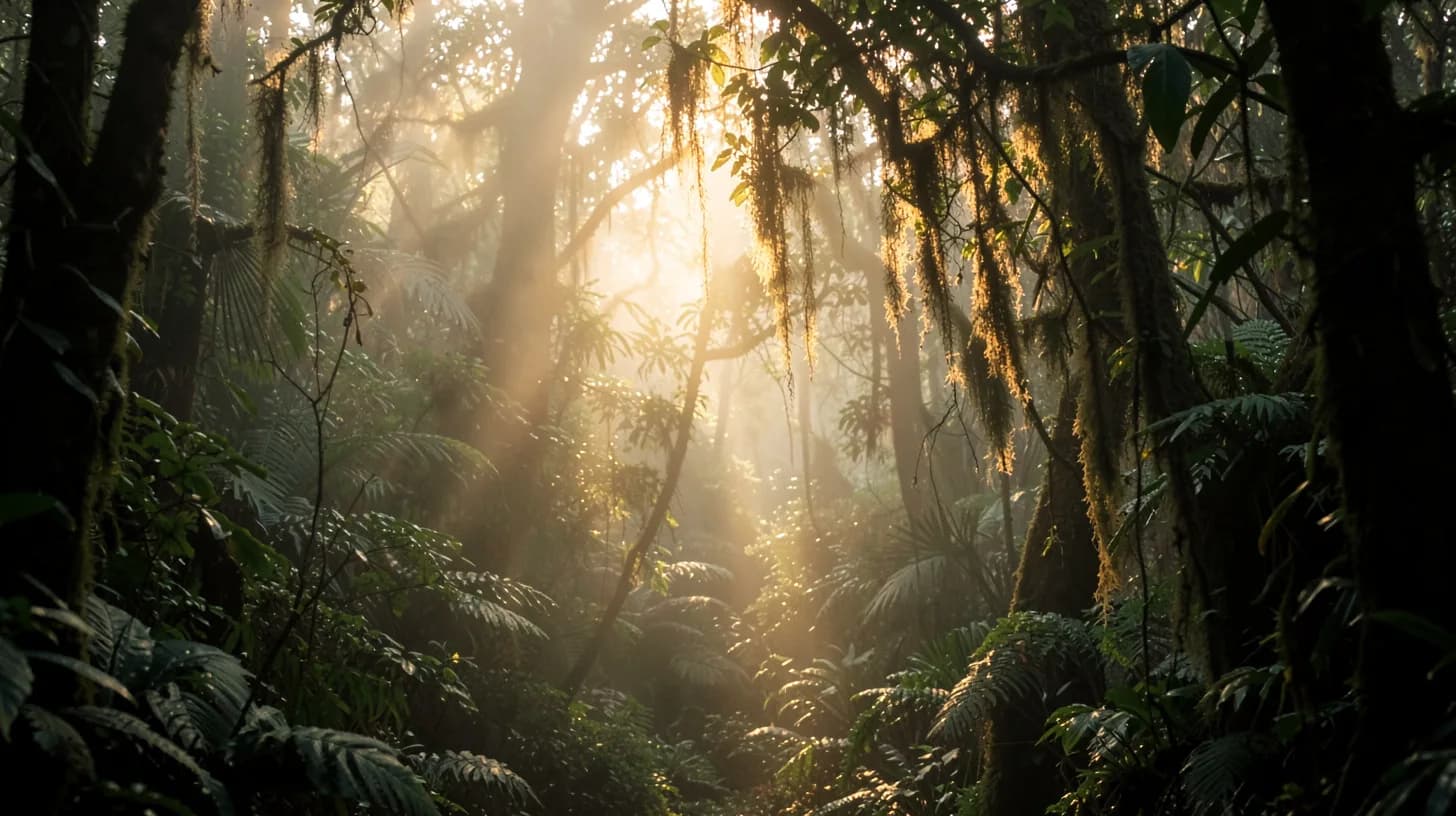
Stand in a Huila valley after dark and the first thing you notice is that it is not silent at all. Cicadas run a continuous high band. Frogs answer each other from the water. Something large moves in the leaf litter and stops. Before dawn the birds start, one species at a time, in an order that barely changes from day to day. Measured with an instrument, a tropical night can be noisier than a suburban street.
And yet people describe that same night as the quietest they have known. The contradiction is the whole subject. Silence, as we actually experience it, is not an acoustic measurement. It is the absence of sound that demands something from you.
Designing silence into a place is therefore not a matter of soundproofing. It is a matter of deciding which sounds belong, where the human ones are allowed to happen, and how the land itself is used to keep them apart. Here is what that involves.
Acoustic ecologists find it useful to split a soundscape into three families: the sounds of the earth — wind, water, rain; the sounds of living things — insects, frogs, birds; and the sounds of humans and their machines. The first two are what people mean when they say a place is peaceful, even when those sounds are objectively loud. The third is what people mean when they say a place is noisy, even when it is faint.
That distinction is not sentimental. A generator two hundred metres away, a radio at the edge of a clearing, a reversing alarm — each carries information, and information is what the brain cannot ignore. This is why the World Health Organization treats environmental noise as a genuine health issue rather than a matter of taste, and why its guidance concentrates on the mechanical, human-made kind.
Of all human sounds, speech is the most disruptive per decibel. Cognitive research has documented this repeatedly: background speech interferes with concentration far more than steady noise of the same level, because the brain automatically decodes it. You cannot choose not to understand your own language.
The design consequences are concrete. Office acousticians use a measure called the distraction distance — the distance at which speech becomes unintelligible enough to stop pulling attention. The same idea applies outdoors. A meditation platform does not need to be far from the kitchen in metres; it needs to be far enough that conversation arrives as texture rather than as words.
It also means water is a genuine tool. Broadband sound with no information in it — a stream, a waterfall — masks speech extremely effectively. Siting a quiet zone within earshot of moving water is one of the oldest and most reliable tricks in landscape design.
Here the intuitive answer is wrong, and expensively so.
Put together, this argues for placing noisy functions — plant rooms, service yards, vehicles, arrivals — physically below or behind a fold in the land rather than screening them with a row of trees and hoping.
Sound behaves differently after sunset, and anyone who has camped in a mountain valley knows it. During the day, air near the warm ground is warmer than the air above it, and sound bends upward, away from listeners. At night the ground cools first, the layer above stays warmer, and that inversion bends sound back down toward the earth. The same vehicle that was inaudible at noon is clearly heard at two in the morning.
Wind does something similar: sound carries much further downwind than up. So a service route that is perfectly discreet in the afternoon can be the loudest thing on the estate at dawn, purely because the air changed shape. Any honest plan for quiet has to include a plan for what moves at night, and where.
The uncomfortable truth is that no amount of terrain and planting survives a group of people who have not agreed what a place is for. The most effective quiet zones in the world are enforced by culture, not by construction: everyone knows this is where you do not talk, and so nobody does.
That means the tools are as much social as physical. A clear threshold you cross to enter. Signage that is understood rather than obeyed. Hours that belong to the place rather than to the schedule. And, crucially, other places nearby where noise is entirely welcome — because a rule that leaves people nowhere to be loud is a rule that gets broken.
Phoenix Oasis is due to open on 30 June 2028 on thirty hectares in Rivera, Huila. Nothing is built yet, which is precisely the moment when this kind of thinking is cheap. Where the vehicles will arrive, where the plant equipment will sit, which fold of the slope will separate the busy part of the estate from the still part — these are decisions being made on drawings now, and they are almost impossible to fix later.
The aim is not a place where nobody speaks. It is a place where, when you want the valley and nothing else, the land itself has already been arranged to give it to you.
You can see what else is planned for the estate on the facilities page.
The OasisThermal water, a climate made for training year-round, and a community worth building with: the founding intentions behind choosing Rivera, Huila, Colombia.
4 min read
 The Oasis
This is a projection, not a timetable. A day-by-day sketch of how a seven-day stay is currently designed to unfold, with the caveats stated plainly up front.
5 min read
 The Oasis
Close to the equator there is no summer and no winter, but there is a calendar. Here is how the year in Huila is expected to shape training, food and the rhythm of a stay.
5 min read