 The Oasis
Why Rivera, Huila: How the Land for Phoenix Oasis Was Chosen
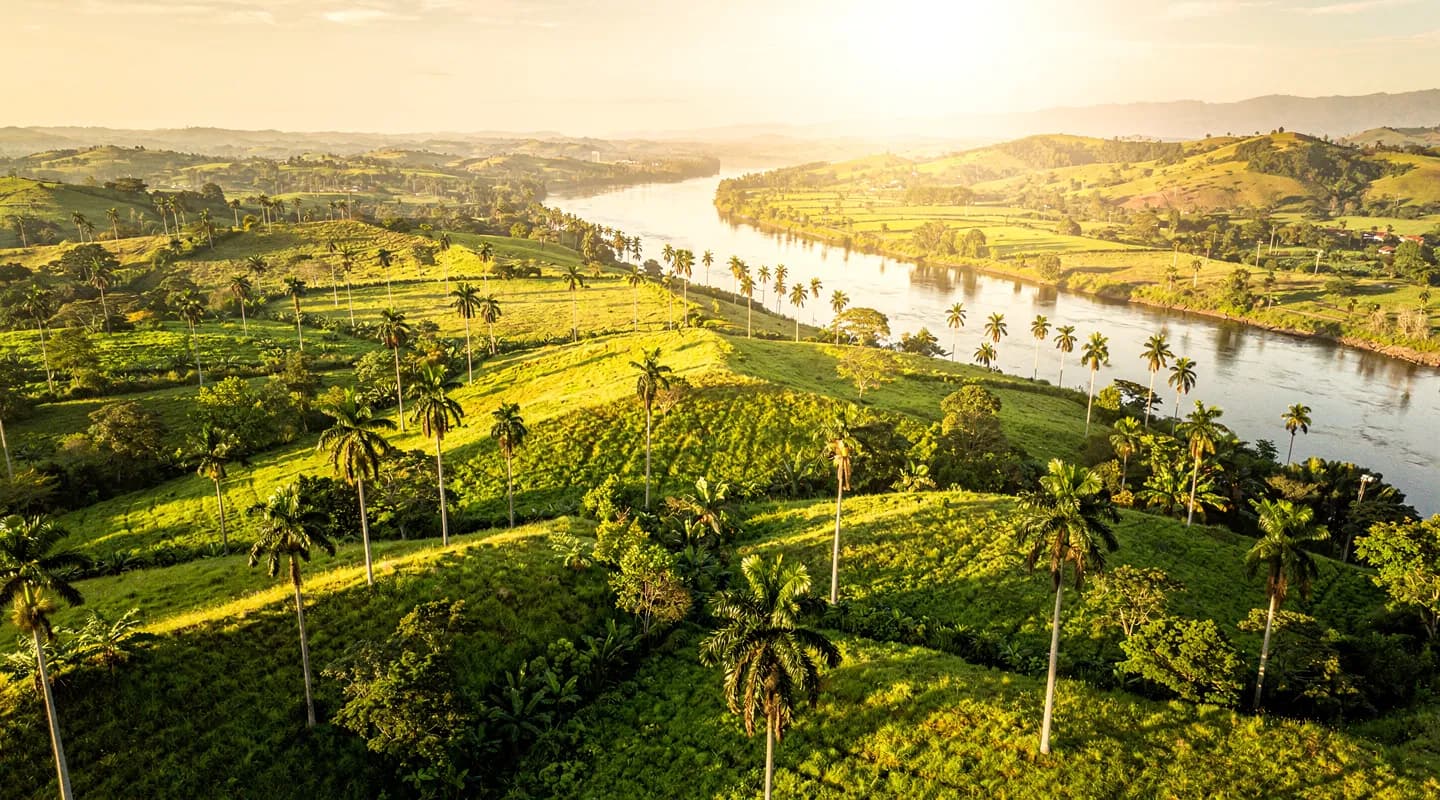
Thermal water, a climate made for training year-round, and a community worth building with: the founding intentions behind choosing Rivera, Huila, Colombia.
4 min read

The Oasis
Phoenix Initiative6 min read
Electricity is the least romantic subject in any building project and the one that decides the most. It determines whether the kitchen can refrigerate, whether the water reaches the top of the slope, whether anyone can charge a phone at ten at night, and whether the whole thing runs on sunlight or on a diesel drum trucked up a mountain road.
Phoenix Oasis will sit on thirty hectares of hillside in Rivera, Huila. The country it sits in has one of the cleanest electricity mixes in the Americas and one of the most weather-dependent. The land it sits on is close enough to the equator that the sun barely changes its habits between January and July. Both facts shape the plan.
Here is the physics behind it — none of it specific to this project, all of it the reason the choices look the way they do.
For decades the large majority of Colombia's electricity has come from hydropower: mountain rivers, reservoirs, turbines. On a normal year that is an enviable position — abundant, renewable, low-carbon power from the country's own geography.
The vulnerability is that reservoirs depend on rainfall, and rainfall in this part of the world is governed by the El Niño–Southern Oscillation. In strong El Niño years the Andean rains falter, reservoir levels drop, and the national grid comes under real strain; Colombia has lived through electricity rationing in living memory for exactly this reason. Add the ordinary fragility of long transmission lines running through mountains and thunderstorms, and the conclusion for any remote site is simple: assume the grid is a useful friend, not a guarantee.
Solar design in Europe or North America is dominated by a single brutal fact — the winter. Days shorten, the sun sits low, and December output can fall to a small fraction of June's. Every system is sized around that trough.
Near the equator there is essentially no trough. Day length in Huila stays close to twelve hours all year, and the sun climbs high in every month. The seasonal curve flattens out, which means a solar array can be sized for something close to its average rather than for a distant worst case. That single difference makes off-grid design far more tractable here than at fifty degrees north.
What replaces the winter as the main variable is cloud. In Andean valleys the mornings tend to be clearer and the afternoons build convective cloud, so production is front-loaded in the day. That is worth knowing, because it argues for doing the heaviest electrical work — pumping water uphill, running laundry, making ice — while the sun is still on the east side of the sky.
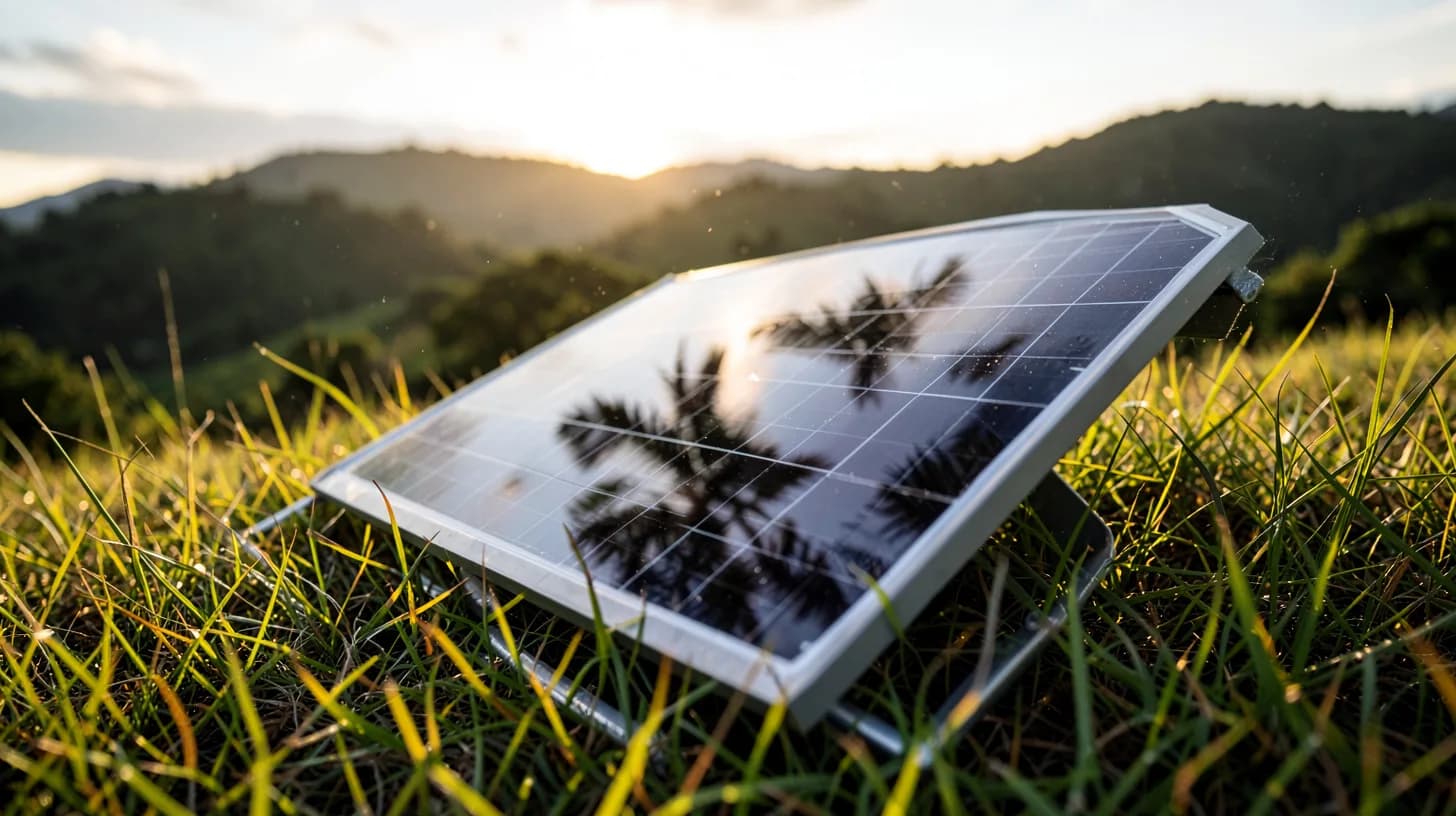
There is a counter-intuitive fact at the centre of tropical solar: photovoltaic panels dislike heat. Their rated output is measured at a cell temperature of 25 °C, and above that the voltage falls. As a rough figure, most silicon modules lose in the region of a third of a percent of their power for every degree above that reference. On a still, sunny tropical afternoon a roof-mounted panel can easily sit thirty degrees hotter than the air around it.
The design responses are unglamorous and effective: mount panels with an air gap so they can shed heat from behind, avoid dark enclosed roof cavities directly under them, and keep the array where wind can reach it. Batteries have the same enemy — every lithium chemistry ages faster when it is hot — so a battery room in the tropics wants shade, ventilation and thermal mass rather than a tin cupboard in the sun.
Two other maintenance realities belong here. Panels get dirty, and in a valley with dust and birds, a soiled array loses output silently until someone notices. And the upper Magdalena is a thunderstorm-rich part of the world, which makes proper earthing and surge protection less a refinement than a condition of survival for the electronics.
Before any array is sized, the honest work is subtraction. Every watt removed from the load is a watt that never has to be generated, stored, inverted or replaced in ten years.
Any off-grid claim lives or dies on one question: what happens after four grey days? Storage is expensive, finite, and degrades. Sizing it for the absolute worst case in a decade is how projects go bankrupt; sizing it for a sunny Tuesday is how they go dark.
The grown-up answer is layered. A solar array for the ordinary day, storage for the ordinary night, a grid connection where one exists, and a backup generator that is expected to run rarely and is maintained as though it will run tomorrow. Alongside that sits demand management: knowing which loads are essential, which can wait for the sun, and which can simply be switched off for an evening without anyone's stay being worse for it.
The centre is due to open on 30 June 2028, and a solar park is part of what the project intends to build on the estate. Nothing is generating anything yet; what exists is land, a slope with a good aspect, and a set of decisions being taken in the right order — loads first, generation second, storage last.
The ambition is not a plaque saying "one hundred per cent renewable". It is a place where the lights and the pumps and the kitchen keep working through a bad week in an El Niño year, on a mountain, without a diesel truck. If that sounds unromantic, consider that it is exactly what makes everything else on the land possible.
You can see what else is planned for the estate on the facilities page.
The OasisThermal water, a climate made for training year-round, and a community worth building with: the founding intentions behind choosing Rivera, Huila, Colombia.
4 min read
 The Oasis
This is a projection, not a timetable. A day-by-day sketch of how a seven-day stay is currently designed to unfold, with the caveats stated plainly up front.
5 min read
 The Oasis
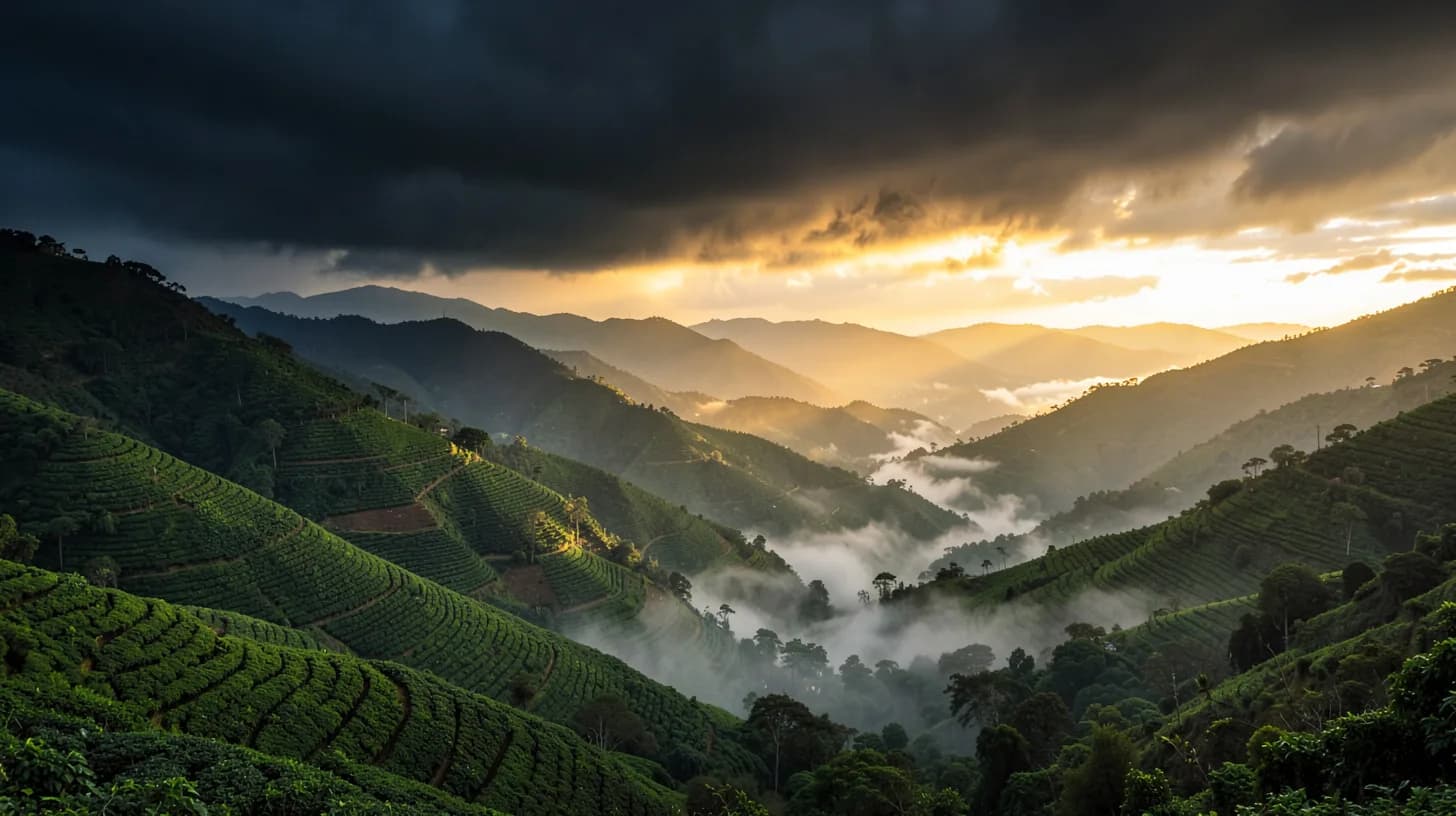
Close to the equator there is no summer and no winter, but there is a calendar. Here is how the year in Huila is expected to shape training, food and the rhythm of a stay.
5 min read